

Table of Contents
- What Tanzanian Wall Art Reveals About Cultural Identity
- Tinga Tinga Painting Meaning and Its Role in Modern Expression
- History of Tinga Tinga Art and Its Evolution
- Tanzanian Art Symbols and Colors: A Visual Language
- Art as Storytelling: Oral Tradition Meets Visual Form
- Social and Political Commentary Through Artistic Expression
- Bringing Tanzanian Wall Art Into Your Home
- Frequently Asked Questions
Last Updated: October 16, 2026
What Tanzanian Wall Art Reveals About Cultural Identity
Tanzanian wall art stands as one of East Africa's most vibrant expressions of cultural identity, telling stories that span generations through color, symbol, and form. When you look at a painted wall in a Tanzanian home or community space, you're witnessing far more than decoration, you're seeing a visual language that communicates ancestral heritage, social values, spiritual beliefs, and personal aspirations all at once.
The cultural significance of Tanzanian wall art runs deep. These paintings function as living heritage, keeping oral traditions alive in visual form and serving as a bridge between what ancestors knew and what younger generations inherit. Travelers who understand this context connect more meaningfully with the communities they visit and the art they bring home. The symbols, colors, and compositions aren't arbitrary choices; they're deliberate expressions rooted in centuries of artistic tradition and cultural practice.
What makes Tanzanian wall art particularly compelling is how it operates simultaneously as personal expression and community statement. A single painted wall might celebrate a warrior's triumph, honor a family's lineage, invoke spiritual protection, or document a moment of social change. This layered meaning is what distinguishes authentic Tanzanian wall art from mass-produced imitations, the depth comes from genuine cultural narrative embedded in every brushstroke.
Tinga Tinga Painting Meaning and Its Role in Modern Expression
Tinga Tinga painting emerged in the 1960s as a distinctly Tanzanian artistic movement that transformed how contemporary artists approach visual storytelling. Named after its founder, the style blends traditional artistic sensibilities with modern subject matter, typically featuring animals, nature scenes, and vibrant depictions of daily life rendered in bold, saturated colors and dynamic compositions.
The meaning embedded in Tinga Tinga paintings extends beyond aesthetic appeal. These works represent a pivotal moment when Tanzanian artists began claiming their own narrative space, moving beyond colonial-era constraints to create art that spoke directly to their own communities and, eventually, to global audiences. The style became a vehicle for cultural pride and economic opportunity, allowing artists to sustain themselves while maintaining artistic integrity.
What's significant about Tinga Tinga's role in modern expression is how it legitimized popular, accessible art as worthy of serious consideration. Unlike more exclusive artistic traditions, Tinga Tinga paintings were created for everyday people, meant to brighten homes, tell stories, and make art available to communities regardless of wealth. This democratic approach to artistic creation became foundational to how contemporary Tanzanian wall art functions today.
Modern Tinga Tinga artists continue to expand the tradition's meaning. While early works focused on wildlife and landscape, contemporary practitioners incorporate social commentary, personal narratives, and experimental techniques. The style remains rooted in its core identity, bold color, dynamic energy, and cultural authenticity, while evolving to address current realities.
History of Tinga Tinga Art and Its Evolution
The history of Tinga Tinga art begins in 1960s Dar es Salaam, when Edward Saidi Tingatinga started painting on canvas using house paint and unconventional materials.
Tingatinga's innovation lay not in inventing entirely new techniques but in democratizing art-making. He used accessible materials, painted subjects that resonated with ordinary people, and created a workshop model that trained other artists. This collaborative approach meant the style spread rapidly, with multiple practitioners developing their own variations while maintaining core stylistic elements, vibrant color palettes, dynamic animal subjects, and energetic compositional movement.
The evolution from Tingatinga's original practice to contemporary Tanzanian wall art reflects broader shifts in how artists engage with cultural expression. Early Tinga Tinga paintings focused heavily on wildlife, leopards, zebras, snakes rendered in almost dreamlike intensity.
By the 1980s and 1990s, the artistic tradition had evolved to incorporate more varied subject matter. Artists began depicting human figures, cultural ceremonies, historical narratives, and personal experiences. The technique remained recognizable, bold outlines, saturated colors, energetic composition, but the content expanded to encompass the full range of Tanzanian cultural experience.
Tanzanian Art Symbols and Colors: A Visual Language
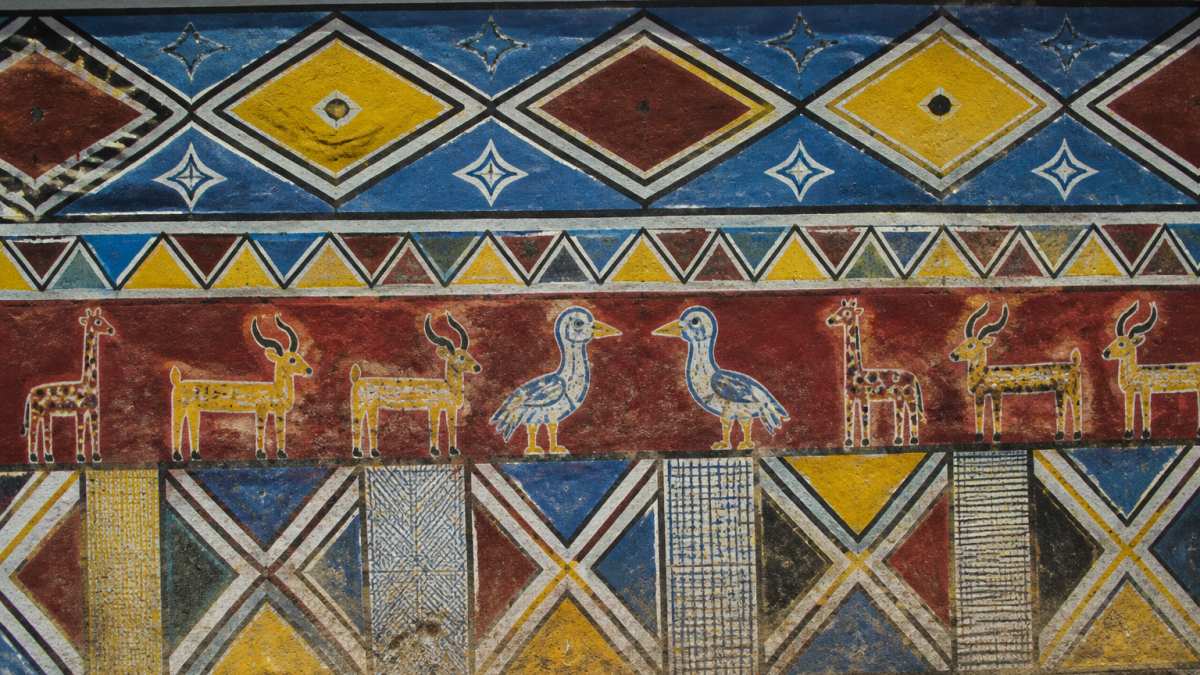
Colors in Tanzanian wall art carry specific symbolic weight rooted in cultural tradition and spiritual belief. Red typically signifies strength, courage, and vitality, qualities valued in warriors and leaders. Blue represents protection, peace, and spiritual connection. Yellow conveys joy, celebration, and the life-giving power of the sun. Green connects to fertility, growth, and the natural world.
The symbols themselves function as a visual vocabulary that communicates meaning across generations. Geometric patterns often represent protection and order, the structured nature of the design itself becomes a form of spiritual safeguarding. Animal imagery carries layered significance: leopards symbolize power and danger, zebras represent community and social harmony, snakes embody transformation and wisdom. Birds frequently appear as messengers between the physical and spiritual realms.
Understanding this symbolic language transforms how you experience Tanzanian wall art. What might appear as decorative pattern actually communicates specific cultural values and beliefs. A painting combining red geometric patterns with a central leopard figure isn't simply visually striking, it's making a statement about strength, protection, and social power.
The visual language of Tanzanian wall art also reflects regional variations. Coastal areas influenced by Swahili culture incorporate different symbolic elements than inland communities. Maasai artistic traditions emphasize particular color combinations and geometric forms distinct from other ethnic groups. These regional variations mean that authentic Tanzanian wall art contains embedded geographic and cultural specificity, information about where and by whom the work was created.
Art as Storytelling: Oral Tradition Meets Visual Form
The relationship between oral tradition and visual art in Tanzanian culture represents a fundamental integration of how communities preserve and transmit knowledge. Long before written records, East African cultures developed sophisticated systems of storytelling, narratives passed through generations via spoken word, song, and performance. Tanzanian wall art evolved as a visual counterpart to these oral traditions, translating spoken narratives into painted form.
This integration means that authentic Tanzanian wall art functions as a visual archive of cultural narrative. A single painting might depict a historical event, a spiritual teaching, a family achievement, or a moral lesson, content that would traditionally be conveyed through storytelling. The artist becomes a keeper of cultural memory, using visual language to ensure that important narratives survive and remain accessible to viewers who might not have heard the original oral account.
Zanzibar in African Oil Canvas Painting →
The storytelling function of Tanzanian wall art also explains why these works resonate so powerfully with audiences across cultural boundaries. Stories are universal human experiences, and when visual art communicates narrative clearly, it transcends language barriers. A painting depicting a successful hunt, a community celebration, or a spiritual journey communicates meaning directly through image rather than requiring translation of words.
Contemporary artists continue this tradition while expanding its scope. Modern Tanzanian wall art tells stories about urbanization, migration, political change, and personal experience alongside traditional narratives. The fundamental practice remains consistent, using visual form to preserve and communicate cultural knowledge, even as the specific content evolves to reflect contemporary reality.
Social and Political Commentary Through Artistic Expression
Tanzanian wall art has long served as a vehicle for social and political commentary, particularly during periods of significant change. Artists have used their work to document liberation struggles, critique social injustice, celebrate cultural pride, and articulate visions of social transformation.
During the colonial period and the independence struggle, visual artists used their work to assert African identity and challenge colonial narratives. The emergence of movements like Tinga Tinga coincided with Tanzania's independence, and this timing was not coincidental. Artists recognized that reclaiming the right to create and define African aesthetic expression was itself a political act.
In contemporary practice, Tanzanian wall art continues this tradition of social commentary. Artists address themes including environmental degradation, gender equality, economic inequality, and cultural preservation. A painting might depict a woman in a position of power or authority, making a statement about gender roles. Another might show animals in a degraded landscape, commenting on environmental destruction.
The power of artistic expression as political commentary lies in its accessibility and emotional immediacy. A painted wall reaches community members who might not engage with written political discourse. The visual impact creates emotional resonance that abstract argument cannot achieve. This is why authoritarian regimes have historically sought to control artistic expression, they recognize that visual art communicates in ways that bypass intellectual filters and speak directly to collective consciousness.
Bringing Tanzanian Wall Art Into Your Home
Acquiring authentic Tanzanian wall art for your home is an opportunity to support living artists, preserve cultural heritage, and surround yourself with work that carries genuine meaning and craftsmanship.
When selecting Tanzanian wall art, prioritize direct sourcing when possible. Work with galleries, artists, or cultural organizations that can verify the artist's identity and background. Authentic pieces typically come with information about the artist's name, region, and sometimes the specific narrative or cultural reference the work depicts.
Simcha African Safaris Limited offers a curated selection of handcrafted African art, including authentic Tanzanian paintings. Our Kilimanjaro Warrior ($175.00) depicts an African warrior woman standing proudly, combining contemporary subject matter with traditional artistic technique. The African Warrior Maasai Canvas Painting ($175.99) similarly celebrates cultural strength and identity through skilled brushwork and symbolic composition.

For those drawn to landscape and place-based narratives, the Zanzibar in African Oil Canvas Painting ($160.99) captures the historic Stone Town with the artistic energy characteristic of Tanzanian painting traditions. The Triumphant Stand ($175.00) presents a warrior in custom dress standing in triumph, depicting the kind of historical and cultural narrative that has long been central to Tanzanian artistic expression.


Display your Tanzanian wall art in spaces where it can function as intended, as a focal point for reflection and conversation. These pieces work particularly well in living rooms, entryways, or personal studies where they can be viewed regularly and appreciated for both aesthetic and cultural dimensions.
Tanzanian wall art carries centuries of cultural knowledge, artistic skill, and community meaning in every brushstroke. Whether you're encountering these works during a journey through East African landscapes or bringing them into your home, understanding their cultural significance transforms them from objects into windows into living heritage.
Frequently Asked Questions
What is the cultural significance of Tinga Tinga paintings?
Tinga Tinga paintings represent a bridge between ancestral heritage and contemporary identity in East African art. These works emerged as a modern artistic tradition that honors ritualistic practices and spiritual beliefs while speaking to current social realities. The style allows artists to comment on cultural values, social status, and identity formation through vivid visual storytelling, making them far more than decorative objects, they are living heritage that preserves craftsmanship and indigenous knowledge for new generations.
What subjects and symbols commonly appear in Tanzanian wall art?
Tanzanian wall art frequently features tribal motifs, wildlife, warrior figures, and geometric patterns that carry deep symbolic meaning. Animals like lions represent strength and social status, while birds symbolize freedom and spiritual connection. Colors hold significance too: red often represents vitality and courage, black denotes protection, and white signifies purity and ancestral connection. These symbols create a visual language rooted in cultural narrative, allowing artists to communicate values, historical continuity, and spiritual beliefs through ornamentation and artistic composition.
How does Tanzanian wall art connect traditional culture with contemporary life?
Tanzanian wall art serves as a cultural sanctuary where ancestral practices meet modern artistic expression. Contemporary artists use traditional techniques and symbolism to address current social and political issues, creating socio-political commentary that honors the past while engaging with present-day identity questions. This fusion demonstrates artistic evolution, the continuation of East African artistic tradition while responding to liberation struggles, globalization, and changing community values. Wall art in homes and public spaces functions as both decorative and educational, preserving cultural landscape knowledge while remaining relevant to living communities.
Where can you find authentic Tanzanian wall art to purchase?
Authentic Tanzanian wall art comes from established sources that work directly with local artisans and ensure genuine craftsmanship. Simcha African Safaris Limited offers carefully curated handcrafted pieces, including oil paintings like the Kilimanjaro Warrior ($175.00) and Triumphant Stand ($175.00), which depict traditional warriors and cultural narratives. When sourcing pieces, verify that artists receive fair compensation and that the work reflects actual cultural traditions rather than mass-produced imitations.


