

Table of Contents
- Step 1: Choose Your Safari Arrangement, DIY vs. Guided Tanzania Safari Logistics
- Step 2: Pick the Best Time to Visit Tanzania Safari Season
- Step 3: Master Multi-Modal Transport Logistics for Your Safari
- Step 4: Book Tanzania Safari Accommodation That Fits Your Trip
- Step 5: Secure Your Travel Documentation and Park Entry Permits
- Step 6: Build Your Tanzania Safari Cost Breakdown and Budget
- Tanzania Safari Packing List: What to Bring and Why It Matters
- Sustainable, Accessible, and Remote-Work-Friendly Tanzania Safari Logistics
Last Updated: July 31, 2026
Knowing how to plan tanzania safari logistics is the difference between a seamless, wildlife-rich adventure and a costly, frustrating scramble across one of Africa's most complex travel landscapes. This guide from Simcha African Safaris Limited breaks down every logistical layer, from choosing your safari arrangement to securing park permits and packing your bag. Below, we cover the exact steps that experienced safari planners use, including multi-modal transport, accessibility planning, and sustainable travel choices.
Step 1: Choose Your Safari Arrangement, DIY vs. Guided Tanzania Safari Logistics
Tanzania safari logistics begin with one foundational decision: do you self-organize or travel with a professional operator?
Private guided safaris offer the clearest logistical path. A reputable operator handles park entry permits, domestic transfers, accommodation booking, and ground handling on your behalf. Simcha African Safaris Limited specializes in curated experiences that integrate wildlife game drives, cultural discovery, and adventure activities into a single, coordinated itinerary.
Group tours lower per-person costs by sharing vehicle and guide fees across travelers. The trade-off is inflexibility: departure times, park choices, and itinerary optimization are fixed.
Self-drive safaris are technically possible but carry significant logistical risk. Park regulations require specific vehicle standards, and navigating unmaintained tracks without a private guide is genuinely dangerous.
| Safari Type | Best For | Flexibility | Logistical Complexity |
|---|---|---|---|
| Private Guided | First-timers, luxury travelers | High | Low (operator handles it) |
| Group Tour | Budget travelers, solo travelers | Low | Low (fixed itinerary) |
| Self-Drive | Experienced Africa travelers | Very High | Very High |
Self-drive is rarely worth the risk for a first Tanzania safari. The logistical coordination required favors travelers with prior East Africa experience.
Step 2: Pick the Best Time to Visit Tanzania Safari Season
The best time to visit Tanzania safari depends entirely on what you want to see.
Peak Season, Shoulder Season, and Booking Windows
The dry season runs roughly from late June through October, with July and August considered peak season. During these months, vegetation thins, animals concentrate around water sources, and wildlife viewing is most predictable. Accommodation booking windows for peak season should open 9 to 12 months in advance.
The shoulder seasons, April to May and November, offer fewer tourists and significantly lower rates. Rain is present, but the landscape turns lush.
The Great Migration: Timing Your Safari Circuit
The great migration follows a broadly predictable annual cycle through the Serengeti ecosystem, with dramatic river crossings at the Mara River occurring primarily between July and September. The calving season in the southern Serengeti and Ndutu area, typically January to March, is one of the most spectacular and least crowded wildlife viewing windows of the year.
Step 3: Master Multi-Modal Transport Logistics for Your Safari
Transport is where Tanzania safari logistics get genuinely complex, and where poor planning costs the most time and money.
Flying In: Kilimanjaro International Airport and Domestic Transfers
Most international travelers arrive at Kilimanjaro International Airport, the primary gateway for northern circuit safaris. Dar es Salaam's Julius Nyerere International Airport serves the southern circuit and Zanzibar-bound travelers. Ground transfer from Kilimanjaro to Arusha, the logistics hub for most northern circuit safaris, takes 45 to 60 minutes by road. Build at least one night in Arusha into your itinerary to absorb flight delays and complete documentation checks.
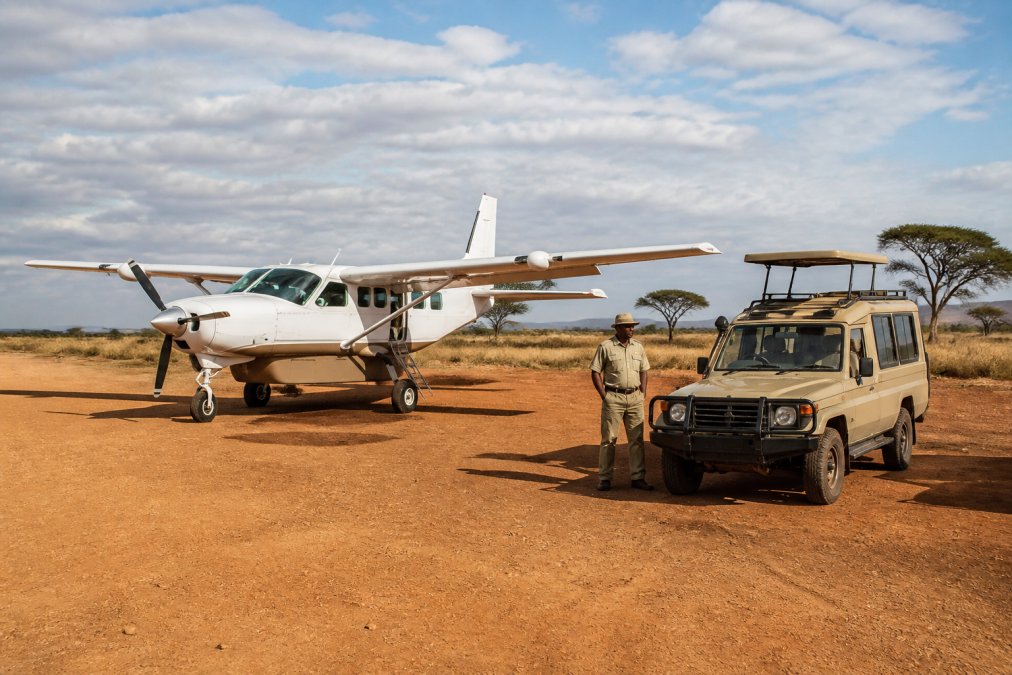
Bush Flights vs. 4x4 Safari Vehicle Road Transfers
Bush flights are the fastest way to move between Tanzania's national parks. A flight from Arusha to the Serengeti takes roughly 90 minutes versus a full day by road. However, bush flights operate on weight restrictions, typically 15 kg of soft-sided luggage per passenger, and schedules depend on weather and passenger loads.
Road transfers by 4x4 safari vehicle offer a different experience. The drive through the Rift Valley escarpment between Arusha and Ngorongoro is itself a wildlife corridor. Many travelers combine road transfers on the outbound leg and a bush flight on the return to optimize both time and experience.
Step 4: Book Tanzania Safari Accommodation That Fits Your Trip
Accommodation choice directly affects your proximity to wildlife, your ability to do early morning game drives, and your overall itinerary optimization.
Lodges, Tented Camps, and Budget Options Compared
Tanzania's accommodation spectrum runs from ultra-luxury permanent lodges to mobile tented camps to budget bandas inside park boundaries. The key logistical variable is location: accommodation inside or on the boundary of a national park allows pre-dawn game drives and eliminates daily commute time.
Tented camps offer en-suite bathrooms and full service while maintaining the sensory experience of being in the bush. Mobile tented camps follow the migration seasonally and require more flexible booking windows. Lodges outside park gates are practical for budget-conscious travelers, but factor in daily park entry fees and transfer time when comparing true costs.
Accommodation Booking Requirements and Lead Times
All accommodation providers operating within national park boundaries must hold a valid Tanzania Tourism Board license. Verify this before booking.
Lead times vary sharply by tier. Peak season lodges in the Serengeti and Ngorongoro require 9 to 12 months' advance booking. Shoulder season availability opens at 3 to 6 months. Budget options can often be secured within 4 to 6 weeks.
Step 5: Secure Your Travel Documentation and Park Entry Permits
Documentation failures are the most avoidable and most common source of safari disruption.
eVisa, Yellow Fever Certificate, and Travel Insurance
Tanzania operates an eVisa system for most nationalities, processed online before travel. Processing typically takes 3 to 10 business days. Apply at least three weeks before departure.
The yellow fever certificate is non-negotiable if you are arriving from or transiting through a yellow fever endemic country. Carry the physical certificate; digital copies are not universally accepted.
Travel insurance for a Tanzania safari should specifically cover emergency medical evacuation. Medical evacuation by air to Nairobi or Dar es Salaam is the realistic response to serious injury or illness in the bush.
Park Entry Permits, Conservation Fees, and National Park Regulations
Park entry permits and conservation fees are charged per person per day and vary by park. The Tanzania National Parks Authority manages fees for parks including the Serengeti, Tarangire, Lake Manyara, and Arusha National Park. Ngorongoro Conservation Area is managed separately and carries its own fee structure.
Fees are denominated in US dollars for non-residents and are subject to annual revision. Your operator should provide a current, itemized fee breakdown before you pay any deposit. Most quoted safari prices exclude park entry permits unless explicitly stated.
Step 6: Build Your Tanzania Safari Cost Breakdown and Budget
Tanzania safari cost planning requires separating the quoted package price from the true total cost of the trip.
Hidden Costs Most Travelers Miss
Common hidden costs include park entry permits and conservation fees, domestic bush flight luggage overweight fees, visa and yellow fever certificate processing, travel insurance with evacuation coverage, laundry services at remote camps, alcohol and premium beverages at lodges, and optional activities such as hot air balloon rides.
Tipping Guidelines and Ground Handling Fees
Tipping is an expected and meaningful part of Tanzania safari culture. Guides, camp staff, and drivers depend on gratuities as a significant portion of their income. Industry convention suggests tipping your private guide more generously than camp staff.
Ground handling fees, charged by local operators for logistics coordination, airport transfers, and inter-camp communication, are sometimes itemized separately and sometimes bundled. Ask your operator to clarify before signing any agreement.
Simcha African Safaris Limited offers flexible safari durations from 3 to 7 days and can provide a detailed, itemized quote based on your specific dates and preferences.
Tanzania Safari Packing List: What to Bring and Why It Matters
The Tanzania safari packing list is shorter than most travelers expect, but every item earns its weight.
Clothing: Neutral-colored, lightweight layers are standard. Early morning game drives can be cold, particularly from June to August. Pack one warm fleece or jacket, long-sleeved shirts for sun and insect protection, and quick-dry trousers.
Footwear: Comfortable walking shoes for lodge grounds and one pair of sandals.
Health and documentation:
- Yellow fever certificate (physical copy)
- eVisa confirmation printout
- Travel insurance policy with evacuation coverage
- Prescription medications in original packaging
- Malaria prophylaxis, confirmed with your travel health clinic before departure
- High-SPF sunscreen and insect repellent
Photography: A long lens, 300mm or above, is worth the bag space. Dust is relentless; bring a protective bag for camera equipment.
Luggage: Soft-sided bags only if you are taking bush flights. Hard-shell suitcases cannot be loaded into small aircraft cargo holds.
Sustainable, Accessible, and Remote-Work-Friendly Tanzania Safari Logistics
Eco-Conscious Safari Choices and Conservation-First Operators
Sustainable safari logistics start with operator selection. Look for operators who contribute directly to community conservancies adjacent to national parks. These conservancies extend wildlife habitat beyond park boundaries and generate income for local communities.
Accommodation choices matter too. Camps with solar power systems, grey water recycling, and locally sourced food supply chains have a measurably lower footprint than generator-dependent lodges.
Accessibility and Mobility Logistics for All Travelers
Tanzania's national parks are more accessible than many travelers assume, but logistics require advance planning. Game drive vehicles can be adapted for travelers with mobility limitations, and several lodges offer ground-floor accommodation and accessible bathroom facilities.
Travelers with respiratory conditions should note that altitude varies significantly across the northern circuit. The Ngorongoro Crater rim sits above 2,300 meters.
Digital Nomad and Remote Work Considerations on Safari
Connectivity in Tanzania's national parks is limited by design and by infrastructure. Most tented camps and lodges offer no Wi-Fi inside park boundaries. Some Arusha-based lodges offer reliable connections suitable for video calls and file transfers.
The practical approach for digital nomads: front-load work obligations in Arusha before entering the parks, or build a Zanzibar segment into the end of your itinerary. Zanzibar's main towns offer reliable 4G connectivity and co-working spaces.
Planning Tanzania safari logistics across permits, transport modes, accommodation tiers, and documentation is genuinely complex. Simcha African Safaris Limited handles the full logistical coordination, from curated game drives in iconic national parks to combination itineraries that include whale shark adventures and hot air balloon rides, with flexible durations from 3 to 7 days tailored to your exact schedule. Request a quote from Simcha African Safaris Limited and get a detailed, itemized itinerary built around your travel dates, budget, and priorities.
Frequently Asked Questions
How far in advance should I plan Tanzania safari logistics?
For peak season travel (July-October and January-February), booking at least six to nine months ahead is strongly advisable. Popular tented camps and lodges near the Serengeti fill up quickly during the Great Migration window. Shoulder season trips can sometimes be arranged with three to four months' notice, but earlier booking always gives you more accommodation choices, better itinerary optimization, and time to sort your eVisa, yellow fever certificate, and park entry permits without rushing.
What is the best time to visit Tanzania for a safari?
The best time to visit Tanzania safari-style depends on what you want to see. July to October (dry season) offers excellent wildlife viewing across the northern circuit, including the Serengeti and Ngorongoro. January and February are ideal for witnessing calving season during the Great Migration. The shoulder seasons (November and March-June) bring fewer crowds and greener landscapes. Each period has trade-offs in terms of weather, wildlife concentration, and accommodation availability, so aligning your goals with the season is a key part of logistical coordination.
What should I pack for a Tanzania safari?
A practical Tanzania safari packing list includes neutral-coloured, lightweight clothing (khaki, olive, beige), a wide-brimmed hat, quality sunscreen, insect repellent with DEET, a headlamp, binoculars, a dust-proof camera bag, and sturdy closed-toe shoes. For bush flights, pack soft-sided bags only, weight limits are strict. Add a fleece or light jacket for early morning game drives, which can be surprisingly cold. Always carry copies of your travel documentation, travel insurance details, and any required prescription medications.
Should I book a private or group safari in Tanzania?
Private guided safaris offer flexible itinerary planning, personalised game drives, and the ability to tailor every logistical detail, ideal for couples, families, or anyone with a specific timeframe like five days rather than a standard week. Group tours reduce per-person costs and suit solo travellers wanting company. The right choice depends on your budget, travel style, and how much control you want over pacing. A reputable operator can build a custom itinerary for either format, so discuss your priorities before committing.
What types of accommodation are available on a Tanzania safari?
Tanzania safari accommodation ranges from permanent lodges with en-suite rooms and full amenities to classic tented camps that place you closer to nature with canvas walls and outdoor showers. Mobile tented camps follow the Great Migration seasonally. Budget travellers can find public campsites within national parks, while luxury travellers gravitate toward private conservancy lodges with exclusive wildlife viewing. Booking requirements, cancellation policies, and conservation fee inclusions vary significantly by property type, so confirm all details during the planning stage.
What are the hidden costs in Tanzania safari planning?
Beyond the headline package price, common hidden costs in Tanzania safari logistics include conservation fees, park entry permits charged per person per day, domestic transfer fees between parks, bush flight excess baggage charges, tipping for guides and camp staff (a standard and expected practice), and travel insurance. Some operators exclude these from quoted prices. Always request a fully itemised cost breakdown before booking, and ask specifically what ground handling and logistical coordination fees are included so there are no surprises on arrival.
This article was written using GrandRanker


