

Table of Contents
- What Community Based Tourism Actually Delivers in Tanzania
- Jobs, Income Diversification, and Poverty Reduction
- Community Tourism and Local Economic Development
- Cultural Community-Based Tourism in Tanzania: Heritage, Exchange, and Authentic Experiences
- Community-Based Tourism and Wildlife Conservation: Where the Money Goes
- Challenges of Community-Based Tourism in Tanzania: Trade-Offs and Uneven Impacts
- How Travelers Can Identify and Support Genuinely Community-Led Tourism
- Conclusion: What the Benefits Mean for Your Trip
- Frequently Asked Questions
Last Updated: October 4, 2026
What Community Based Tourism Actually Delivers in Tanzania
Community based tourism is a model where travelers stay in, eat with, and pay directly to local communities rather than to outside operators. In Tanzania, that distinction matters more than most safari brochures admit. At Simcha African Safaris Limited, we route visitor spending toward villages near the parks and on the slopes of Kilimanjaro, because the benefits of community based tourism in Tanzania are real but unevenly spread.
Who Benefits and Who Doesn't
The clearest winners are households near gate communities: lodge staff, guides, cooks, drivers, and craft sellers. Those who benefit least are people without land near a route, women with caregiving duties, and villages outside the main safari circuit. Assuming "community tourism" means every resident shares equally is a common mistake.
Jobs, Income Diversification, and Poverty Reduction
Employment creation is the most direct benefit. Lodges, camps, and cultural tourism programs hire locally for housekeeping, security, guiding, and food service, and those salaries circulate through the village. Income diversification matters just as much: a farmer who also sells produce to a camp, or a mother who weaves baskets for guests, has supplementary income when the harvest fails.
Direct Tour Fees and Benefit Sharing
Direct tour fees are the most transparent revenue stream. When a village sets its own entry fee for a cultural visit, that money stays under local control. Benefit sharing works best when a written agreement states the split between the community fund, the guides, and the performers. Many communities now publish these terms at the gate.
| Benefit Type | Who Receives It | How It Reaches Them |
|---|---|---|
| Salaries | Lodge and camp staff | Monthly wages |
| Direct tour fees | Village fund and guides | Cash at the gate |
| Craft sales | Artisans and vendors | Point-of-sale payment |
| Produce supply | Local farmers | Wholesale contracts |
Community Tourism and Local Economic Development
Community tourism and local economic development connect through small business growth, and the connection is easiest to see in specific places rather than in the abstract. A camp that buys vegetables, eggs, and honey from nearby farms keeps money in the region instead of importing it from Arusha or Dar es Salaam. That spending builds local markets, and local markets build the infrastructure that villages need anyway: better roads, water points, and mobile coverage.
Where the Money Actually Circulates
Three Tanzanian community tourism models show how differently local economic development plays out:
- Wildlife Management Areas (WMAs) on the northern circuit. Villages adjacent to Tarangire, Lake Manyara, and the Serengeti set aside land as a WMA and earn tourism revenue through photographic safaris, walking safaris, and hunting concessions. Revenue is paid to an authorized association required to distribute a share to member villages, but villages closest to the gate and best organized at committee level capture the largest share; those farther from the road receive less.
- Cultural tourism programs around Kilimanjaro and Arusha. Villages near Machame and Marangu run cultural tourism enterprises offering coffee tours, banana-beer brewing demonstrations, traditional dance, and craft markets. These are smaller and village-controlled, so a larger share of the fee reaches households, but visitor numbers are lower and more seasonal.
- Coastal and island community tourism. Villages on the coast and on Zanzibar and Pemba run spice tours, dhow sailing, seaweed farming visits, and village homestays. Here the leakage risk is highest, because imported food, fuel, and supplies can drain revenue before it reaches local producers.
Small and Micro Entrepreneurs: Who Sells What
Small and micro entrepreneurs fill the gaps big lodges ignore: the woman selling roasted maize at a trailhead, the mechanic servicing safari vehicles, the family renting out a spare room, the tailor making uniforms for lodge staff, the farmer delivering produce by pickup each morning.
The first businesses to grow have the shortest supply chain to the visitor: food, transport, laundry, and repairs. Craft and cultural services grow next, once visitor numbers justify inventory. Businesses depending on a single lodge or tour operator are most vulnerable when bookings fall.
| Local Business Type | Typical Buyer | Main Barrier to Entry |
|---|---|---|
| Produce and dairy supply | Lodges, camps, cultural programs | Cold storage, reliable delivery |
| Vehicle repair and fuel | Safari operators, guides | Tools, spare parts, credit |
| Craft and art sales | Visitors, gift shops | Market access, pricing power |
| Homestay and room rental | Independent travelers | Standards, booking platforms |
| Food stalls and guiding | Day visitors | Licensing, seasonality |
What Makes Local Spending Stick
Local economic development lasts when three conditions are met: a written agreement on how revenue is split, residents with the skills to run the enterprise without outside management, and more than one customer.
Infrastructure follows the same logic. When a WMA or cultural program generates predictable revenue, villages prioritize water points, classroom repairs, and road maintenance because those investments support the tourism business itself.
Cultural Community-Based Tourism in Tanzania: Heritage, Exchange, and Authentic Experiences
Cultural community-based tourism in Tanzania is where heritage preservation and visitor experience meet. When a village earns income from its own traditions, it has a financial reason to keep them alive: the songs, dances, craft techniques, and language.
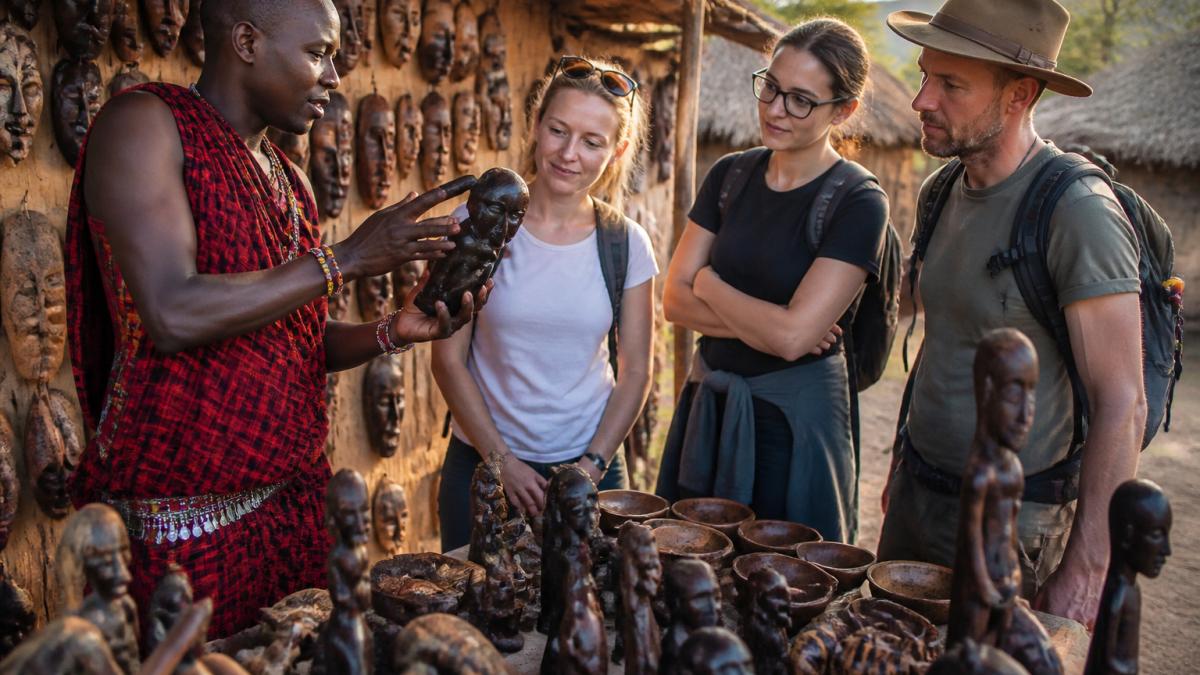
Authentic experiences also protect traditional knowledge: when elders are paid to teach, younger people see a future in the craft. We stock handcrafted pieces like the African Tribal Maasai Traditional Mask and the African Heritage Sculpture so the money you spend on art goes back to the makers rather than a middleman.


Community-Based Tourism and Wildlife Conservation: Where the Money Goes
Community-based tourism and wildlife conservation are linked by one simple fact: if wildlife costs a village more than it earns, the village stops protecting it. When tourism revenue reaches households near protected areas, conservation awareness grows because animals become an asset rather than a threat to crops and livestock. The UN Environment Programme has long argued that community benefit sharing is central to protecting biodiversity in East Africa.
Conservation Awareness and Environmental Protection
Environmental protection improves when communities police their own land. Villages that earn from tourism report crop raiding, poaching, and illegal logging because the loss is theirs to bear. That is a stronger deterrent than any outside patrol.
Zanzibar in African Oil Canvas Painting →
Challenges of Community-Based Tourism in Tanzania: Trade-Offs and Uneven Impacts
Challenges of community-based tourism in Tanzania come down to power, money, and timing. The benefits are real but not automatic, and the same program can look very different from the gate, the committee room, and a household on the edge of the village. Naming the trade-offs separates a credible program from a marketing claim.
Elite Capture and Unequal Access
Elite capture is the biggest risk: a few well-connected families control the committee, the fees, and the jobs while everyone else watches. Most practitioners treat it as the default unless a program has explicit safeguards. Warning signs:
- The same names appear on the committee year after year.
- Jobs go to relatives of committee members rather than to a posted hiring process.
- Meeting minutes and fee splits are not shared publicly.
Safeguards include rotating leadership, publishing the benefit-sharing agreement at the gate, hiring through a posted process, and reserving revenue for households that cannot work in tourism directly, elders, caregivers, and people with disabilities.
Seasonality and Income Volatility
Tourism income in Tanzania is seasonal. The high season for northern-circuit safaris runs roughly June through October, with a second peak around the December holidays and a quieter period during the long rains; cultural programs near Kilimanjaro and Arusha follow a similar pattern. For a household depending on tourism, that means several months of low or no income each year.
Revenue Leakage
Leakage is the share of visitor spending that leaves the community before it reaches local hands: lodges importing food and supplies, tour operators based outside the region, crafts bought from wholesalers rather than makers, profits repatriated to owners who do not live in the village. Leakage is highest in coastal and island destinations and lowest in small, village-run cultural programs where the fee is collected and spent locally.
Cultural Commodification
When traditions are shortened and staged for quick turnover, they lose meaning for the community and authenticity for the visitor. A 20-minute dance performed six times a day is not the same as a ceremony tied to a real event. Staging makes traditions accessible and generates income, but over-staging hollows them out. Programs that rotate performers, pay elders to teach, and let visitors participate rather than just watch preserve more of the original practice.
Environmental Pressure
More visitors mean more water use, waste, trail erosion, and disturbance to wildlife. Villages that earn from tourism have a strong incentive to protect the resource, but only if revenue actually reaches them and visitor numbers are capped. Uncontrolled growth can turn a conservation success into a conservation problem within a few seasons.
Uneven Impacts Across the Country
Benefits are not spread evenly across Tanzania. Communities near the northern circuit and Kilimanjaro capture more tourism revenue because they sit on the main routes and have more established programs. Communities in the south, the west, and along the coast often see fewer visitors and less revenue, even with comparable natural and cultural assets. Within a single village, households with land near the road, English-language skills, or capital to invest in a small business capture more of the benefit.
How Travelers Can Identify and Support Genuinely Community-Led Tourism
Genuinely community-led tourism is easy to spot if you know what to ask. Look for local ownership, local decision-making, and a stated benefit-sharing agreement. Ask who owns the camp, who sits on the committee, and where the fee goes. A program that answers clearly is usually the real thing. The Global Sustainable Tourism Council publishes criteria that separate genuine community participation from marketing claims.
- Ask who owns the business and who sits on the governing committee
- Request the benefit-sharing agreement in writing
- Check whether guides and staff are hired from the village
Conclusion: What the Benefits Mean for Your Trip
Community based tourism in Tanzania works best when visitors treat it as a partnership rather than an add-on. The benefits are real: jobs, supplementary income, cultural preservation, and stronger conservation. Simcha African Safaris Limited builds cultural visits, Kilimanjaro hikes, and Big Five game drives into UNESCO World Heritage sites, with flexible durations from 3 to 7 days and handcrafted African art sourced from the makers themselves.
Frequently Asked Questions
What are the main benefits of community based tourism for Tanzanian communities?
The benefits fall into four categories: employment creation and salaries for local jobs, income diversification that supplements farming or fishing income, direct tour fees and benefit sharing that fund schools or infrastructure, and cultural preservation as traditional knowledge becomes economically valued. Conservation also benefits when communities earn revenue from wildlife areas. The distribution is rarely equal, though, and communities closest to tourism routes tend to capture more of the economic benefits than remote villages.
How does community-based tourism and wildlife conservation work together in Tanzania?
When communities receive direct tourism revenue from nearby wildlife areas, the economic case for protecting habitat becomes stronger. Conservation awareness grows because residents see animals and landscapes as income-generating assets rather than threats to crops or livestock. Benefit sharing arrangements route a portion of tour fees back to villages, which reduces poaching incentives and supports environmental protection. The model works best when local decision-making bodies control how funds are allocated.
What are the main challenges of community-based tourism in Tanzania?
Key challenges include barriers to participation such as limited capital, English language skills, or distance from tourism routes. Power imbalances often mean outside operators capture most revenue while local communities receive a small share. Governance issues arise when community organizations lack transparency or when political benefits override economic ones. Seasonality creates unstable income. Infrastructure gaps, including roads and reliable electricity, limit which communities can host visitors at all.
How can travelers choose a responsible community-based tourism experience?
Ask who owns and manages the operation, not just who staffs it. Genuine community-led tourism involves local ownership and local decision-making about how revenue is used. Look for published benefit-sharing details or ask what percentage of your tour fee stays in the community. Smaller group sizes and longer stays typically mean more visitor contact and higher local economic benefits. If a cultural experience feels staged for tourists rather than shared with them, it may not be community-led.


