

Table of Contents
- Why Tanzanian Tribal Masks Belong in a Considered Interior
- How to Tell If an African Mask Is Authentic
- African Mask Provenance and Documentation: What Should Come With the Piece
- Materials, Finishes, and Price: Evaluating Tanzanian Tribal Masks
- Tanzanian Wood Carvings for Home Decor Beyond the Mask
- How to Display African Masks Respectfully in Your Home
- Import Rules, Ethical Sourcing, and Caring for Your Mask
- Frequently Asked Questions
Last Updated: October 18, 2026
Why Tanzanian Tribal Masks Belong in a Considered Interior
A hand-carved mask does something a mass-produced print never can: it carries the mark of the person who made it.
The masks we offer come directly from Tanzania's cultural landscapes.
Here is what most guides get wrong: they treat a mask as a souvenir. It is not. It is a carved object with a specific origin, a specific maker, and a specific cultural meaning.
How to Tell If an African Mask Is Authentic
Authenticity comes down to three things: tool marks, material, and a seller who can answer questions without flinching. Machine reproduction leaves uniform surfaces and identical copies. A genuine piece shows the small irregularities of handwork.
Signs of Hand-Carving Versus Machine Reproduction
Look closely at the surface. A hand-carved wooden mask will show subtle variations in depth, chisel marks, and slight asymmetry between the left and right sides. Machine copies repeat perfectly and feel flat under your thumb.
- Tool marks: fine gouges and knife facets, not sanded-to-plastic smoothness
- Weight and density: real hardwood feels heavier than resin or softwood
- Interior: the back of a carved mask is often rough and unfinished
- Consistency: two "identical" masks side by side is a red flag
What to Ask a Seller Before You Buy
A confident seller welcomes questions. A vague one does not. Ask where the piece was carved, which community or carver made it, and what the design signifies. Ask for close-up photos of the back and edges. If the answers are generic or the seller dodges, walk away.
African Mask Provenance and Documentation: What Should Come With the Piece
Provenance is the recorded history of an object: who made it, where it traveled, and how it reached the seller.
Documentation does not need to be elaborate. A signed note, a receipt with those details, and clear photographs are enough to start a record you can keep.
This matters for two reasons. It protects your investment if you ever resell, and it keeps the cultural story attached to the object. A mask without context is just decor.
Materials, Finishes, and Price: Evaluating Tanzanian Tribal Masks
Material and finish tell you how a mask was made and how it will age. Price should follow craftsmanship, not size alone. A small, finely carved piece often outvalues a large, crude one. Most buyers overpay for scale and underpay for detail.
Mpingo Wood and Other Natural Materials
Mpingo is a dense, dark hardwood prized across East Africa for carving. Our African Tribal Maasai Traditional Mask is carved from mpingo, a tree the listing notes is valued for its strength and spiritual significance.

Compare that with our African Tribal Chagga Traditional Mask at $120.99, tied in Chagga tradition to power and worn historically by chiefs, and the African Tribal Wasukuma Traditional Mask at $120.99.


| Mask | Material | Cultural Meaning | Price |
|---|---|---|---|
| Maasai Traditional Mask | Mpingo wood | Strength and spirituality | $130.99 |
| Chagga Traditional Mask | Mpingo wood | Power, worn by chiefs | $120.99 |
| Wasukuma Traditional Mask | Mpingo wood | Market and trade tradition | $120.99 |
| Mpingo Wood Heritage Mask | Mpingo wood | Rite-of-passage celebration | $120.99 |
Other woods appear in the market, and each behaves differently.
What Actually Drives Price
Consider these five factors before looking at the number on the tag:
- Workmanship: crisp tool marks, symmetrical features, and a cleanly finished interior justify a premium. Sanded-to-plastic surfaces and sloppy edges do not.
- Material: mpingo and other dense hardwoods cost more and last longer than softwoods. Ask what species was used and whether it was legally harvested.
- Provenance: a named carver, community, or workshop adds documented value. A generic "African mask" label adds none.
- Condition: original finish and intact features command more than repaired or heavily refinished pieces.
- Size: larger pieces use more material and are harder to ship, but size alone should not double a price if detail is coarse.
A practical rule: anything dramatically cheaper than our offerings deserves a hard look at material and origin.
Finish, Age Claims, and Condition Checks
Finish matters. Natural oiled wood ages gracefully; heavy lacquer can crack and is hard to repair.
Age claims are where buyers get burned. A genuinely old piece usually shows patina in the handling areas, slight wear on high points, and a stable, dry surface.
Inspect for condition before you commit:
- Cracks: hairline cracks along the grain are common in wood and often stable; cracks across the grain or through carved features are weaker points.
- Repairs: look for glue lines, filler, mismatched stain, or replaced parts. Repairs are not disqualifying, but they should be disclosed and priced in.
- Pests: fine dust or tiny exit holes can indicate wood-boring insects. Reject active infestations.
- Warping and splits: check the back for cupping, which suggests moisture exposure.
takeaway Price the piece, not the story. A fair price reflects material, workmanship, provenance, and condition, in that order, and a good seller will walk you through all four.
Tanzanian Wood Carvings for Home Decor Beyond the Mask
Masks are the headline, but they work best as part of a wider story. Tanzanian wood carvings for home decor include bowls, figures, and wall pieces that share the same material language and let you build a cohesive collection rather than a single showpiece.
African Tribal Maasai Traditional Mask →
Our African Mpingo Wood Heritage Mask at $120.99, used in Wahaya tradition to mark a boy's passage into manhood, pairs well with a carved bowl or a small figure on the same shelf. The shared mpingo tone ties the grouping together.
How to Display African Masks Respectfully in Your Home
Respectful display means treating the mask as art with a story, not a novelty. Mount it at eye level, give it breathing room, and let the cultural meaning inform where and how it hangs.
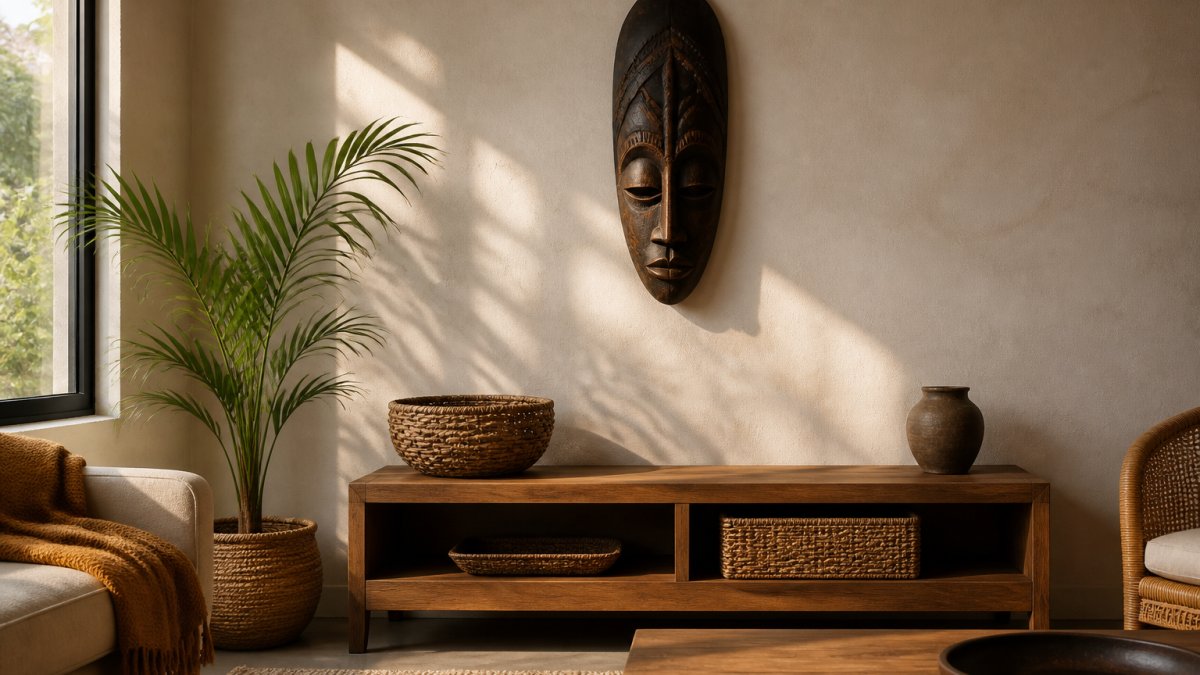
Wall Placement, Lighting, and Grouping
Hang a mask at eye level on a wall with space around it. Avoid direct sunlight, which fades finishes and dries wood. Soft, warm lighting brings out carving depth without glare.
For groupings, use odd numbers and vary height. A cluster of three masks with related tones reads as a curated collection. Keep them away from humid bathrooms and heat sources.
Import Rules, Ethical Sourcing, and Caring for Your Mask
Bringing carved wood into the United States involves real rules, and responsible buying does not stop at the checkout. This section covers the paperwork to expect, the questions that separate ethical sellers from opportunists, and how to keep a carved mask sound for decades.
Import Rules and Protected Cultural Property
Wooden handicrafts may be subject to inspection for pests and plant-health concerns. Before you travel or ship, check current requirements with U.S. Customs and Border Protection and be ready to declare what you are bringing in.
Protected cultural property has additional restrictions. The United States is a party to the 1970 UNESCO Convention on cultural property, implemented in part through the Cultural Property Implementation Act, and antiquities or objects of archaeological or ethnographic significance can face import restrictions. In practice, that means:
- Buy from sellers who can document lawful origin and export.
- Be cautious with pieces described as antique, ceremonial, or museum-quality without paperwork.
- Keep receipts, seller correspondence, and any provenance documents with the object.
If a seller cannot explain how a piece left its country of origin, that is a reason to walk away, regardless of how good the mask looks.
Ethical Sourcing and Artisan Compensation
Ethical sourcing is the other half of authenticity. Ask how the carver is compensated and whether the piece was made for sale rather than taken from a heritage site. Responsible sellers pay artisans fairly, buy through known workshops, and can explain the chain from workshop to buyer.
Questions worth asking:
- Who carved this piece, and can you name the workshop or community?
- Was it made for sale, or is it a used or ceremonial object?
- How is the carver paid, and is the price consistent with fair compensation?
- Do you have photos or records of the piece before it was shipped?
A seller who answers these plainly is usually the same seller who documents origin. A seller who deflects is telling you something too.
Caring for and Conserving Your Mask
Care is simple but not optional. Dust with a soft dry cloth, keep humidity stable, and apply a light natural wood oil sparingly once a year if the surface looks dry. Never soak or scrub a carved mask, and avoid household cleaners, which can strip finish and raise grain.
A few habits prevent most damage:
- Humidity: keep the piece in a stable indoor environment; avoid bathrooms, kitchens, and rooms that swing between damp and dry.
- Sunlight: display away from direct sun, which fades finishes and dries wood.
- Heat: keep masks off radiators, fireplaces, and heating vents.
- Handling: lift by the body, not by protruding features, and wear clean gloves if the surface is fragile.
- Pests: inspect periodically for fine dust or exit holes, and act quickly if you see them.
If a piece develops a loose repair or an active crack, consult a conservator rather than reaching for glue. Reversible, professional treatments protect value; amateur fixes usually reduce it.
Keep a small card behind each mask noting the carver, region, and date you bought it. Future you, and any buyer, will thank you.
Frequently Asked Questions
How can you avoid buying a reproduction marketed as authentic?
Look for tool marks, uneven edges, and grain that follows the carving rather than a molded or laser-cut surface. Ask the seller for the carver's name, the tribe or region the design comes from, and photos of the back of the mask. A reproduction often has identical siblings, so request a photo of the exact piece you will receive. Buying from a seller who can describe the material, such as mpingo wood, and the cultural meaning behind the design is a stronger signal than a generic 'handcrafted' label.
What materials are Tanzanian tribal masks made from?
Most traditional Tanzanian tribal masks are carved from wood, and mpingo is one of the most valued timbers because of its density and dark finish. Mpingo is used in Maasai, Chagga, Sukuma, and Wahaya mask traditions, each with its own meaning. Some pieces are painted, some are left with a natural finish, and some incorporate pigment or fiber. When you buy, confirm the wood species and finish in the listing, and check that the seller can explain why that material was chosen.
How do you display a Tanzanian mask respectfully in a home?
Mount the mask at eye level on a stable interior wall away from direct sun and damp, and use a proper bracket rather than nails through the carving. Treat it as a cultural object, not a costume prop: avoid pairing it with stereotypical safari-themed decor, and place it where it can be seen as a focal piece. If you group several masks, give each one space and label the tribe and region if you know it. Keeping the cultural context visible is the simplest way to show respect.
How should you care for a wooden mask?
Keep the mask out of direct sunlight and away from heat sources, which dry the wood and cause cracking. Dust with a soft dry cloth rather than a wet one, and avoid furniture polish on unpainted surfaces. Indoor humidity between roughly 40 and 60 percent suits most carved wood. Check the mounting bracket once a year, and if you store a mask, wrap it in acid-free tissue and keep it flat rather than hanging. Inspect for insect damage, especially in older pieces.
Buying authentic Tanzanian tribal masks takes a little homework, but the payoff is a piece with a real story and real value. Simcha African Safaris Limited sources handcrafted masks directly from Tanzanian carving traditions, and our curated safaris let you meet the culture behind every piece. Explore our handcrafted African art collection, or request a quote for a safari that brings you face to face with the artisans themselves.


