

Table of Contents
- Why Mpingo Wood Art Belongs in Your Collection
- How to Identify Ebony Wood in Carvings
- Tanzania Wood Carving Meanings and Symbolism
- Authenticity Checklist Before You Buy
- Caring for Ebony Carvings at Home
- Ethical Sourcing and Legal Considerations
- Pricing, Valuation, and Building a Collection
- Conclusion
- Frequently Asked Questions
Last Updated: October 17, 2026
Why Mpingo Wood Art Belongs in Your Collection
Mpingo wood art is hand-carved sculpture made from African blackwood (Dalbergia melanoxylon), a dense, slow-growing tree found across Tanzania and East Africa. This guide exists to close that gap.

Here is the first thing most buyers get wrong: they assume dark means real. It doesn't. Mpingo is prized less for its color than for its density, its fine grain, and the way a carver can hold detail in it that softer woods simply cannot support.
That matters because the market is full of ebony-labeled carvings that are nothing of the sort. Below, we walk through identification, symbolism, authenticity checks, care, sourcing ethics, and pricing, so you can buy with confidence rather than hope.
How to Identify Ebony Wood in Carvings
Learning how to identify ebony wood starts with weight and grain, not color. Genuine Mpingo is unusually heavy for its size and shows a tight, interlocking grain with a pale sapwood edge on unfinished pieces. But informal tests have limits, and the most reliable approach combines several clues rather than relying on any single one.
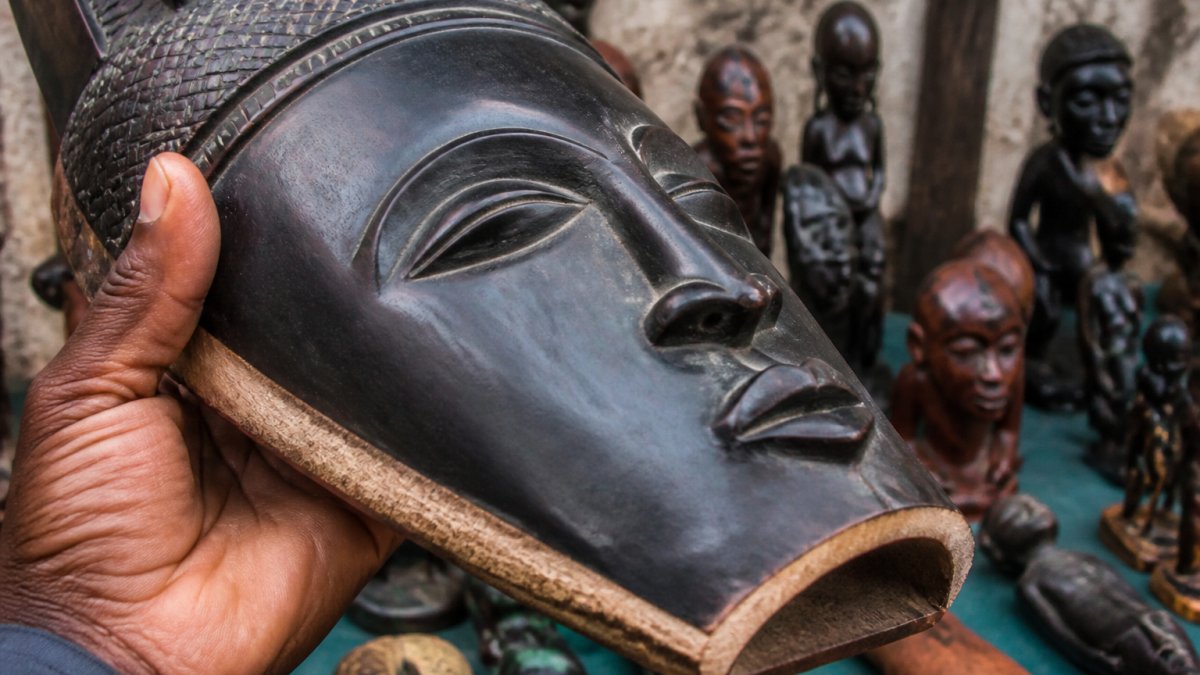
Run through this sequence before you commit, and treat each result as one piece of evidence rather than proof:
- Weight and density: Mpingo is dense enough that a small carving feels unexpectedly heavy in the hand. A common practitioner test is whether a small offcut or hidden area sinks in water, while many lookalikes float. Do not submerge a finished piece you do not own; ask the seller whether they can demonstrate density on an offcut or inconspicuous area.
- Grain and pore structure: Genuine African blackwood shows a fine, tight grain with small pores, not the open, coarse pores typical of softer dark woods. Examine an unpolished area, such as the base or the inside of a hollow, under raking light.
- Sapwood edge: Authentic pieces often show a lighter band where the dark heartwood meets the pale outer sapwood. A uniformly jet-black surface with no variation at all is a reason to look closer, not a guarantee of authenticity.
- Finish and surface honesty: Shoe polish, wax, and dye are common on blackened wood. A uniform, opaque black with no visible grain may indicate a dyed softer wood. Ask what finish was applied and whether the grain is visible beneath it.
- Tool marks and form: Hand-carved Mpingo typically shows chisel and knife marks consistent with the maker's hand, especially on the base and less-visible surfaces. Molded or routed edges that repeat identically across pieces suggest reproduction rather than hand-carving.
- Smell: Freshly carved Mpingo has a faint, distinctive scent. Imitations often smell of dye, varnish, or nothing at all. Smell is a weak signal on finished pieces and should never be the deciding test.
A common mistake is judging a piece by its sheen. Polish tells you how someone finished a carving, not what the carving is made of. Equally, color alone is unreliable: many dark woods and dyed softwoods can mimic the look of Mpingo, and some genuine pieces are lighter or more figured than buyers expect.
Distinguishing Mpingo from other dark woods is where informal identification reaches its limit. Visual and physical clues can raise or lower confidence, but they cannot confirm species. When a piece is expensive, when the seller's story is thin, or when the surface has been heavily finished, the responsible step is expert assessment, such as a wood technologist or a conservator who can examine end grain and, where appropriate, arrange laboratory identification.
Tanzania Wood Carving Meanings and Symbolism
Tanzania wood carving meanings vary by tribe and subject, and the Makonde tradition carries most of the symbolism collectors recognize. The Ujamaa style, for example, stacks human figures into a tower representing family and community, while the Tree of Life sculpture links generations in a single carved column.
Makonde carvers traditionally work from a single piece of wood, letting the figure emerge from the trunk rather than joining sections.
Common subjects and what they tend to represent:
- Ujamaa figures: family unity and mutual support
- Tree of Life: ancestry and continuity
- Shetani figures: spirit figures drawn from Makonde storytelling
- Animal carvings: wildlife such as zebras and elephants, often stylized rather than realistic
- Masks: ceremonial and tribal identity, including Maasai and Wahaya traditions
Symbolism is where sellers exaggerate most. Ask what a piece represents and why. A carver or reputable dealer can explain the tradition behind a subject.
Authenticity Checklist Before You Buy
Authenticity in Mpingo wood art comes down to provenance, material, and the maker's hand. Work through this checklist before any purchase, in person or online:

- The seller can name the carver or the workshop
- The piece shows tool marks consistent with hand-carving, not molded edges
- Weight and grain match genuine African blackwood
- The finish is honest about what it is, including shoe polish or wax
- The seller explains the subject's meaning without prompting
- Dimensions and material are stated in writing
- There is a return policy if the piece fails inspection
- Photos show the base, the back, and any sapwood edge
If a seller cannot answer basic questions about origin and material, walk away. There is always another carving.
Caring for Ebony Carvings at Home
Caring for ebony carvings is mostly about moisture and light. Keep pieces out of direct sun and away from heating vents, and dust them with a soft dry cloth rather than a damp one.
Mpingo is dense and stable, but it still responds to humidity swings. A few practical habits keep a collection intact:
Mpingo wood candle holder. Hand carved candle holder set →
- Display away from windows and radiators
- Avoid polishing with silicone or oil-based products
- Reapply a thin coat of wax only when the surface looks dry
- Store smaller pieces wrapped in soft cloth, not plastic
- Handle masks by the edges to keep oils off the carved face
Ethical Sourcing and Legal Considerations
Ethical sourcing means buying from sellers who can document where the wood came from and how the piece was made. African blackwood is a slow-growing species under pressure from overharvesting, so provenance questions are not just legal box-ticking.
United States buyers should know that importing wildlife products and plant materials falls under U.S. Fish & Wildlife Service import regulations, and wood products can be subject to declaration requirements. Check the current rules before shipping anything home rather than relying on a seller's assurance.
The practical side of ethical buying:
- Ask whether the wood is sourced from managed stock
- Prefer carvers and cooperatives with a traceable supply chain
- Avoid pieces priced so low that the wood cannot plausibly be real
- Request documentation for anything shipped internationally
Pricing, Valuation, and Building a Collection
Pricing for Mpingo wood art reflects size, carving complexity, subject, and provenance, not just material. A small hand-carved piece and a large Ujamaa sculpture in the same wood can sit in entirely different price bands.
The main factors that move value:
- Size and material volume: Larger pieces use more slow-growing heartwood and take longer to carve. Size alone does not guarantee value, but it sets a floor for material and labor.
- Workmanship and complexity: Deep undercutting, single-block construction, fine detail, and consistent tool work command more than simple shapes. A Tree of Life column with many figures involves far more carving hours than a plain candle holder.
- Maker and tradition: A named carver or a recognized workshop with a traceable reputation supports a higher price than an unattributed piece. Makonde single-block carving, for example, carries a recognized tradition that buyers pay for.
- Condition: Cracks, repairs, loss of detail, and heavy refinishing reduce value. Original finish and intact carving are worth more than a piece that has been sanded or recoated.
- Provenance and documentation: Receipts, maker information, photographs, and a documented chain of ownership make a piece easier to insure and resell. Undocumented pieces trade at a discount because the next buyer carries the same uncertainty you do.
- Material honesty: A documented Mpingo piece supports a higher price than an ebony-labeled carving of uncertain wood. If the seller cannot explain the material, the price should reflect that risk.
For reference, our own hand-carved Mpingo pieces include a Mpingo wood candle holder set at $120.00, an African warrior mask in Mpingo wood at $140.00, a Maasai traditional mask at $130.99, and a Mpingo wood heritage mask at $120.99.

| Piece Type | Typical Price Band | What Drives Value |
|---|---|---|
| Candle holders, small carvings | $120 | Carving detail, finish |
| Masks | $121-$140 | Subject, tribal tradition, size |
These bands reflect our own inventory and are a starting point, not a market index. Prices vary by seller, region, and documentation. When comparing pieces, ask what is included: maker information, material description, dimensions, and any written record.
Build slowly. Start with one or two well-documented pieces, learn the grain and weight of genuine Mpingo in your hands, and expand from there. Keep a simple record for each purchase: price, date, seller, maker if known, dimensions, and photographs.
Conclusion
Simcha African Safaris Limited builds cultural discovery into our itineraries, from guided game drives in UNESCO World Heritage sites to encounters with the carvers and traditions behind this work. Our handcrafted African art collection lets you bring that heritage home with confidence.
Request a quote and start planning a trip where the art you buy has a story you actually witnessed.
Frequently Asked Questions
What is Mpingo wood, and why is it used for carvings?
Mpingo is the Swahili name for African blackwood (Dalbergia melanoxylon), a dense, dark wood found in Tanzania and other parts of East Africa. Carvers value it because it holds fine detail, polishes to a deep black finish, and resists wear. The heartwood is nearly black while the outer sapwood is pale, which helps with identification. Because the tree grows slowly, high-quality Mpingo is limited, which is why authentic pieces often cost more than carvings made from substitute woods.
How can you tell whether a Mpingo wood carving is authentic?
Look for a dark heartwood core with a lighter sapwood edge, tight grain, and noticeable weight for its size. Ask the seller about origin, the carver, and whether the piece is hand-carved from a single piece of wood. Genuine Mpingo wood art often shows slight irregularities from hand tools rather than uniform machine cuts. Request provenance documentation when buying online, and be cautious of pieces priced far below market for the size.
How should you care for a Mpingo wood carving?
Keep the carving out of direct sunlight and away from heating vents or humid bathrooms, since rapid moisture changes can cause cracking. Dust with a soft dry cloth, and avoid soaking or using harsh cleaners. A light application of a non-abrasive wood conditioner once or twice a year helps maintain the finish. Store smaller pieces in a padded box if you rotate your collection, and handle masks by the edges to avoid transferring oils to the surface.
Where can you buy authentic Tanzanian wood art safely?
Buy from established galleries, safari operators with curated art programs, or directly from carvers with verifiable reputations. Ask for the carver's name, the wood source, and photos of the piece from multiple angles before purchase. When buying online, use payment methods with buyer protection and confirm shipping and customs details in advance. Simcha African Safaris offers hand-carved Mpingo pieces, including candle holders and masks, sourced through their cultural programs.


