

Table of Contents
- Understanding Bush Plane Travel in Tanzania
- Tanzania Bush Flight Luggage Allowance and Weight Restrictions
- Essential Tanzania Safari Flight Packing List
- Health, Vaccination, and Travel Documents
- Tanzania Safari Airstrip Transfers and Airport Logistics
- Managing Tanzania Safari Flight Delays and Weather Challenges
- The Bush Plane Experience: What to Expect During Flight
- Safety Briefing, Emergency Procedures, and Peace of Mind
- Frequently Asked Questions
Last Updated: October 20, 2026
Understanding Bush Plane Travel in Tanzania
Learning how to prepare for bush plane travel in Tanzania starts with understanding that it's a small aircraft journey connecting remote safari lodges and airstrips across Tanzania's national parks. These light aircraft typically seat 4-20 passengers and operate on unprepared dirt airstrips rather than commercial airports. Bush plane travel is fundamentally different from commercial flying, the experience shapes your entire safari logistics, packing strategy, and comfort level.
The appeal is real. Bush planes bypass long road transfers and connect you directly to remote wildlife areas. But this convenience comes with specific constraints: strict weight limits, luggage size restrictions, and weather dependencies that commercial flights don't face. Understanding these realities upfront prevents frustration and ensures you pack smart.
Most travelers underestimate how different bush flying feels. The aircraft are smaller, the takeoffs and landings more pronounced, and the noise louder. Knowing what to expect transforms anxiety into anticipation. We'll walk you through every practical detail so you arrive prepared.
Tanzania Bush Flight Luggage Allowance and Weight Restrictions
Bush planes operate under strict weight limitations. Most charter operators impose a 20-kilogram luggage allowance per passenger, though some allow up to 25 kilograms on certain routes. This isn't negotiable, weight directly affects fuel consumption, takeoff distance, and safety margins on short airstrips.
Here's what this means in practice:
- A typical rolling suitcase weighs 3-4 kilograms empty
- That leaves 16-17 kilograms for actual clothing and gear
- One pair of boots, one pair of shoes, toiletries, and camera equipment add up quickly
Operators weigh luggage at check-in and enforce limits strictly. Excess baggage fees run high, often $2-3 USD per kilogram over the limit. The real problem isn't the fee; it's that overweight bags may be refused entirely, leaving your items behind.
Weight-saving strategy:
- Wear your heaviest items (boots, jacket) during travel instead of packing them
- Leave non-essentials at your hotel in Arusha or Dar es Salaam
- Use compression bags to reduce clothing volume
- Bring solid toiletries (shampoo bars, solid deodorant) instead of liquids
Carry-on baggage typically allows 5 kilograms. This is where your camera, medications, and valuables go. Checked luggage beyond your main bag usually incurs additional fees or is refused outright.
Essential Tanzania Safari Flight Packing List
Soft-Sided Luggage and Carry-On Essentials
Soft-sided luggage is non-negotiable for bush plane travel. Hard-shell suitcases are bulky, exceed weight limits quickly, and don't fit the irregular storage spaces in small aircraft. Duffel bags and soft-sided travel packs compress easily and weigh half as much as rigid luggage.
Choose luggage with these features:
- Lightweight construction (under 2.5 kilograms)
- Compression straps to reduce volume
- Handles that survive rough handling
- Water-resistant material for unpredictable conditions
Your carry-on should hold:
- Passport and vaccination records
- Travel insurance documents
- Medications and first aid basics
- Camera and extra batteries
- Phone charger
- One change of clothes in case luggage is delayed
Delays happen. Weather closes airstrips without warning. A change of clothes in your carry-on prevents a day of discomfort if your checked bag arrives later.
Clothing for Small Aircraft Comfort
Bush planes lack pressurization and climate control. Cabin temperatures vary wildly, cold at altitude, hot during ground time on the tarmac. Layers are essential.
Pack these items:
- Lightweight long-sleeve shirt (breathable, quick-dry fabric)
- Fleece or thin sweater for altitude
- Neutral-colored pants (tan, khaki, olive) for game drives
- Shorts for lodge downtime
- One pair of hiking boots (worn during travel)
- One pair of casual shoes
- Socks (merino wool works well)
- Wide-brimmed hat
- Lightweight rain jacket
- Underwear and socks (5-7 pairs)
- Swimsuit
Neutral colors matter. Bright colors and white clothing attract insects and reduce your chances of seeing wildlife on game drives. Guides and experienced travelers wear earth tones for a reason.
Fabric choice affects comfort. Cotton holds moisture. Merino wool and synthetic blends dry quickly and regulate temperature. In a small aircraft where you're sitting for 1-3 hours, breathable clothing prevents overheating during takeoff and landing.
Health, Vaccination, and Travel Documents
Vaccination records are mandatory for entry into Tanzania. Most travelers need proof of yellow fever vaccination. Malaria prevention is essential in most safari regions. Consult your physician 4-6 weeks before travel to confirm requirements for your specific itinerary.
Required documents for bush plane travel:
- Valid passport (at least 6 months validity)
- Visa for Tanzania (obtainable on arrival or in advance)
- Vaccination certificate (yellow fever recommended, check current requirements)
- Travel insurance policy documents
- Prescription medications in original containers with labels
- Doctor's letter for prescription medications if traveling with syringes or controlled substances
Travel insurance should cover emergency evacuation. Bush airstrips lack medical facilities. If serious illness or injury occurs, evacuation by bush plane to a major hospital is expensive, often $5,000-15,000 USD. Insurance that covers this is non-negotiable.
Keep copies of all documents separate from originals. Store digital copies in cloud storage accessible offline. Power outages and lost phones happen in remote areas.
Tanzania Safari Airstrip Transfers and Airport Logistics
Airport transfers in major cities like Arusha and Dar es Salaam are straightforward. Your tour operator arranges ground transport to the domestic terminal. Arrive 2 hours before your bush flight departure.
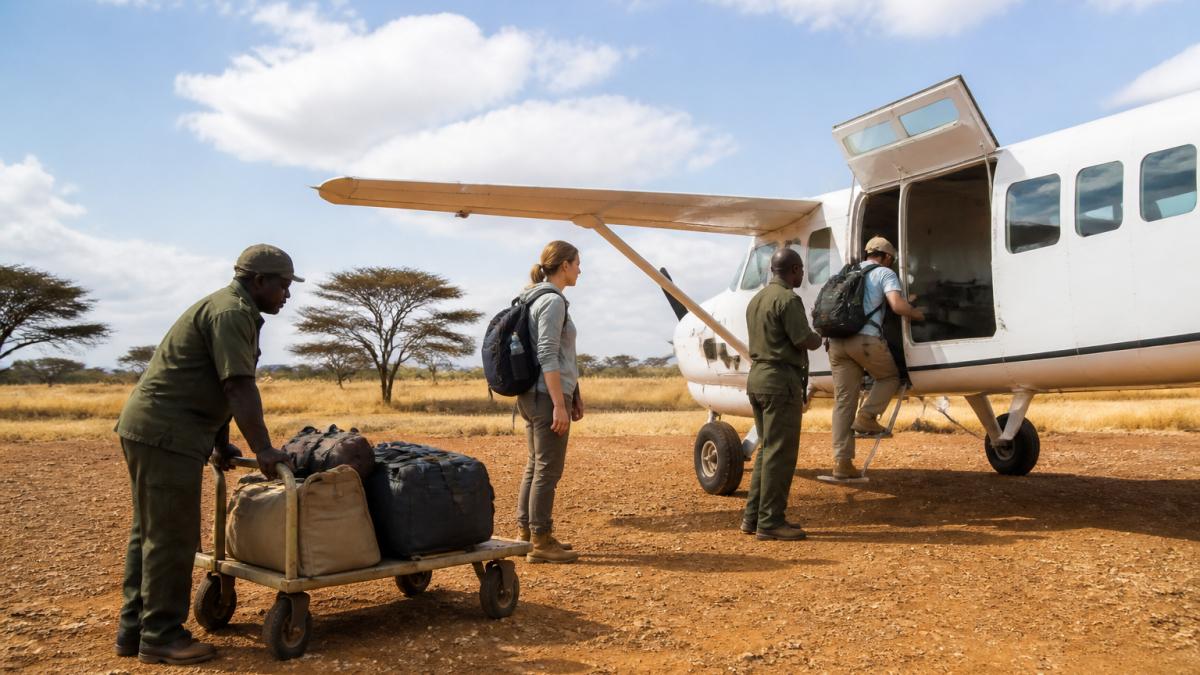
Bush airstrips operate differently. There's no terminal building, no conveyor belts, no organized queuing. You drive directly to the airstrip. Your luggage is loaded by hand. The entire boarding process takes 15 minutes.
What to expect at a bush airstrip:
- Dirt or grass runway with no markings
- A small shelter or covered area (sometimes just open air)
- Hand-loading of luggage into the aircraft
- Manual passenger count before takeoff
- Safety briefing delivered by the pilot or guide
Transfers from your lodge to the airstrip are arranged by your tour operator. Timing is tight. Bush flights operate on strict schedules. Arriving late means missing your flight, and likely paying for a new ticket.
Plan your lodge checkout carefully. Request breakfast early. Have luggage packed and ready the night before. Guides will collect you 30-45 minutes before departure.
Weather delays are common. The pilot makes the final call on whether conditions are safe. Delays of 2-4 hours aren't unusual during rainy season. Bring entertainment and patience. Rushing the pilot doesn't change weather.
Managing Tanzania Safari Flight Delays and Weather Challenges
Bush planes don't fly in heavy rain or low visibility. Afternoon thunderstorms can ground flights for hours. This isn't a minor inconvenience, it's a core reality of bush flying.
Common delay scenarios:
- Morning fog clears by mid-morning; flight departs at 10 AM instead of 8 AM
- Afternoon storm develops; flight postponed to next morning
- Destination airstrip becomes waterlogged; flight diverted to alternate location
- Wind conditions unsafe; departure delayed until conditions improve
Your itinerary should include buffer days. If your schedule is rigid, bush flying creates stress.
How to handle delays:
- Stay at your current lodge an extra night (usually covered by your operator)
- Use the time for additional game drives or cultural activities
- Keep medications, toiletries, and a change of clothes in your carry-on
- Maintain communication with your tour operator
- Avoid arguing with pilots about weather decisions, their judgment keeps you safe
Weather delays rarely ruin safaris. Extra time at a lodge means more wildlife viewing opportunities. Reframe delays as bonus time in nature rather than obstacles.
The Bush Plane Experience: What to Expect During Flight
Bush plane cabins are small and loud. Noise levels reach 85-90 decibels, bring earplugs or noise-canceling headphones. Conversation is difficult during flight. The engine sound is constant and intense.
Takeoffs are abrupt. The pilot accelerates hard and lifts off quickly, often within 30 seconds. Landings are firm. The aircraft drops onto the airstrip and brakes hard.
What the flight actually feels like:
- Takeoff: strong acceleration, steep climb angle, engine roar
- Cruise: steady drone, slight turbulence from thermal activity, views of landscape below
- Descent: gradual descent, banking turns to line up with airstrip, firm touchdown
Flight duration varies. A 1-hour flight covers roughly 200 kilometers. Most internal Tanzania flights last 45 minutes to 2 hours. Sit back, watch the landscape, and enjoy the perspective.
Cabin comfort is basic. Seats are narrow and upright. Legroom is limited. The aircraft isn't pressurized, so your ears may pop during altitude changes. Chewing gum or yawning helps equalize pressure.
Bathrooms are rare. Some aircraft have a small lavatory; most don't. Use facilities before boarding. Flights are short enough that this isn't usually a problem, but it's worth knowing.
Safety Briefing, Emergency Procedures, and Peace of Mind
Every bush flight includes a safety briefing. The pilot or guide explains emergency procedures, exit locations, and what to do if the aircraft needs to land unexpectedly. Listen carefully, even if you've flown before.
Key points from a typical briefing:
- Exit door locations and how to open them
- Life jacket location (if flying over water)
- Brace position for emergency landing
- What to do if the aircraft loses an engine
- Emergency equipment locations
Bush plane operators maintain strict safety standards. Aircraft are regularly serviced. Pilots undergo rigorous training. Emergency procedures are practiced. The accident rate for licensed bush operators is comparable to commercial aviation.
Your anxiety is normal. Small aircraft feel less safe than large ones, even though statistics say otherwise. Understanding this psychological difference helps. The aircraft is small because it needs to access remote airstrips, not because it's less capable.
Questions to ask your tour operator before flying:
- What's the aircraft model and passenger capacity?
- How often is the aircraft serviced?
- What's the pilot's experience level?
- What's the operator's safety record?
- What happens if weather prevents departure?
Knowing your operator's standards builds confidence.
Understanding how to prepare for bush plane travel in Tanzania requires different preparation than commercial flying, but the logistics are straightforward once you understand the constraints. Pack light, pack soft-sided luggage, bring layers, and expect weather delays as part of the experience. When you're ready to book your Tanzania safari with internal flights, we're here to handle the planning details and connect you with operators who prioritize your safety and comfort.
| Preparation Area | Key Action | Timeline |
|---|---|---|
| Luggage | Choose soft-sided bag under 2.5 kg | 2 weeks before |
| Documents | Verify passport validity, obtain visa | 4-6 weeks before |
| Health | Confirm vaccinations, start malaria prevention | 4-6 weeks before |
| Packing | Pack clothing in neutral colors, layers | 3-5 days before |
| Insurance | Purchase evacuation coverage | 2 weeks before |
| Logistics | Confirm flight times, arrange transfers | 1 week before |
Frequently Asked Questions
What are the typical luggage weight and size limits on bush plane flights in Tanzania?
Most bush plane operators enforce strict weight limits between 20-25 pounds per person for checked baggage, with additional carry-on allowances of 5-10 pounds. Size restrictions typically allow soft-sided bags no larger than 24 inches long, 16 inches wide, and 10 inches deep. Weight limits exist because light aircraft have limited payload capacity and must maintain precise weight distribution for safe flight. Always confirm exact restrictions with your tour operator before packing, as different operators and aircraft types have varying requirements.
What should I pack for a bush plane flight in Tanzania?
Pack soft-sided luggage, neutral-colored breathable clothing, sun protection (hat, sunglasses, sunscreen), binoculars, camera equipment, medications, travel documents, and a small day pack. Avoid hard suitcases and excessive baggage. Wear comfortable, layered clothing suitable for both cool early mornings and warm afternoons. Include motion sickness medication if you're prone to discomfort. Keep valuables and essentials in carry-on only. Leave behind heavy items, excess shoes, and non-essential electronics to stay within weight limits.
What happens if my bush plane flight is delayed due to weather?
Bush plane operations depend heavily on weather conditions. Delays are common during rainy seasons and can last several hours or even a full day. Operators prioritize safety over schedules and will not fly in unsafe conditions. Most tour operators include contingency time in itineraries and have alternative routing plans. Travel insurance that covers weather-related delays is strongly recommended. Stay flexible, bring entertainment and medications, and maintain communication with your tour operator for real-time updates.
Are bush plane flights in Tanzania safe?
Yes, bush plane flights are safe when operated by licensed, reputable operators with proper maintenance and experienced pilots. Operators follow strict safety protocols, conduct regular safety briefings, and maintain aircraft to international standards. Small aircraft are actually more maneuverable than larger planes and can navigate challenging terrain safely. Choose operators with established safety records and proper certifications. While turbulence in small aircraft can feel more pronounced than commercial flights, this is normal and not dangerous.


