

Table of Contents
- Mount Kilimanjaro Success Rates for Beginners: What the Data Shows
- Why Trek Duration Affects Your Summit Chances
- Best Kilimanjaro Routes for Beginners and Their Success Rates
- Altitude Sickness Prevention on Kilimanjaro
- Training Plan: Preparing Your Body for Summit Success
- Common Reasons Beginners Fail to Summit
- Budget vs. Success: What You're Actually Paying For
- Post-Summit Recovery and What Happens After You Reach the Top
Mount Kilimanjaro Success Rates for Beginners: What the Data Shows
Most people assume summiting Mount Kilimanjaro requires elite mountaineering skills. That's wrong. The data reveals that success depends far less on prior climbing experience than on three specific factors: route selection, acclimatization strategy, and realistic preparation.
Roughly 65% of climbers reach the summit overall. But for beginners who follow a structured acclimatization schedule, work with experienced guides, and choose the right route, success rates climb significantly higher. The difference between summiting and turning back usually comes down to preparation decisions made weeks before arrival.
This guide breaks down what actually determines success on Mount Kilimanjaro: which routes give beginners the best odds, how trek duration impacts summit chances, what altitude sickness prevention requires, and exactly what your body needs to handle 19,341 feet of elevation gain.
Why Trek Duration Affects Your Summit Chances
Trek length is not a luxury choice, it's the primary determinant of whether your body successfully adapts to high altitude. Mount Kilimanjaro success rates for beginners drop sharply on shorter itineraries because the human body needs time to adjust to decreasing oxygen levels.
A 5-day climb compresses the ascent so aggressively that your body never catches up. A 7-8 day itinerary gives your body the recovery windows needed to build new red blood cells and adjust breathing patterns. At sea level, blood oxygen saturation sits around 98%. At Kilimanjaro's summit, that drops to roughly 70% even with acclimatization. Your body responds by increasing respiratory and heart rate, but that adjustment takes time.
Research shows climbers on 7-8 day itineraries report significantly fewer altitude sickness symptoms and higher summit success rates than those on compressed schedules. The extra days aren't wasted time; they're the difference between reaching the summit and turning back at 17,000 feet.
Best Kilimanjaro Routes for Beginners and Their Success Rates
Route selection determines your acclimatization profile, trail difficulty, and crowding levels, all of which directly impact your odds of success.
Marangu Route
The Marangu Route is often called the "tourist route." It's the most direct path to the summit with well-maintained trails and hut accommodations at each camp. Most operators run Marangu in 5 days, compressing acclimatization dangerously. The route gains elevation rapidly without enough intermediate camps for proper body adjustment. Summit success rates on Marangu average around 60% for beginners, making it the riskiest choice despite its popularity.
Machame Route
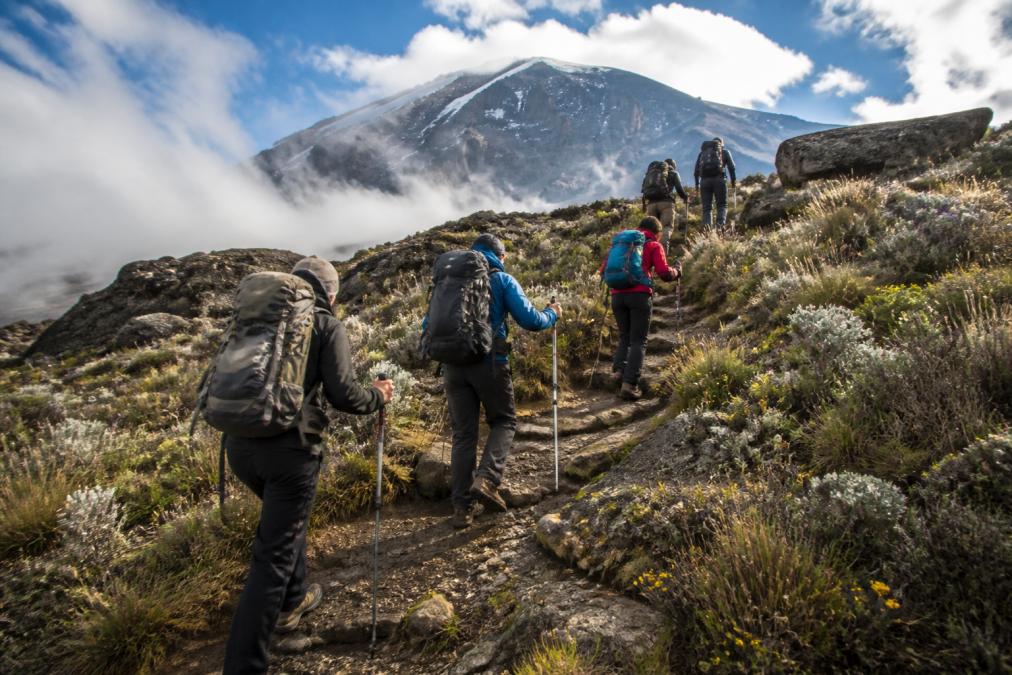
Machame is the most popular choice among experienced operators because it offers the best balance of acclimatization opportunity and manageable difficulty. The standard itinerary runs 6-7 days, giving your body meaningful adaptation time. The route features scenic variety: rainforest, alpine meadows, and high-altitude desert terrain.
Machame climbers report significantly fewer altitude sickness symptoms than Marangu climbers, with summit success rates closer to 75% for beginners. The trail is more challenging, but manageable for anyone with basic cardiovascular fitness. For most beginners, Machame represents the sweet spot between challenge and success probability.
Rongai Route
The Rongai Route approaches from the north and is less crowded than Marangu or Machame. It's also the gentlest option in terms of daily elevation gain, excellent for beginners prioritizing comfort over speed.
A typical Rongai itinerary runs 6-7 days with gradual, steady climbing rather than aggressive daily ascents. Rongai climbers report some of the lowest altitude sickness rates among all routes, with summit success rates averaging 70-75% for beginners. If you're comfortable with a rustic experience and prioritize acclimatization over amenities, Rongai is an excellent choice.
Altitude Sickness Prevention on Kilimanjaro
Acute mountain sickness (AMS) is the primary reason beginners fail to summit. It's also largely preventable through proper acclimatization strategy and specific preparation.
AMS occurs when your body struggles to process reduced oxygen at high altitude. Early symptoms include headache, nausea, fatigue, and difficulty sleeping. Prevention requires understanding how altitude affects your physiology and building in enough time for adaptation.
The most effective prevention strategy is "pole pole", climbing slowly and spending multiple nights at intermediate elevations before the summit push. This allows your body to produce more red blood cells, increase respiratory rate appropriately, and adjust acid-base balance.
Hydration is non-negotiable. Your body loses water faster in thin, dry air, and dehydration accelerates altitude sickness. Aim to drink 3-4 liters of water daily, even when not thirsty.
Medication can help. Many climbers use acetazolamide (Diamox) starting 24 hours before reaching high altitude. This diuretic helps your body adjust to reduced oxygen by changing blood chemistry. Talk to your doctor before your climb, Diamox isn't for everyone, and individual responses vary.
Your guide will monitor you constantly for AMS symptoms. If you develop severe headache, confusion, or difficulty walking a straight line, your guide will likely recommend descending. Descending 1,000 feet often resolves severe symptoms within hours.
Training Plan: Preparing Your Body for Summit Success
Proper training doesn't require a gym membership or prior climbing experience. It requires consistent cardiovascular conditioning, basic strength work, and mental preparation focused on high-altitude trekking demands.
Cardiovascular Conditioning
Your cardiovascular system is the foundation of summit success. You need sustained aerobic capacity to handle 6-8 hours of climbing at elevation where oxygen is scarce.
Begin training 12-16 weeks before your climb with 3-4 weekly sessions of steady-state cardio: running, cycling, stair climbing, or hiking. After 4-6 weeks of base building, add one weekly session of hill repeats or stair intervals. By 4-6 weeks before your climb, shift to longer, slower efforts with weekend hikes featuring 2,000-3,000 feet of elevation gain.
Strength and Endurance Work
Kilimanjaro doesn't require explosive power, but demands muscular endurance, the ability for your legs and core to work for hours without failing.
Focus on compound movements: squats, lunges, step-ups, and deadlifts. Add 2-3 weekly strength sessions on non-cardio days. Core stability matters more than most beginners realize. Include planks, side planks, and anti-rotation exercises 2-3 times weekly. Don't neglect your upper body, you'll use trekking poles throughout your climb.
Mental Preparation Strategies
The mental component of summiting Kilimanjaro often determines success more than physical fitness. Begin mental training 8-12 weeks before your climb. Visualization is highly effective: spend 10-15 minutes weekly imagining yourself climbing steep sections, managing discomfort, and reaching the summit. Develop a specific mantra or mental anchor, a short phrase you repeat when climbing gets hard.
Practice discomfort tolerance in training by deliberately climbing hard hills when fatigued or extending training sessions beyond what feels comfortable.
Common Reasons Beginners Fail to Summit
Understanding why climbers turn back helps you avoid those mistakes.
Inadequate acclimatization is the leading cause of summit failure. Climbers on compressed itineraries simply don't give their bodies enough time to adapt. By 17,000-18,000 feet, altitude sickness becomes severe enough that continuing safely is impossible.
Poor pacing during the climb is the second major factor. Beginners often start too fast, burning energy reserves in the first two days. By summit night, when you need maximum effort, your body is depleted. Guides emphasize "pole pole" to preserve energy.
Inadequate mental preparation leads many climbers to quit when the physical challenge is manageable. Summit night is brutal: you'll start climbing around midnight in near-freezing temperatures in darkness, with thin air making every breath labored.
Underestimation of hydration needs creates cascading problems. Dehydration accelerates altitude sickness, reduces cognitive function, and impairs decision-making.
Ignoring early altitude sickness symptoms is another critical mistake. Headache, nausea, or difficulty sleeping signal that your body is struggling. The correct response is to slow down, hydrate more, and rest.
Budget vs. Success: What You're Actually Paying For
Mount Kilimanjaro climbs vary dramatically in price, and cost differences directly correlate with success rates. Budget operators offer 5-day climbs at lower prices by compressing the itinerary, meaning worse acclimatization and lower summit success rates. Mid-range operators typically offer 6-7 day climbs with experienced guides, reasonable group sizes, and solid logistics. Premium operators offer 7-8 day itineraries, smaller groups, higher-quality meals, and guides with extensive altitude sickness management experience.
Your guide's quality matters enormously. A guide trained in altitude sickness recognition can catch problems early and make decisions that preserve your safety and summit chances. Group size affects your experience and success probability. Large groups (15+ climbers) mean less personalized guide attention. Smaller groups (6-8 climbers) allow your guide to monitor each person individually.
Meal quality and variety matter more than most climbers expect. Proper nutrition supports your body's altitude adaptation. Better operators prioritize balanced nutrition and variety to keep climbers eating adequately even when appetite is suppressed by altitude.
At Simcha African Safaris Limited, we structure Kilimanjaro climbs with 7-8 day itineraries specifically to maximize acclimatization time. Our guides are extensively trained in altitude sickness management, and we keep group sizes small to ensure personalized attention. This approach delivers summit success rates significantly higher than industry averages.
Post-Summit Recovery and What Happens After You Reach the Top
The descent from Kilimanjaro's summit is often underestimated in difficulty. You've just spent 6-8 hours climbing in darkness at extreme altitude with minimal oxygen. Your body is depleted, yet the descent requires focus and careful foot placement on steep, rocky terrain.
Most climbers descend the same day they summit, dropping from 19,341 feet to 15,100 feet at Barafu Camp. This rapid descent actually helps your body recover from altitude exposure, but physical and mental fatigue is real. Your guide will monitor you closely, falls and injuries are more common during descent than ascent.
After reaching lower camps, your body begins recovering quickly. Within 24-48 hours at lower elevation, most altitude sickness symptoms resolve completely. Your appetite returns, sleep improves, and the fog that altitude creates lifts.
The emotional experience of summiting Kilimanjaro often surprises climbers. The sense of accomplishment is profound, but many also describe unexpected emotional processing, the realization of what their body and mind accomplished, gratitude toward guides and fellow climbers, and sometimes the emotional weight of the experience.
Physical recovery takes 1-2 weeks. Most people feel completely normal within 10 days. If you experience persistent fatigue, shortness of breath, or other symptoms beyond two weeks, consult a doctor.
Summiting Mount Kilimanjaro as a beginner is entirely achievable when you approach it with proper preparation and realistic expectations. Success rates climb dramatically when you invest in acclimatization time, choose the right route, and commit to genuine training. At Simcha African Safaris Limited, we offer 7-8 day itineraries, experienced guides trained in altitude management, and small group sizes to create the conditions where beginners can reach the summit safely and with confidence. Request a quote to explore a Kilimanjaro climb tailored to your timeline and experience level.
| Route | Typical Duration | Acclimatization Profile | Difficulty Level | Summit Success Rate |
|---|---|---|---|---|
| Marangu | 5-6 days | Rapid elevation gain | Moderate | ~60% |
| Machame | 6-7 days | Gradual with acclimatization days | Moderate-High | ~75% |
| Rongai | 6-7 days | Very gradual, most gentle | Moderate | ~70-75% |
Frequently Asked Questions
Can a beginner successfully climb Mount Kilimanjaro?
Yes. Kilimanjaro success rates for beginners range from 65% to 85% depending on route choice, acclimatization strategy, and physical preparation. The climb is non-technical, meaning you don't need rock climbing skills. Success depends more on fitness level, mental determination, and proper altitude acclimatization than on climbing experience. Most beginners who follow a structured training plan and choose a longer route with better acclimatization profiles reach the summit.
What is the failure rate on Kilimanjaro for first-time climbers?
Approximately 15% to 35% of first-time climbers fail to summit, with the highest failure rates on shorter, faster routes like the 5-day Marangu itinerary. Acute mountain sickness (AMS) and inadequate acclimatization cause most failures. Climbers who take 7+ days and follow the 'pole pole' (slowly, slowly) approach have failure rates below 15%. Physical fitness issues and mental factors account for the remaining failures among beginners.
Which Kilimanjaro route has the best success rate for beginners?
The Machame and Rongai routes offer the highest success rates for beginners, typically 80%+, because they provide better altitude acclimatization profiles with gradual elevation gain. The Machame route takes 6-7 days and crosses multiple climate zones, allowing your body to adjust. The Rongai route approaches from the north with a gentler grade. The Marangu route, despite being popular, has lower success rates (65-75%) due to its compressed 5-day timeline that doesn't allow adequate acclimatization.
How long does it actually take to climb Kilimanjaro for beginners?
Most beginners should plan 6-8 days for the complete climb, including approach, summit attempt, and descent. A 5-day itinerary is possible but increases failure risk significantly due to insufficient acclimatization time. The average time to climb Kilimanjaro for beginners is 7 days. This timeline allows your body's oxygen saturation and respiratory rate to adjust gradually to high altitude. Rushing the climb dramatically increases acute mountain sickness risk and reduces summit success rates.
What's the best way to prevent altitude sickness on Kilimanjaro?
Altitude sickness prevention on Kilimanjaro relies on three strategies: (1) gradual acclimatization through a longer itinerary with slow elevation gain, (2) staying properly hydrated and eating high-carbohydrate meals, and (3) using the 'pole pole' pacing strategy, moving slowly and deliberately rather than rushing. Some climbers take acetazolamide (Diamox) as a preventive medication, though this should be discussed with a doctor beforehand. Sleeping at lower elevations than your daytime maximum height is the most effective acclimatization technique.
What physical fitness level do I need to summit Kilimanjaro as a beginner?
You should be able to hike 4-6 hours daily on uneven terrain without stopping. Cardiovascular fitness is more important than strength. A 3-4 month training regimen of regular hiking, stair climbing, or elliptical work prepares most beginners adequately. You don't need to be an elite athlete, but sedentary individuals should allow 4-6 months for conditioning. The climb demands stamina and endurance more than peak athletic ability, making it accessible to most adults in reasonable health.
What happens if I can't make it to the summit?
If you cannot summit due to altitude sickness, fatigue, or other factors, your guide will turn back with you well before the summit push to ensure your safety. This is standard practice with reputable operators. You'll descend to lower elevations where symptoms resolve quickly. Many climbers who don't summit still experience the profound journey through multiple ecosystems and witness incredible views. The descent itself is an achievement, and operators focus on safe, healthy descent over forced summit attempts.
When is the best time of year to climb Kilimanjaro as a beginner?
The dry seasons, January through March and July through September, offer the best conditions for beginners. January-March provides warmer temperatures and lower precipitation, making the climb more comfortable. July-September has cooler temperatures but excellent visibility. These periods also align with favorable weather patterns that reduce acute mountain sickness risk. Avoid the rainy seasons (April-June and November-December), which increase trail hazards and cloud cover that obscures summit views and affects acclimatization.
This article was written using GrandRanker


