

Table of Contents
- Understanding Kilimanjaro Success Rates
- Kilimanjaro Summit Success Rate by Days on the Trail
- Physical Training for Kilimanjaro: Building the Fitness Foundation
- How to Prevent Altitude Sickness on Kilimanjaro
- Choosing the Right Route and Guide for Your Climb
- Common Reasons Climbers Fail to Reach the Summit
- Mental Resilience and Psychological Preparation for Summit Success
- Conclusion
Last Updated: August 13, 2026
Understanding Kilimanjaro Success Rates
Kilimanjaro success rate refers to the percentage of climbers who reach Uhuru Peak, the mountain's 19,341-foot summit. Success on Kilimanjaro depends far less on technical climbing ability than most people assume. Instead, it hinges on acclimatization, physical preparation, route selection, and mental resilience.
The reality is sobering: roughly 40-50% of climbers who attempt Kilimanjaro fail to summit. That's not a failure of ambition, it's a failure of preparation and planning. The good news? The factors that separate summitters from those who turn back are predictable and controllable.
This guide breaks down the seven critical factors that determine whether you'll plant your flag at the summit or descend before reaching it. Some of these factors surprise climbers. Others require uncomfortable truths about preparation. All of them are actionable.
Kilimanjaro Summit Success Rate by Days on the Trail
The duration of your climb directly impacts your kilimanjaro summit success rate. This isn't theory, it's the single most predictable variable in the equation.
Five-day routes have summit success rates around 40-50%. Six-day routes push that to 55-65%. Seven-day routes and longer climb to 70-85%. The difference? Time for acclimatization.
Your body needs days to adapt to altitude. At sea level, your blood carries oxygen efficiently. At 10,000 feet, oxygen becomes scarce. At 14,000 feet, your body is in genuine physiological distress. Rushing this process guarantees failure for most people.
The reason is straightforward: altitude acclimatization isn't something you can compress. Your red blood cell production increases, your breathing patterns shift, and your cardiovascular system recalibrates. This takes time. Skip the time, and you skip the summit.
A seven-day itinerary typically follows this pattern: Day 1-2 approach and lower elevation, Day 3-4 climb to 12,000-13,000 feet and descend slightly (active acclimatization), Day 5-6 push to high camp, Day 7 summit push and descent. This rhythm gives your body multiple opportunities to adapt.
Five-day routes compress this into a vertical sprint. You're climbing too high too fast. Your body doesn't have time to adjust. Headaches become migraines. Nausea becomes vomiting. Shortness of breath becomes gasping for air on a relatively flat trail.
If you have the time, take the longer route. If you're locked into five days, understand the risk going in.
Physical Training for Kilimanjaro: Building the Fitness Foundation
Kilimanjaro isn't a rock climbing expedition. You don't need to be able to do pull-ups or climb overhanging rock. What you need is muscular endurance and cardiovascular capacity, the ability to move steadily uphill for hours while your body is oxygen-deprived.
Most climbers underestimate the physical demands. They think, "I can walk. I can hike. How hard can this be?" Then they hit 13,000 feet and discover that walking at altitude is a completely different animal.
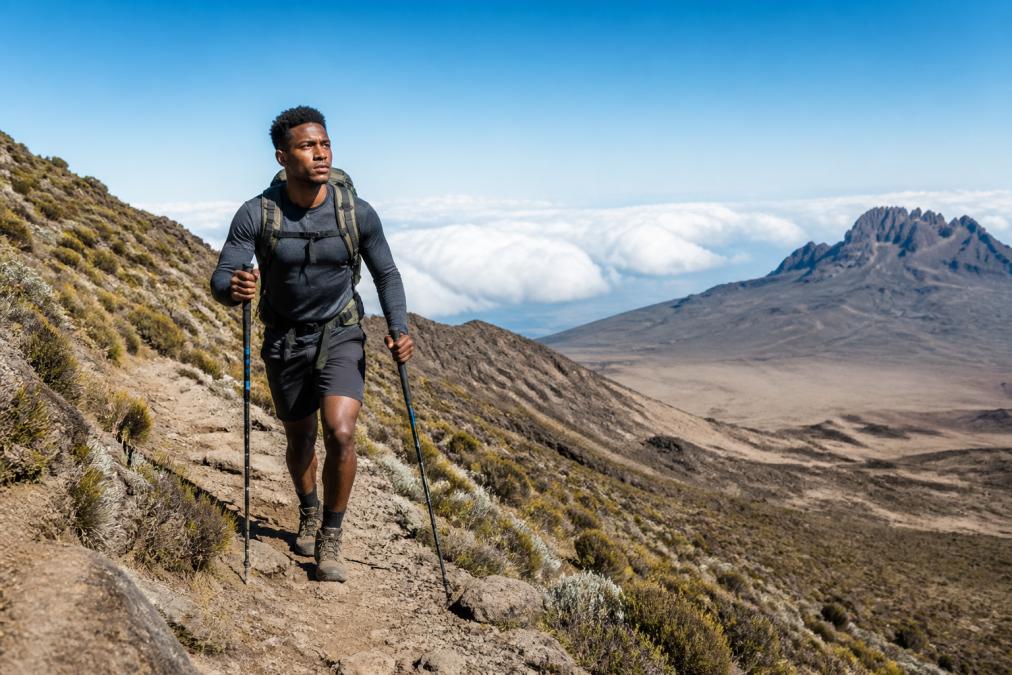
Your training should focus on three things: leg strength, cardiovascular endurance, and altitude-specific adaptation.
Leg strength matters because you're walking uphill for 6-8 hours daily with a backpack. Your quads, glutes, and calves absorb the impact. Weak legs tire quickly and increase injury risk. Spend 8-12 weeks doing hill repeats, stair climbing, and loaded carries. Use trekking poles during training, they distribute the load and teach your body the movement pattern you'll use on the mountain.
Cardiovascular endurance means your heart and lungs can sustain effort at altitude. Long, steady-state cardio is your foundation. Run, bike, or hike for 45-90 minutes at a moderate intensity 3-4 times per week. Include at least one longer effort per week, a 2-3 hour hike with elevation gain.
Altitude-specific adaptation is harder to train for at sea level, but you can simulate it. High-intensity interval training improves your body's oxygen use. Sprints, hill repeats, and tempo efforts teach your cardiovascular system to work harder. This doesn't replace the real acclimatization that happens on the mountain, but it gives your body a head start.
Start training 12-16 weeks before your climb. If you're over 40 or have been sedentary, give yourself 20 weeks. This isn't about becoming an athlete. It's about building the specific endurance that Kilimanjaro demands.
How to Prevent Altitude Sickness on Kilimanjaro
Altitude sickness on Kilimanjaro takes two forms: acute mountain sickness (AMS) and high altitude cerebral edema (HACE). AMS is common and usually manageable. HACE is rare but life-threatening.
AMS symptoms appear above 8,000 feet and typically include headache, nausea, fatigue, and shortness of breath. Most climbers experience some level of AMS. The question isn't whether you'll feel it, it's whether it will stop you.
Prevention starts with acclimatization. Climb slowly. Spend nights at intermediate elevations. Use the "climb high, sleep low" principle: push to a higher elevation during the day, then descend to sleep. This trains your body to produce more red blood cells and adapt to lower oxygen levels.
Hydration matters more than most guides acknowledge. Altitude causes dehydration because the air is dry and your breathing rate increases. Drink 3-4 liters of water daily. Your urine should be pale yellow, not dark. Dark urine means you're dehydrated, which worsens AMS symptoms.
Eat enough calories. Altitude suppresses appetite, which is your body's way of making a bad situation worse. Force yourself to eat carbohydrate-rich foods. Your body processes carbs more efficiently at altitude and needs the energy to produce new red blood cells.
Avoid alcohol and sleeping pills. Both depress your respiratory drive, which slows acclimatization. Avoid heavy exertion on your first days at altitude, let your body adjust before pushing hard.
If AMS symptoms develop, the standard treatment is descent. Even 1,000 feet of elevation loss often resolves symptoms within hours. If symptoms persist or worsen, descend further. There's no heroism in ignoring altitude sickness.
Prescription medications like acetazolamide (Diamox) can help prevent or reduce AMS severity. Discuss this with your doctor before your climb. Some climbers benefit from it; others experience side effects that outweigh the benefits.
Choosing the Right Route and Guide for Your Climb
Kilimanjaro has six main routes, and your choice dramatically affects your summit success rate and overall experience.
Marangu Route is the most popular and the most crowded. It's also the shortest at five days. The route follows a well-established trail with hut accommodations. The downside: five days isn't enough time for proper acclimatization, and the huts are often overcrowded. Success rates hover around 40%.
Machame Route takes six days and follows a more scenic path with camping. It's steeper than Marangu but allows better acclimatization. Success rates are around 60-65%. This route is physically demanding but rewards you with solitude and views.
Lemosho Route is the longest at seven days and the least crowded. It approaches from the west and offers excellent acclimatization. Success rates exceed 70%. If you have the time and budget, this is the route that maximizes your summit odds.
Rongai Route approaches from the north and is slightly less crowded than Marangu. It's six days with moderate difficulty. Success rates are similar to Machame at around 60%.
Umbwe Route is steep, short, and brutal. It's for experienced mountaineers only. Success rates are low because the route doesn't allow adequate acclimatization.
Crater Route is a descent-only route for those who've already summited.
Your guide matters as much as your route. A good guide understands acclimatization, recognizes altitude sickness symptoms early, and knows when to push and when to slow down. A bad guide rushes climbers and ignores warning signs.
Ask potential operators about guide qualifications, guide-to-climber ratios, and their summit success rates. Operators willing to share this data are confident in their service.
Common Reasons Climbers Fail to Reach the Summit
Understanding why climbers fail helps you avoid the same mistakes.
Altitude sickness is the leading cause of summit failure. Climbers ignore warning signs or push through symptoms that should trigger descent. By the time they acknowledge the problem, they're too compromised to continue safely.
Inadequate acclimatization time is the second leading cause. Climbers choose five-day routes when their fitness or altitude experience warranted longer routes. They're simply not ready physiologically.
Poor pacing kills climbers who are physically capable. They start too fast, burn out by day three, and lack the energy reserves to summit. The mountain demands a steady, sustainable pace, not heroic daily efforts.
Insufficient training is obvious in hindsight. Climbers arrive undertrained and underestimate how much the mountain will demand. They're gasping on day two when they should be moving easily.
Dehydration and poor nutrition compound every other problem. Climbers skip meals because they're nauseous. They don't drink enough water because they're not thirsty. Both mistakes accelerate deterioration.
Mental breakdown is less discussed but significant. The summit push happens at night in cold, darkness. Climbers reach high camp exhausted, then face a 6-8 hour push in brutal conditions. Those who haven't prepared mentally quit when the physical pain peaks.
Weather occasionally forces descents. Severe storms, extreme cold, or high winds can make the summit push impossible. This is rare but real. Accept that the mountain has final say.
Mental Resilience and Psychological Preparation for Summit Success
The final 1,000 feet to Uhuru Peak separates the climbers who summit from those who don't. At that elevation, your body is screaming to stop. Your mind is exhausted. The cold is brutal. The darkness is total.
Physical fitness gets you to high camp. Mental resilience gets you to the summit.
Most climbers don't prepare mentally. They train their legs and cardiovascular system but ignore the psychological demands. Then they hit the summit push and realize they have no mental framework for pushing through severe discomfort.
Start mental preparation months before your climb. Visualize the summit push. Imagine the cold, the darkness, the pain. Imagine yourself continuing despite these sensations. Visualize reaching the summit. This isn't motivational nonsense, it's training your brain to handle extreme conditions.
Practice discomfort in training. Run in cold weather. Do hard efforts when you're tired. Train in darkness. Climb when you don't feel like it. These experiences teach your mind that discomfort is survivable and temporary.
Develop a summit mantra, a short phrase you repeat when things get hard. "One foot in front of the other." "I've trained for this." "The summit is close." Something simple that anchors you when your mind wants to quit.
Understand your "why." Why are you climbing Kilimanjaro? Not the Instagram-worthy version, the real reason. Climbing for a cause? For yourself? To prove something? Your why sustains you when the physical going gets impossible.
On summit night, expect to be cold, tired, and in pain. Expect your mind to invent reasons to turn back. Expect to doubt whether you can continue. This is normal. Everyone who summits experiences this. The difference is that summitters push through anyway.
Kilimanjaro is achievable for most people in reasonable health. It's not a technical climb. It's not a race. It's a test of preparation, patience, and persistence.
Success comes from choosing the right route, training specifically, understanding acclimatization, and preparing mentally. It comes from selecting guides and operators who prioritize your safety over their schedule. When you're ready to attempt Kilimanjaro with a team that understands what success actually requires, Request a Quote with Simcha African Safaris Limited and let's get you to the summit.
Frequently Asked Questions
What is the average success rate for hiking Mount Kilimanjaro?
Overall summit success rates on Kilimanjaro range from 45% to 65% depending on route difficulty, acclimatization time, and climber preparation. Longer routes with more days for acclimatization typically show higher success rates, while shorter, faster routes result in more summit failures due to acute mountain sickness and insufficient altitude adaptation.
How does the number of days on the trail affect Kilimanjaro summit success rate?
Trekking duration directly impacts success. Five-day routes average 40-50% success rates, while seven-day routes reach 60-65% success. The extra days allow your body to acclimatize gradually to high altitude, reducing hypoxia effects and acute mountain sickness. Slower ascent profiles give your oxygen saturation levels time to stabilize at each elevation gain.
How do I prevent altitude sickness on Kilimanjaro?
Prevention combines three strategies: choose a longer trekking itinerary with gradual elevation gain, stay hydrated throughout the climb, and allow your body proper acclimatization time at each base camp. Ascending slowly (no more than 300 meters of elevation gain per day above 2,500 meters) is the most effective approach. Some climbers benefit from medical consultation before departure.
Can an average person hike Kilimanjaro successfully?
Yes. Kilimanjaro does not require technical climbing skills or elite fitness. Success depends more on mental resilience, proper acclimatization, adequate physical conditioning (cardiovascular health and stamina), and choosing the right guide. Most climbers who fail do so from altitude sickness or mental fatigue, not lack of technical ability. Proper training and a longer route significantly improve your odds.
This article was written using GrandRanker


