

Table of Contents
- What Is a Whale Shark Swimming and Safari Combo?
- Best Time for Whale Shark Swimming and Safari Visits
- Safari and Beach Itinerary Planning: A Step-by-Step Approach
- What to Expect During Whale Shark Encounters
- Essential Gear and Packing for Dual-Environment Travel
- Responsible Interaction and Conservation Practices
- Travel Logistics and Booking Your Combo Experience
- Conclusion
Last Updated: August 12, 2026
What Is a Whale Shark Swimming and Safari Combo?
A whale shark swimming and safari combo merges two distinct African adventures into one immersive journey. You spend part of your trip exploring wildlife-rich national parks on game drives, then transition to coastal waters where you encounter whale sharks in their natural habitat. This dual-experience package appeals to travelers who want both the thrill of spotting the Big Five and the underwater wonder of swimming alongside the world's largest fish.
The combination works logistically because many safari destinations sit within reasonable travel distance of coastal areas where whale sharks congregate seasonally. Rather than choosing between a traditional safari or a beach-based marine adventure, you get both in a single, curated itinerary. At Simcha African Safaris Limited, we've designed these combo experiences to flow naturally, minimizing downtime between activities while maximizing your exposure to diverse ecosystems.
Morning game drives deliver adrenaline and wildlife encounters on land. Afternoon snorkeling sessions offer weightlessness, silence broken only by water sounds, and surreal proximity to a creature that weighs as much as a school bus. The psychological shift between these environments keeps the experience fresh across your entire trip.
Best Time for Whale Shark Swimming and Safari Visits
Whale sharks migrate to warmer waters with peak sightings between November and March when ocean temperatures rise and plankton blooms attract these gentle giants. Safari wildlife viewing peaks during the dry season, roughly June through October, when animals congregate around remaining water sources and vegetation thins.
This creates a timing challenge: the optimal whale shark season and the optimal safari season don't fully overlap. Most successful combo trips target September through November, when both activities remain viable. You'll encounter whale sharks more reliably than in the dry season, while wildlife is still active on game drives.
Temperature and weather matter significantly. During the dry season, daytime temperatures can exceed 85°F, making water-based activities refreshing. The warm season (November-March) brings higher humidity and occasional rain, but the water is warmer for snorkeling, reducing the need for thick wetsuits.
Safari and Beach Itinerary Planning: A Step-by-Step Approach
Building a balanced safari and beach itinerary requires strategic sequencing. Start by anchoring your dates around whale shark season (November-March ideally), then layer in 3-4 days of safari activity before or after your coastal portion.
Step 1: Choose Your Safari Region Select a national park or game reserve within reasonable driving distance of coastal access points. Serengeti and Tarangire offer world-class wildlife viewing and sit within 6-8 hours of coastal towns. This proximity matters, as long transfers eat into your active time.

Step 2: Determine Safari Duration Most safari visitors need 3-4 days minimum to see diverse wildlife and experience the rhythm of game drives. For a combo trip, 3-4 safari days balances wildlife exposure with time for your coastal experience.
Step 3: Plan Your Coastal Transition Build in a travel day between safari and snorkeling. This recovery time lets you shower, rest, acclimate to sea-level humidity, and prepare gear.
Step 4: Schedule Whale Shark Encounters Allocate 2-3 days for coastal activities. This gives you flexibility if weather delays a boat excursion and ensures a backup opportunity if whale sharks aren't encountered on your first attempt.
Step 5: Add Buffer Days Include at least one unscheduled day for rest or spontaneous exploration. A buffer day prevents your entire itinerary from collapsing if one activity gets delayed.

5-Day Combo Itinerary Example
Days 1-2: Safari Foundation Spend two full days on game drives in a national park. Morning and afternoon excursions maximize wildlife viewing and introduce you to the landscape and your guide's expertise.
Day 3: Transition Day Travel from the park to your coastal base. Use this day for rest, equipment checks, and mental preparation for water activities. Confirm weather forecasts and review snorkeling safety protocols.
Days 4-5: Whale Shark and Snorkeling Two full days of boat-based marine activities. The first day focuses on whale shark encounters if conditions permit. The second day might include additional snorkeling, island exploration, or coral reef investigation.
7-Day Extended Experience
A 7-day combo allows deeper immersion in both environments. Extend your safari to 4 days, giving you more opportunities to locate specific species. Add an extra coastal day for activities like diving (if certified), guided reef walks, or visits to nearby islands.
What to Expect During Whale Shark Encounters
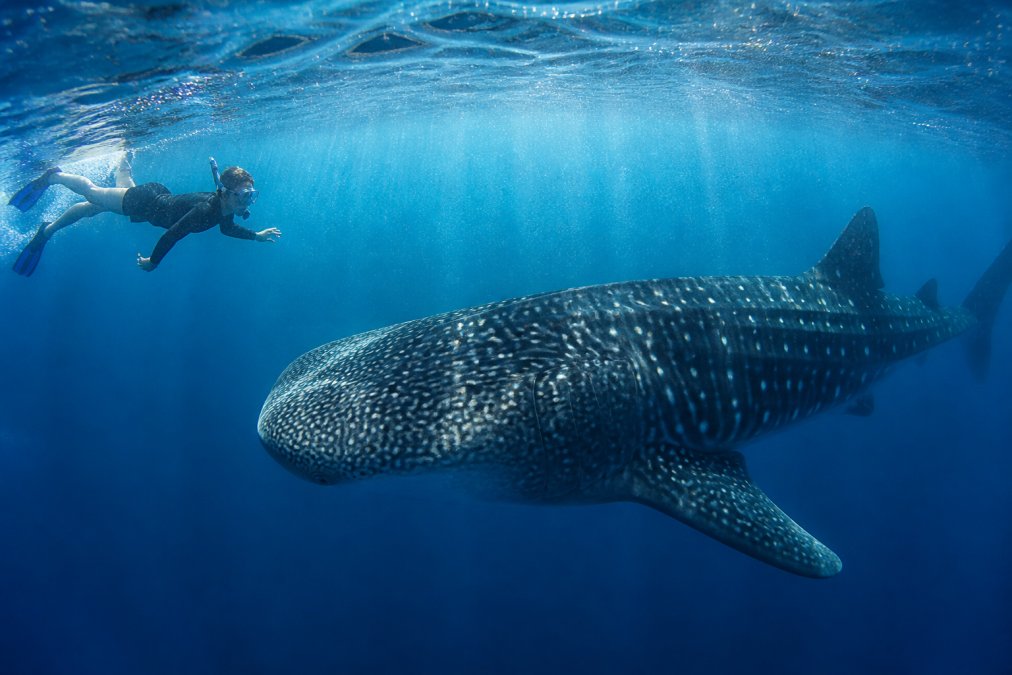
Whale shark encounters feel surreal because the scale doesn't register until you're in the water. These animals reach lengths of 40+ feet, yet they're filter feeders that pose zero threat to humans.
The typical encounter sequence begins with a spotter on the boat identifying a whale shark at the surface. The boat approaches slowly, as rapid movements startle them. You'll enter the water a safe distance away, then snorkel toward the animal as it moves. Most whale sharks tolerate human presence if approached calmly and from the side rather than head-on. You'll see their distinctive white-spotted pattern, watch their gill slits working as they filter plankton, and possibly observe the turn of their eye.
Water visibility varies seasonally. During peak season (November-March), visibility often reaches 60-80 feet, letting you see the whale shark's full body. In transitional months, visibility drops to 30-40 feet, which still offers an incredible experience. Underwater photography becomes challenging in lower visibility, so manage expectations if you're planning professional-quality images.
Most encounters last 15-30 minutes before the animal descends or moves away. Multiple encounters in a single day are possible but not guaranteed, as whale sharks follow their own patterns.
Essential Gear and Packing for Dual-Environment Travel
Packing for a combo trip means preparing for temperature swings, sun exposure, and water conditions.
Safari Essentials: Lightweight, long-sleeved shirts in earth tones reduce sun exposure and insect bites. Neutral pants (tan, khaki, olive) help you blend into wildlife viewing. Closed-toe hiking boots are essential for game walks and uneven terrain. A wide-brimmed hat, sunglasses, and high-SPF sunscreen protect against intense equatorial sun. Binoculars amplify distant wildlife viewing. A lightweight rain jacket handles afternoon showers.
Water Activity Gear: A quality snorkel set (mask, snorkel, fins) ensures comfort during extended water time. A rash guard or lightweight wetsuit offers sun protection and thermal insulation, as water temperatures average 75-80°F. Reef-safe sunscreen (zinc oxide-based, not chemical) protects coral ecosystems. Water shoes with grip soles prevent slipping on boat decks.
Dual-Purpose Items: Moisture-wicking base layers work for both safari hikes and water activities. Lightweight, quick-dry clothing minimizes luggage. A small waterproof bag protects electronics during boat transfers. Seasickness medication prevents discomfort on open-water excursions.
Health and Comfort: Antimalarial medication (prescribed by your doctor before departure) is essential for safari regions. Insect repellent with DEET or picaridin reduces mosquito exposure. A basic first-aid kit addresses minor cuts and blisters. Electrolyte supplements combat dehydration in heat and sun.
Responsible Interaction and Conservation Practices
Whale shark swimming carries ethical dimensions that responsible operators take seriously. These animals face threats from fishing pressure, boat strikes, and habitat degradation. How you interact during encounters either supports or undermines conservation efforts.
The core principle is simple: observe without disturbing. Whale sharks don't need human interaction to thrive, they need protected waters, reduced fishing pressure, and freedom from vessel collisions. Maintain distance, move slowly, and exit the water if the animal shows stress signals like rapid diving or erratic movement.
Many regions have developed interaction codes that guide responsible snorkeling. These typically include approaching from the side rather than head-on, maintaining at least 10 feet distance, avoiding flash photography, and limiting encounter duration. Operators who follow these codes invest in training and monitoring.
Safari activities carry similar ethical considerations. Viewing wildlife should never involve baiting, harassment, or habitat disruption. Ethical operators maintain distance from animals, avoid sudden movements, and never prioritize photo opportunities over animal welfare.
Support operators who invest in local communities and conservation initiatives. Many responsible safari and whale shark operators partner with research organizations, fund anti-poaching efforts, or support marine protected areas.
Travel Logistics and Booking Your Combo Experience
Logistics determine whether your combo trip flows smoothly or becomes a series of stressful transfers. The primary challenge is coordinating safari and coastal activities across different regions.
Getting There: Most international travelers fly into Dar es Salaam or Kilimanjaro International Airport. From there, you'll need domestic flights to reach safari regions (typically Serengeti or Tarangire) and then coastal towns (usually Zanzibar or smaller coastal bases). Factor in 4-6 hours for each major transfer.
Booking Strategy: Reserve your entire combo experience through a single operator rather than booking safari and coastal activities separately. This ensures coordinated timing, shared logistics, and unified communication. Simcha African Safaris Limited handles end-to-end combo planning, managing transfers, accommodation, and activities across both environments.
Accommodation Options: Safari lodges range from basic camps to luxury properties with en-suite bathrooms and fine dining. Coastal accommodations vary similarly. Your operator should match accommodation quality across both segments.
Timing and Booking Windows: Peak season (November-February) books 4-6 months in advance. Shoulder season (September-October, March) offers more flexibility and fewer crowds. Off-season (April-August) provides deep discounts but requires flexibility around weather and wildlife patterns.
Cost Considerations: A 5-day combo trip typically ranges from $2,500-$5,000 per person depending on accommodation quality, guide expertise, and included activities. This covers lodging, meals, game drives, boat excursions, and ground transfers. International flights are separate. The value lies in expertise and coordination, as operators who manage logistics smoothly justify premium pricing through reduced stress and better outcomes.
Documentation: Ensure your passport is valid for at least six months beyond your travel dates. Most visitors need visas, obtainable on arrival or in advance. Confirm vaccination requirements with your doctor. Travel insurance covering medical evacuation and trip cancellation is essential given remote locations and unpredictable weather.
Combining whale shark swimming with a traditional safari creates a rare travel experience that few destinations offer. The contrast between terrestrial and marine wildlife produces memories that linger long after you return home. When you work with experienced operators who understand both environments, the logistics fade into the background, leaving you free to absorb the experience.
Simcha African Safaris Limited specializes in exactly these combo journeys, coordinating seamless transitions between safari regions and coastal waters while managing all logistical complexity. We handle transfers, accommodate different fitness levels, and ensure your encounter with whale sharks respects both the animals and conservation principles. Beyond the experience itself, we offer handcrafted African art that lets you bring the journey home: pieces like our Animals of The Jungle Canvas Painting ($160.99) or Walking Elephant sculpture ($140.00) serve as tangible reminders of your adventure. Request a quote today and let us build your customized whale shark swimming and safari combo itinerary.


Frequently Asked Questions
When is the best time of year to see whale sharks?
Whale sharks congregate off Mafia Island primarily from October through March, with peak activity from November to February. During these months, the gentle giants gather to feed on plankton blooms in the warm Indian Ocean waters. Water visibility is typically 40-60 feet during this season, ideal for snorkeling and underwater photography. Outside this window, encounters are rare and unreliable. Plan your whale shark swimming adventure during these peak months for the highest success rate.
What should I pack for a trip combining ocean and safari activities?
Bring reef-safe sunscreen (SPF 50+), a rash guard or wetsuit (3mm for tropical waters), underwater camera, polarized sunglasses, and a wide-brimmed hat. For the safari portion, pack neutral-colored clothing (khaki, tan, green), binoculars, a quality camera with a telephoto lens, and insect repellent. Include lightweight layers for early morning game drives, closed-toe hiking boots, and a headlamp. Waterproof bags protect electronics during boat excursions. Don't forget medications, travel documents, and a portable charger for remote areas.
Can you really combine a beach vacation with a wildlife safari in one trip?
Yes. Mafia Island sits off the coast, making it accessible from safari regions via domestic flights or boat transfers. A typical 5-7 day itinerary includes 3-4 days of game drives in national parks followed by 2-3 days of marine activities. The transition is seamless when properly planned. Simcha African Safaris Limited specializes in these dual-environment journeys, coordinating logistics so you experience both the Big Five and whale shark encounters without the stress of DIY planning.
How reliable are whale shark encounters, and what happens if we don't see them?
During peak season (November-February), encounter rates exceed 80% with experienced operators. However, whale sharks are wild animals and sightings are never guaranteed. Reputable operators like Simcha African Safaris Limited build itineraries with alternative activities, snorkeling at coral reefs, diving, or exploring Mafia Island's marine park, so your trip delivers value regardless. Many packages include multiple boat excursions to maximize encounter chances. Always book with operators transparent about seasonal variability and backup activities.
What is the ethical way to interact with whale sharks?
Follow these responsible interaction guidelines: maintain at least 10 feet distance, never touch or chase the animal, avoid sudden movements or loud noises, and limit time in the water to 30 minutes per encounter. Never feed them or use flash photography. Snorkel or freedive passively; let the whale shark approach you. Support operators who follow research protocols and contribute to marine conservation. Simcha African Safaris Limited partners with marine research initiatives, ensuring your encounter supports whale shark protection and scientific understanding of these gentle giants.
How many days do you need for a combined safari and marine adventure?
A meaningful experience requires 5-7 days minimum. A 5-day itinerary includes 3 days of game drives plus 2 days of marine activities. A 7-day trip allows deeper exploration of both ecosystems, multiple safari parks, and several whale shark boat excursions. Shorter trips (3-4 days) sacrifice depth; longer trips (8+ days) let you explore additional national parks or island activities. Simcha African Safaris Limited offers flexible durations to match your schedule, even accommodating non-standard timeframes like 5-day windows in March.
What's the difference between snorkeling and diving with whale sharks?
Snorkeling keeps you at the surface with a mask and fins, ideal for most travelers and offering excellent whale shark views without certification. Scuba diving allows deeper exploration of coral reefs and underwater marine life, but requires PADI certification and is more physically demanding. Both methods work for whale shark encounters since they feed near the surface. Snorkeling is more accessible, affordable, and beginner-friendly; diving suits experienced divers wanting to explore deeper reef ecosystems. Your comfort level and experience determine which suits you best.
This article was written using GrandRanker


