

Table of Contents
- What Defines Affordable Luxury in Safari Experiences
- Best Time for Tanzania Safari: Seasons and Wildlife Viewing
- Top Affordable Luxury Safari Tours: Serengeti, Ngorongoro, and Beyond
- Tanzania Safari Cost Breakdown: What You Actually Pay For
- How to Plan Tanzania Safari Logistics: Itineraries and Accommodations
- Hidden Costs and How to Avoid Overpaying
- Solo Female Travelers and Specialized Safari Options
- Authentic Souvenirs and Handcrafted Art to Bring Home
Last Updated: August 25, 2026
What Defines Affordable Luxury in Safari Experiences
Affordable luxury in a Tanzania safari means experiencing world-class wildlife viewing, high-end accommodations, and expert-guided game drives without astronomical price tags. This isn't about cutting corners, it's about strategic planning, timing, and choosing experiences that deliver genuine value rather than unnecessary frills.
The distinction matters because "luxury" safaris often include amenities you'll never use: helicopter transfers, Michelin-star dining, or private aircraft. An affordable luxury approach prioritizes what enhances your safari: knowledgeable guides, small group sizes, excellent wildlife viewing, and comfortable accommodations. You're paying for the experience, not the Instagram aesthetic.
Travelers seeking affordable luxury prioritize three things: authentic wildlife encounters, genuine cultural interactions, and customizable itineraries rather than rigid group tours.
Best Time for Tanzania Safari: Seasons and Wildlife Viewing
Peak season runs June through October, when the Great Migration dominates the Serengeti and accommodation prices reflect it. Shoulder season (March-May and November-December) offers exceptional value: lodge rates drop 30-40%, rainfall concentrates wildlife around water sources, and game drives remain productive. The trade-off is occasional rain and fewer international tourists, many travelers see this as a benefit.
Low season (January, February, and April) brings the heaviest rains and lowest prices, but accessibility becomes an issue. Some roads become difficult and certain lodges close temporarily.
For the Great Migration, timing is critical. The massive movement of wildebeest and zebra typically peaks June-July in the Serengeti's northern region, then moves south toward Ngorongoro from August onward. If the Great Migration is your primary goal, peak season is unavoidable, but booking 4-6 months in advance locks in better rates than last-minute bookings.
Top Affordable Luxury Safari Tours: Serengeti, Ngorongoro, and Beyond
Classic Game Drive Experience: Serengeti National Park
The Serengeti spans nearly 5,900 square miles and hosts the densest concentration of large mammals on Earth (nps.gov). A classic game drive means full-day excursions with a private or small-group guide, stopping for wildlife sightings and returning to your lodge for sunset.
What separates affordable luxury from budget operations is guide quality and vehicle comfort. Experienced guides know where lions rest during midday heat and where elephant herds congregate near water sources. Your vehicle should have pop-up roof panels for unobstructed photography and binoculars for spotting distant wildlife.
Accommodation options range from tented camps ($150-250 per night) to mid-range lodges ($200-350 per night). Both deliver the full safari experience. Tented camps offer the sensation of sleeping closer to nature; lodges provide solid structures and better bathroom amenities. Either choice, when booked during shoulder season, represents genuine value.
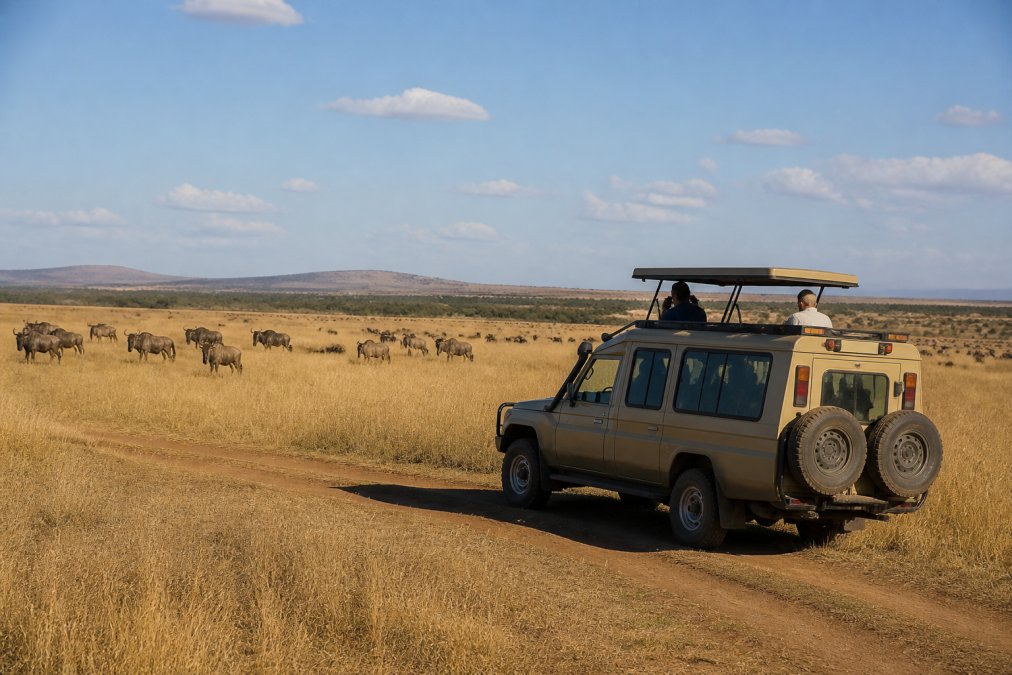
A typical 3-day Serengeti package from Simcha African Safaris Limited includes two full-day game drives, all meals, and accommodation in a quality tented camp or lodge. Expect to encounter the Big Five and countless wildebeest and zebra herds.
Crater and Conservation: Ngorongoro Crater Tour
The Ngorongoro Crater is a self-contained ecosystem where 25,000 large animals live in a collapsed volcanic caldera (unesco.org). Unlike the Serengeti's sprawling landscape, the crater concentrates wildlife in a defined area, yielding higher encounter rates and shorter distances between sightings.
A crater tour typically involves a full day of game drives descending into and exploring the crater floor. The 2,000-foot walls create a dramatic natural amphitheater, and varied terrain supports diverse wildlife. You'll see lions, buffalo, elephants, and flamingos, often within hours of arrival.
Conservation fees (approximately $50-75 per person daily) fund habitat protection and community programs. Most affordable luxury crater tours combine 1-2 days in the crater with time in the Serengeti or a cultural visit to a Maasai village.
Bush-to-Beach Combination: Safari Plus Zanzibar Extension
The bush-to-beach model pairs 4-5 days of safari with 2-3 days on Zanzibar, the historic spice island off Tanzania's coast. Zanzibar offers cultural depth: Stone Town's narrow streets, Arab and Portuguese architecture, and active spice markets reflect centuries of trade history. The island also offers snorkeling and scuba diving, including opportunities to encounter whale sharks and reef sharks.
Internal bush flights connect safari lodges to Zanzibar (typically 1-2 hours), eliminating long ground transfers. These flights add $200-400 per person each way but save time and reduce fatigue.
A typical 7-day bush-to-beach itinerary costs $2,500-4,000 per person (double occupancy, all-inclusive) during shoulder season. Peak season prices climb to $3,500-5,500. This represents genuine affordable luxury: you're experiencing two distinct ecosystems, expert guides, quality accommodation, and all meals for an accessible price point.
Tanzania Safari Cost Breakdown: What You Actually Pay For
Understanding where your safari budget goes reveals where you can optimize spending without sacrificing experience.
Accommodation (40-45%): Lodges and tented camps range from $120-300 per night. Affordable luxury sits at $180-250 per night. You're paying for location, guide expertise, meal quality, and service standards. The sweet spot is $200-220 per night.
Guides and game drives (20-25%): Professional guides command $40-60 daily. Group sizes matter: a private guide costs more but delivers personalized attention; a guide managing 6-8 people reduces per-person cost but increases wait times for optimal photo positions.
Meals and beverages (15-20%): Full-board packages include breakfast, lunch, dinner, and non-alcoholic beverages. Alcohol typically costs extra. Affordable luxury lodges maintain quality without excess: expect excellent coffee, fresh fruit, grilled meats, and local vegetables prepared competently.
Park fees and conservation charges (10-15%): Serengeti National Park entry costs approximately $50-70 daily per person; Ngorongoro Crater adds $50-75 daily. These fund habitat protection and are non-negotiable.
Transportation and logistics (5-10%): Ground transfers from airports, internal bush flights, and vehicle fuel. Affordable luxury typically uses private ground transfers but shared bush flights when multiple guests travel the same route.
How to Plan Tanzania Safari Logistics: Itineraries and Accommodations
Tented Camps vs. Luxury Lodges: Where to Stay
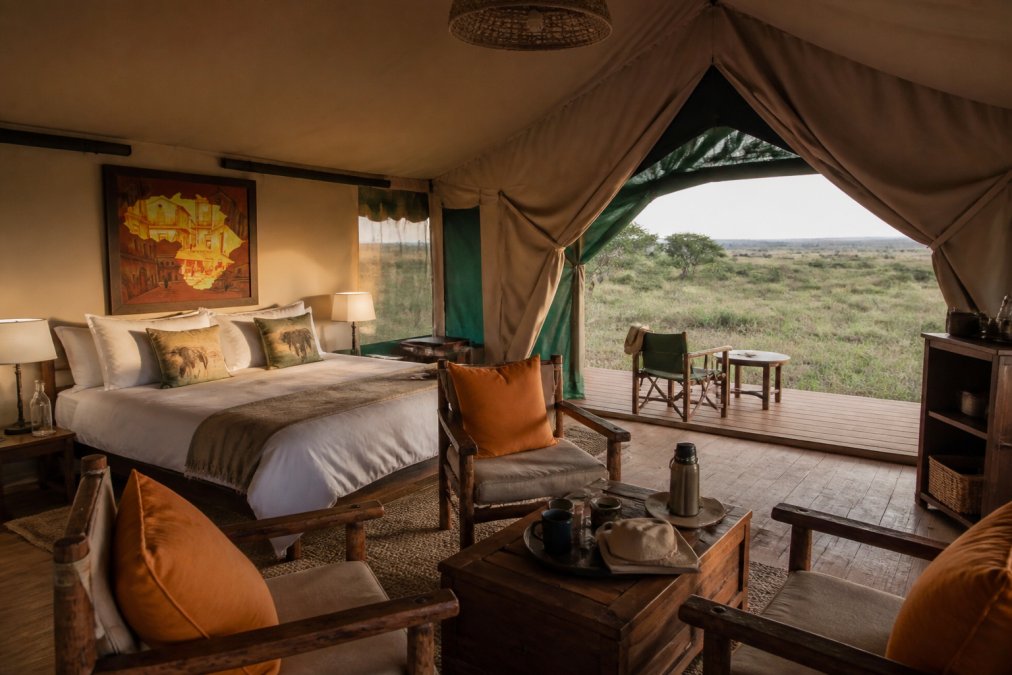
Tented camps position you closer to the natural environment. You'll hear wildlife sounds at night, distant lion roars, hyena calls, elephant movements. Canvas walls create a permeable boundary between your sleeping space and the bush. Quality tented camps feature en-suite bathrooms, comfortable beds with quality linens, and electric lighting.
Luxury lodges offer solid structures, air conditioning, and more refined dining experiences. You're slightly removed from immediate wildlife sounds, but views often compensate, many lodges position rooms to overlook watering holes where animals congregate.
For affordable luxury, tented camps typically represent better value. A quality tented camp at $200 per night delivers more authentic atmosphere than a lodge at the same price. Location matters more than structure type. Ask operators specifically: Where is the accommodation located? How far from primary game drive routes? What's the guide-to-guest ratio?
Sample 5-Day and 7-Day Itineraries
5-Day Serengeti Focus (Shoulder Season Budget: $2,000-2,800 per person, double occupancy)
- Day 1: Arrive in Arusha. Transfer to Serengeti lodge/camp (4-5 hours). Afternoon game drive.
- Day 2: Full-day game drive with packed lunch.
- Day 3: Early morning game drive. Afternoon cultural visit to Maasai village or rest at lodge.
- Day 4: Full-day game drive.
- Day 5: Early morning game drive. Transfer to airport for departure.
7-Day Bush-to-Beach (Shoulder Season Budget: $2,800-4,000 per person, double occupancy)
- Days 1-4: Serengeti as above.
- Day 5: Early morning game drive. Mid-day internal bush flight to Zanzibar (approximately 2 hours).
- Days 6-7: Zanzibar: Stone Town tour, spice market visit, snorkeling, and beach time.
| Itinerary Type | Duration | Shoulder Season Cost | Peak Season Cost | Best For |
|---|---|---|---|---|
| Serengeti Focus | 5 days | $2,000-2,800 | $3,200-4,500 | Wildlife priority, limited time |
| Crater & Serengeti | 5 days | $2,200-3,000 | $3,500-4,800 | Diverse ecosystems, varied wildlife |
| Bush-to-Beach | 7 days | $2,800-4,000 | $4,200-6,000 | Adventure and relaxation blend |
| Extended Safari | 10 days | $4,000-5,500 | $6,000-8,500 | In-depth exploration, multiple parks |
Hidden Costs and How to Avoid Overpaying
Alcohol and premium beverages: Most all-inclusive packages exclude alcohol. Wine, beer, and spirits cost $5-15 per drink at lodges. Budget $100-200 for a week if you drink regularly.
Tipping expectations: Guides typically expect $10-20 daily; lodge staff expect $2-5 daily. This totals $100-200 for a week. Clarify whether tips are included in package pricing.
Photography permits and drone fees: Professional camera equipment or drones may incur additional fees ($20-50). Drones face restrictions in most protected areas; confirm regulations before packing.
Travel insurance and visa costs: Visas for U.S. citizens cost approximately $50-100. Travel insurance runs $50-150 depending on coverage level.
Pre- and post-safari accommodation: Most international flights arrive in Arusha early morning or depart late evening, requiring an extra night. Budget lodging near Arusha airport costs $80-150 per night.
Solo Female Travelers and Specialized Safari Options
Solo female travelers represent a growing segment of safari tourism. Safety concerns are valid but often overblown. Practical measures include: traveling with established operators who conduct background checks on guides, choosing accommodations with secure entry points, and maintaining communication with family back home.
Female guides are increasingly available; requesting one is entirely reasonable. Specialized safari options cater to specific interests: photography safaris pair extended game drives with guides trained in wildlife photography; birding safaris focus on avian species; conservation-focused safaris include meetings with park scientists. These typically cost 10-20% more than standard safaris.
Solo travelers benefit from group tours that pair individual guests with others, reducing per-person costs while providing companionship. Women-only safari groups have emerged as a niche offering, combining adventure with peer community at 5-10% premium over co-ed groups.
Authentic Souvenirs and Handcrafted Art to Bring Home
Returning home with authentic handcrafted art connects you to your safari experience long after the trip ends. Authentic tribal masks and sculptures come from specific ethnic groups with distinct carving traditions. Wahaya tribe masks, carved from Mpingo wood (found only in Tanzania), feature specific geometric patterns and ceremonial significance.
Simcha African Safaris Limited offers carefully sourced handcrafted pieces including the African Mpingo Wood Heritage Mask ($120.99) and African Tribal Wasukuma Traditional Mask ($120.99), both carved from authentic Mpingo wood and reflecting genuine tribal traditions.
Oil paintings depicting safari scenes offer another avenue. The Kilimanjaro Warrior oil painting ($175.00) captures an African warrior woman standing proudly over Mount Kilimanjaro, while the Elephant Love painting ($160.00) portrays an elephant and its baby in the wild. Wooden sculptures like the Elephant Family sculpture ($140.00) and individual African Elephant Sculpture ($130.00) showcase Mpingo wood's durability and make meaningful heirlooms.

When purchasing souvenirs in Tanzania, buy directly from artisans or through reputable operators rather than tourist shops. Ask about the maker's name, ethnic background, and the piece's cultural function. Genuine handcrafted items cost more than mass-produced alternatives, but you're supporting artisans and bringing home objects with real meaning.
Affordable luxury Tanzania safaris deliver world-class wildlife viewing and authentic cultural experiences without requiring ultra-premium pricing. The key is strategic planning: timing your visit during shoulder season, choosing accommodations that prioritize location and guide quality over unnecessary amenities, and booking through operators like Simcha African Safaris Limited who understand the balance between value and experience. With 3-7 day itineraries ranging from $2,000-4,000 per person, you're accessing the same ecosystems, guides, and wildlife encounters as travelers spending twice as much. The difference lies in eliminating excess rather than compromising on what matters: the safari itself.
Frequently Asked Questions
What is the typical cost of a luxury safari in Tanzania?
Affordable luxury safari tours in Tanzania typically range from $2,500 to $5,500 per person for a 5-to-7-day package, depending on season and accommodation type. This includes game drives, full-board meals, internal flights, and conservation fees. High season (June-October) costs more than shoulder season (March-May, November). Solo travelers often pay a single-occupancy supplement. Costs vary based on whether you choose tented camps or lodges, and whether your itinerary includes Zanzibar extensions or specialized experiences like hot air balloon rides.
What is the best month to go on a safari in Tanzania?
The best time for Tanzania safari depends on your priorities. High season (June-October) offers peak wildlife viewing during the Great Migration, with excellent Big Five sightings and clear skies ideal for photography. Shoulder season (March-May and November) provides fewer crowds, lower costs, and lush landscapes after rains, though some wildlife disperses. December-February is low season with higher rainfall but fewer tourists and discounted rates. Plan around the Great Migration if that's your priority, or choose shoulder season for affordable luxury without sacrificing wildlife encounters.
How can I find affordable luxury safari options?
Affordable luxury safaris balance comfort with smart spending. Book during shoulder season (March-May or November) for 30-40% lower prices than high season. Choose tented camps over lodges for authentic luxury at lower cost. Select 5-day itineraries instead of 7 days to reduce overall expenses. Combine activities like game drives with cultural interactions to maximize value. Work with operators offering tailor-made, bespoke itineraries that eliminate unnecessary add-ons. Ask about package deals that bundle accommodation, meals, and activities. Solo travelers should inquire about group safari options to avoid single-occupancy premiums.
What does a luxury safari package typically include?
Most affordable luxury safari packages include full-board accommodation (breakfast, lunch, dinner), daily game drives with private guides, internal bush flights between parks, conservation fees, and park entrance charges. Premium packages add hot air balloon rides, cultural interactions with Maasai communities, photographic safari guidance, and sometimes Zanzibar extensions. Check whether your package covers travel insurance, visa assistance, and airport transfers. All-inclusive packages simplify budgeting by covering meals and activities upfront. Verify what's excluded (tips, alcoholic beverages, personal activities) to avoid surprise costs at checkout.
Can I customize a safari itinerary to fit exactly 5 days instead of the standard week?
Yes. Simcha African Safaris Limited and other operators offer tailor-made, bespoke itineraries designed specifically for your available timeframe. A 5-day safari can cover Serengeti game drives, Ngorongoro Crater, and cultural experiences without compromising quality. Shorter itineraries focus on high-impact wildlife viewing rather than extensive wilderness exploration. Confirm that your operator can arrange internal bush flights and accommodation changes within your exact dates. Custom planning may require booking 6-8 weeks in advance to secure preferred camps and guides. Request a detailed day-by-day itinerary before committing to ensure it matches your expectations.
This article was written using GrandRanker


