

Table of Contents
- 1. The Hadzabe Tribe Cultural Tour: Africa's Last Hunter-Gatherers
- 2. Maasai Village Visit Etiquette: What to Wear, Ask and Avoid
- 3. The Datoga: Blacksmithing, Bride Price and a Pastoralist Life
- 4. The Chagga: Coffee Farming on the Slopes of Kilimanjaro
- 5. Ethical Tribal Tourism in Tanzania: How to Tell a Good Operator From a Bad One
- 6. Off-the-Beaten-Path Tribes and Budget vs. Luxury Cultural Immersion
- 7. Best Time to Visit and How to Fit Tribal Visits Into a Northern Circuit Safari
- Frequently Asked Questions
Last Updated: September 30, 2026
1. The Hadzabe Tribe Cultural Tour: Africa's Last Hunter-Gatherers
The Hadzabe are one of the last hunter-gatherer communities on Earth, and among the Tanzania tribes they are the ones living around Lake Eyasi in the north. A cultural tour with them is not a performance but a morning spent tracking, foraging, and learning survival skills alongside people who still practice this lifestyle daily.
What a Day With the Hadzabe Actually Looks Like
Most visits begin before sunrise, joining a small group with bows and arrows to track animals. A local guide translates as elders explain how they identify tracks and which plants are safe to eat.
2. Maasai Village Visit Etiquette: What to Wear, Ask and Avoid
Maasai village visit etiquette comes down to three things: dress modestly, ask before you photograph, and never hand out money or sweets to children. The Maasai are pastoralists whose traditions around cattle, beadwork, and coming-of-age ceremonies have survived for centuries.
Photography Etiquette and Gift-Giving Done Right
Always ask permission before photographing people; a local guide can handle this. Some will say no, and that answer is final.
3. The Datoga: Blacksmithing, Bride Price and a Pastoralist Life
The Datoga are pastoralists known for blacksmithing, supplying neighboring communities with arrowheads, knives, and jewelry for generations. A Datoga homestead near Lake Eyasi pairs naturally with a Hadzabe visit, since both groups live in the same area.
4. The Chagga: Coffee Farming on the Slopes of Kilimanjaro
The Chagga live on the fertile slopes of Mount Kilimanjaro, farming coffee, bananas, and vegetables for centuries. A Chagga coffee tour is one of the easiest cultural experiences to add to a northern circuit itinerary, since many operators pass through before or after a Kilimanjaro hike.
5. Ethical Tribal Tourism in Tanzania: How to Tell a Good Operator From a Bad One
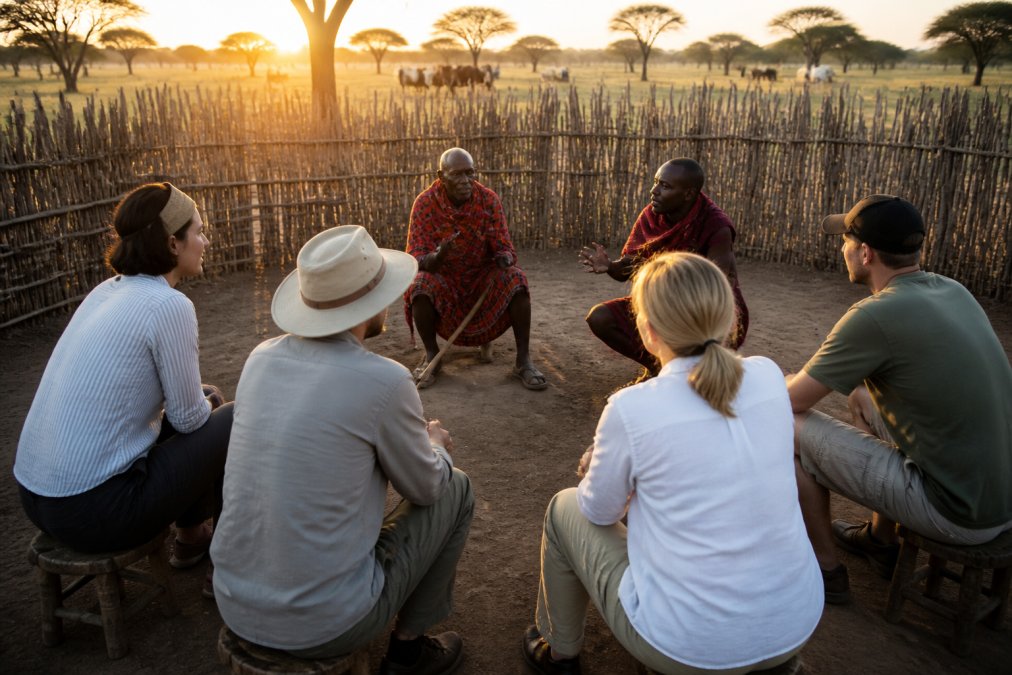
Ethical tribal tourism in Tanzania is easy to spot once you know the signs. A good operator pays communities fairly, limits group size, hires local guides, and asks permission before every visit; a bad one treats villages as photo stops. The difference is the money trail and the visitor cap, not marketing language.
The Impact Assessment Most Operators Never Show You
Most articles tell you to "choose an ethical operator" and stop there. The harder question is whether tourism revenue actually reaches the community. Ask for these four things in writing before you book:
- The community fee per visitor. A common pattern is a fixed per-person fee paid to a village committee, separate from guide tips. If an operator cannot state the amount and who receives it, the fee is likely pooled into general tour costs.
- The split between the operator and the community. Ask what percentage of the cultural-tour portion stays local versus covering transport, fuel, and margin. Reputable operators explain this plainly.
- The visitor cap per village per week. Small Hadzabe camps and family bomas cannot absorb daily busloads. Operators who cap groups protect the experience and the community.
- Where the money goes. School fees, water containers, clinic supplies, and livestock are common priorities. Ask whether support is routed through a village committee or handed out ad hoc.
Questions to Ask Before You Book
- Does the operator pay a fixed community fee, or does it rely on tips?
- How many visitors does each village receive per week?
- Are guides from the community itself or from outside?
- Can the operator name the specific villages and the local contacts?
- Is there a written code of conduct for photography and gifts?
- Does the operator publish or share any record of community payments?
If an operator cannot answer these plainly, walk away. The UN World Tourism Organization guidelines on sustainable tourism stress community consent and benefit-sharing as core principles, not optional extras.
Language Barriers and Getting a Local Guide Right
Most Maasai and Datoga elders speak Maa or a Datoga dialect, not English. A good local guide is not just a translator but your cultural interpreter, telling you when a question is inappropriate and when a gift is welcome.
A few practical habits help across any language gap:
African Tribal Maasai Traditional Mask →
- Learn two or three greetings in the local language before you arrive. The effort matters more than the accuracy.
- Let the guide open and close conversations rather than jumping in.
- Use gestures sparingly; some hand signals carry different meanings across cultures.
- Ask the guide privately if a topic is sensitive before raising it with an elder.
6. Off-the-Beaten-Path Tribes and Budget vs. Luxury Cultural Immersion
Beyond the well-known groups, several off-the-beaten-path tribes offer deep cultural immersion with far fewer visitors. The Iraqw, Sukuma, Luo, Barabaig, and Pare all live within reach of the northern circuit and welcome respectful guests.
Lesser-Known Tribes Worth the Detour
- The Iraqw live in the highlands around Karatu and Mbulu, near the Ngorongoro Conservation Area. They are known for terraced farming, a distinct Cushitic language, and traditional underground houses in older homesteads. Visits fit easily into a Karatu overnight.
- The Barabaig are pastoralists related to the Datoga, living near Mount Hanang in the north-central region. They are known for cattle culture and respect for elders. Access requires a longer drive and a guide who knows the area.
- The Sukuma are one of the largest groups in the country, centered near Lake Victoria and Mwanza. They are known for farming, cattle, and a strong tradition of music and dance, including competitive dance societies. This is a western-circuit add-on rather than a northern one.
- The Luo live near Lake Victoria and along the Mara River corridor. Their traditions include carved masks and oral storytelling. Visits pair well with a western Tanzania itinerary.
- The Pare live in the Pare Mountains in the northeast, near Kilimanjaro. They are known for terraced agriculture, ironworking history, and a distinct language. This is an easy add-on for travelers already in the Kilimanjaro region.
The Luo, for example, have a tradition in which young men carve masks to attract brides, and Simcha African Safaris Limited carries a hand-carved African Tribal Luo Traditional Mask that reflects this custom. The mask is made from the Mpingo wood.

Budget vs. Luxury: What Actually Drives the Cost
Budget versus luxury immersion is less about comfort and more about access, group size, and how much of your money stays with the community. The table below breaks down the practical differences.
| Factor | Budget Cultural Immersion | Luxury Cultural Immersion |
|---|---|---|
| Group size | 8-15 travelers | 2-6 travelers |
| Village time | 1-2 hours | Half day or overnight |
| Guide | Shared driver-guide | Private local guide |
| Accommodation | Basic lodges or camps | Boutique lodges or tented camps |
| Community fee | Often pooled, smaller | Direct, higher per visitor |
| Transport | Shared vehicle, fixed departures | Private vehicle, flexible routing |
| Trip length | Short add-on stops | Multi-day cultural stays |
| Best for | Solo and budget travelers | Couples, families, honeymooners |
Three cost mechanics matter more than the sticker price:
- Group size drives the per-visitor community fee. A private group of four can pay a higher per-person fee and still leave the community better off than a bus of fifteen paying a pooled, smaller amount.
- Time in the village drives authenticity. A one-hour stop rarely allows real exchange. Half-day and overnight stays cost more because they require local hosting, meals, and often a separate guide.
- Routing drives total trip cost. Adding a western-circuit tribe like the Sukuma or Luo means extra transport and lodging, which is the single biggest line item in any cultural add-on.
7. Best Time to Visit and How to Fit Tribal Visits Into a Northern Circuit Safari
The best time to visit for tribal experiences is the dry season, June through October, when roads to Lake Eyasi and Maasai areas are passable and communities are most active. The short rains in November and long rains from March to May can make remote village access difficult.
A typical week might look like this:
- Days 1-2: Tarangire National Park, with a Maasai village stop en route
- Day 3: Lake Manyara or a Chagga coffee tour near Kilimanjaro
- Days 4-5: Serengeti game drives
- Day 6: Ngorongoro Crater
- Day 7: Lake Eyasi for Hadzabe and Datoga visits
Frequently Asked Questions
Is it ethical to visit the Hadzabe tribe?
It can be, if the visit is arranged through a community-based operator with a local guide and the Hadzabe themselves set the terms. Look for small group sizes, no staged hunting performances, and a fee that goes directly to the community. Avoid operators who promise 'authentic' tracking expeditions on demand or push photography without consent. Ask upfront how the fee is split, and treat the Hadzabe as hosts, not attractions. A respectful Hadzabe tribe cultural tour leaves the community better off, not just your camera roll.
How do I arrange a respectful Maasai village visit?
Book through an operator that has a standing relationship with a specific village rather than one that stops at whichever boma is closest. Confirm in advance whether the visit fee goes to the village, a school, or a clinic, and ask what is appropriate to bring. Dress modestly, ask before photographing people or homes, and buy beadwork directly from the makers. Maasai village visit etiquette also means not entering homes uninvited, not touching children without permission, and keeping group sizes small enough that daily life continues around you.
What are the most unique traditions of the Datoga people?
The Datoga are known across northern Tanzania as blacksmiths, forging arrowheads, knives, and jewelry that neighboring communities rely on, including the Hadzabe. Their pastoralist life centers on cattle, and traditional bride price is paid in livestock, which shapes family alliances. You'll often see women wearing heavy brass armbands and beaded leather skirts. A visit usually pairs with a Lake Eyasi itinerary, and the craft demonstrations are genuine work rather than staged shows, which makes the Datoga one of the more distinctive tribes to visit for cultural immersion.
How can I ensure my tribal visit supports the local community?
Ask three questions before booking: who receives the fee, how many visitors the community hosts per week, and whether the community can decline a visit. Operators that can answer all three clearly are usually running ethical tribal tourism in Tanzania. Beyond the fee, buy handicrafts directly from artisans, hire local guides rather than importing them, and choose itineraries that include several tribes instead of one photo stop. If a tour promises a 'tribal experience' with no named community or village, that's a red flag.
What is the best time of year to include tribal visits on a safari?
The dry season from late June through October gives you the most reliable roads to Lake Eyasi and the northern circuit, plus easier access to Maasai villages near the Ngorongoro highlands. January and February are also workable and quieter. The long rains from March to May make some rural routes muddy and can close smaller tracks, though cultural visits near Arusha and Kilimanjaro remain feasible. If your priority is combining wildlife safari integration with tribal visits, plan for July through September and book lodges early.


