

Table of Contents
- Northern Circuit Overview for First-Time Visitors
- Tanzania Safari Itinerary for Beginners: A 5-Day Route
- How Many Days for a Tanzania Safari: Duration Guide
- Best Time to Visit Tanzania for Safari: Seasonal Breakdown
- Must-Visit National Parks and Wildlife Viewing
- Sustainable Safari Practices and Ethical Wildlife Tourism
- Safari for Families: Accessibility and Child-Friendly Routes
- Bringing Tanzania Home: Authentic African Art and Souvenirs
- Frequently Asked Questions
Last Updated: September 29, 2026
Northern Circuit Overview for First-Time Visitors
The Northern Circuit encompasses the Serengeti National Park, Ngorongoro Crater, Tarangire National Park, and Lake Natron, ecosystems that deliver the complete safari experience through safari routes first time visitors should prioritize. The Northern Circuit consistently emerges as an ideal introduction to Tanzania's wildlife because it concentrates diverse ecosystems, the Big Five, and authentic cultural experiences within a manageable geographic area.
The region spans roughly 14,750 square miles of protected land. The Serengeti's endless savannah supports the Great Migration. The Ngorongoro Crater functions as a natural amphitheater where wildlife congregates in remarkable density. Tarangire National Park showcases massive elephant herds and baobab forests. Together, these parks reveal how African ecosystems function at their most dynamic.
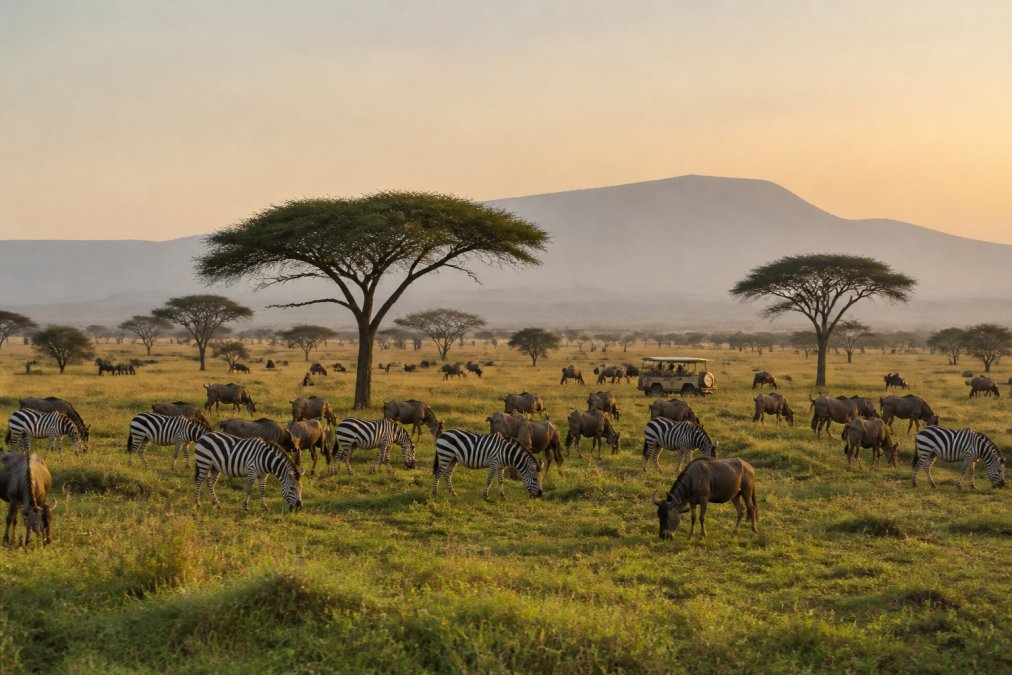
Most first-timers benefit from experiencing at least two parks. A five-day itinerary allows you to explore the Serengeti and Ngorongoro Crater without feeling rushed, while a seven-day trip comfortably incorporates Tarangire. The Northern Circuit's proximity makes multi-park itineraries feasible without excessive travel time.
Tanzania Safari Itinerary for Beginners: A 5-Day Route
A five-day itinerary capturing the best safari routes first time visitors should experience balances game drives, wildlife viewing, and cultural interaction across the Northern Circuit.
Day 1-2: Serengeti National Park and Game Drives
Your first two days focus on the Serengeti. Upon arrival in Arusha, you'll transfer to the Serengeti (approximately 240 kilometers northwest). The six to eight-hour drive transitions from cultivated farmland to acacia woodland to open savannah.
Early morning departures (5:30 AM) position you in prime wildlife viewing territory. Your safari guide navigates established routes while remaining alert for predator activity and animal congregations. Most first-timers are surprised by the sheer density of wildlife: zebras, wildebeest, gazelles, and buffalo appear in herds numbering hundreds. Predator sightings occur regularly during the dry season but are never guaranteed, which is why experienced guides matter tremendously.
Afternoon game drives (3:00 PM to sunset) offer golden light and increased wildlife activity as temperatures cool.
Accommodation ranges from basic tented camps to luxury lodges. First-time visitors often choose mid-range options that balance comfort with authenticity.
Day 3: Ngorongoro Crater Exploration
Day three transitions you to the Ngorongoro Crater, a UNESCO World Heritage site. The volcanic caldera is roughly 19 kilometers in diameter with walls 600 meters high, creating a self-contained ecosystem supporting an estimated 25,000 large animals.
Your descent takes approximately two hours from the rim via a steep road requiring a specialized 4x4 vehicle. The landscape transforms from highland forest to grassland to the crater floor.
The crater floor concentrates wildlife in ways the Serengeti cannot. You'll encounter lion prides, buffalo herds, zebras, wildebeest, and flamingos. Most first-timers see four of the Big Five within their crater visit.
The crater experience differs fundamentally from the Serengeti. Animals are closer, encounters feel more intimate, and the geological drama frames every game drive. Many first-timers describe it as the emotional peak of their safari.
Accommodation near the crater rim (rather than on the floor) offers stunning sunset views over the crater and cooler evening temperatures than lower-altitude parks.
Day 4-5: Tarangire National Park and Cultural Experiences
Your final two days focus on Tarangire National Park and cultural immersion. Less visited than the Serengeti or Ngorongoro, it appeals to first-timers seeking fewer crowds. The park is famous for massive elephant herds (dry season concentrations exceed 3,000) and distinctive baobab trees.
Game drives follow the same early-morning and late-afternoon pattern. The park's smaller size (2,850 square kilometers) means you encounter the same animals multiple times, allowing you to observe behavior evolution and develop deeper understanding of predator-prey dynamics.
On day five, incorporate a cultural experience with a Maasai community. Lodge-arranged village visits allow you to meet pastoralists, learn traditional lifeways, and purchase handcrafted items directly from artisans. Expect 2-3 hours including a traditional Maasai dance performance.
Your return journey to Arusha on day five takes most of the day, typically departing early morning and arriving by evening. This completes your five-day safari routes itinerary.
| Day | Location | Primary Activity | Duration |
|---|---|---|---|
| 1-2 | Serengeti | Game drives (morning & afternoon) | Two full days |
| 3 | Ngorongoro Crater | Crater floor game drives | One full day |
| 4-5 | Tarangire | Game drives + Maasai village visit | Two days |
How Many Days for a Tanzania Safari: Duration Guide
The ideal duration depends on your objectives and budget.
A three-day safari routes itinerary covers one park thoroughly but provides an incomplete picture of the Northern Circuit's diversity.
A five-day safari routes itinerary represents the sweet spot for first-time visitors. It encompasses two or three parks and balances wildlife viewing with cultural experiences. Most first-timers report that five days feel sufficient to see the Big Five and experience multiple habitats.
Zanzibar in African Oil Canvas Painting →
A seven-day safari routes itinerary permits leisurely exploration of three parks plus cultural activities. You'll spend 2-2.5 days per park, increasing the likelihood of rare sightings and allowing deeper engagement with guides.
Best Time to Visit Tanzania for Safari: Seasonal Breakdown
Timing your safari to match wildlife behavior and weather patterns dramatically improves your experience.
Dry Season: June to October
The dry season (June-October) is most popular. Minimal rainfall means vegetation remains sparse, wildlife congregates around water sources, and visibility peaks. Temperatures are mild, and malaria transmission decreases.
The dry season's primary advantage is wildlife predictability. The Serengeti's Great Migration typically occurs in the northern plains during June-July, creating opportunities to witness predator-prey interactions and river crossings.
Disadvantages are crowding and cost. Popular lodges book months in advance, and daily rates increase 30-50% compared to shoulder seasons.
Calving Season: January to March
The calving season (January-March) coincides with the long rains and offers fewer crowds and lower costs. The Serengeti's southern plains experience intense rainfall, triggering wildebeest and zebra calf births that attract predators.
The landscape is verdant and photographically striking. Accommodation costs drop 30-40% from dry season rates.
Challenges include heavy afternoon rains that limit game drives, muddy roads, and increased malaria transmission. Some lodges close during the heaviest rain periods (April-May).
The shoulder seasons (November-December and April-May) offer moderate pricing and reasonable wildlife viewing, though they lack the predictability of the dry season or the drama of the calving season.
Must-Visit National Parks and Wildlife Viewing
The Northern Circuit's three primary parks each merit dedicated exploration. Understanding their distinct characteristics helps you prioritize based on your interests.
Serengeti National Park (5,900 square kilometers) is Tanzania's largest national park and home to the Great Migration. The Serengeti supports roughly 1.5 million wildebeest, 200,000 zebras, and 300,000 gazelles, plus significant predator populations including 3,000 lions.
Ngorongoro Crater is a conservation area where wildlife and Maasai pastoralists coexist.
Sustainable Safari Practices and Ethical Wildlife Tourism
First-time visitors often ask how they can experience safari without contributing to wildlife harm or environmental degradation. Ethical safari tourism requires awareness of your impact and deliberate choices about how you engage with wildlife and communities.
Safari for Families: Accessibility and Child-Friendly Routes
First-time visitors traveling with children often worry whether safari is appropriate for young ages. The answer depends on your child's age, temperament, and your flexibility regarding itinerary adjustments.
Bringing Tanzania Home: Authentic African Art and Souvenirs
First-time visitors often want to bring home tangible reminders of their safari experience. Authentic African art, particularly handcrafted pieces from artisans, connects you to Tanzanian culture and supports traditional craftspeople.
Frequently Asked Questions
What is the best time of year for a first-time safari in Tanzania?
The dry season from June to October offers the best wildlife viewing for first-time visitors, with animals congregating around water sources and vegetation sparse for easier spotting. The calving season from January to March provides dramatic Great Migration moments and abundant wildlife, though afternoon rains are common. Choose based on your priority: consistent game drives (dry season) or dramatic wildlife spectacles (calving season).
How many days do you need for a first-time Tanzania safari?
A minimum of 4-5 days allows you to experience multiple national parks and adapt to the safari rhythm. Most first-time visitors benefit from a 5-7 day itinerary covering the Northern Circuit, which includes the Serengeti, Ngorongoro Crater, and Tarangire. This duration balances wildlife viewing opportunities with travel logistics and cultural experiences without overwhelming your schedule.
What makes the Northern Circuit the best safari route for beginners?
The Northern Circuit concentrates the Big Five, diverse ecosystems, and reliable wildlife viewing in a compact area. It combines the vast Serengeti plains, the wildlife-rich Ngorongoro Crater, and Tarangire's elephant populations, allowing first-timers to experience varied landscapes and abundant animals without extensive travel between parks. Internal flights connect the parks efficiently, minimizing travel time and maximizing game drive hours.
What should I pack for my first safari in Tanzania?
Pack neutral-colored clothing (khaki, tan, green) for game drives, a wide-brimmed hat, high-SPF sunscreen, binoculars, and a camera with a telephoto lens. Bring malaria prophylaxis as recommended by your healthcare provider and verify yellow fever vaccination requirements. Include layers for early morning and evening drives when temperatures drop, insect repellent, and comfortable walking shoes for lodge exploration and cultural visits.


