

Table of Contents
- Why Safely Climbing Kilimanjaro at Fifty Is More Achievable Than You Think
- Medical Clearance for High Altitude Trekking: What to Do Before You Book
- Best Kilimanjaro Routes for Older Hikers
- Kilimanjaro Training Plan for Seniors: A Step-by-Step Approach
- How Long Does It Take to Climb Kilimanjaro Safely at Fifty
- Acclimatization, Altitude Sickness, and the Pole Pole Principle
- Gear Modifications That Make Climbing Kilimanjaro at Fifty Safer
- Post-Climb Recovery for the 50+ Hiker
Last Updated: August 3, 2026
Safely climbing kilimanjaro at fifty is genuinely achievable for the right candidate, and the numbers back that up. According to Kilimanjaro National Park Authority official statistics, climbers in the 50-plus age group represent one of the fastest-growing demographics on the mountain. Simcha African Safaris Limited has guided many of these trekkers to the summit, and the single biggest predictor of success is not age: it is preparation.
Why Safely Climbing Kilimanjaro at Fifty Is More Achievable Than You Think
The most persistent myth about climbing Kilimanjaro at fifty is that the mountain belongs to younger legs. Aerobic capacity does decline gradually with age, but the qualities that matter most on Kilimanjaro, patience, pacing discipline, and mental resilience, tend to improve with decades of life experience. Kilimanjaro is a high-altitude trekking challenge, not a technical climb. What the mountain demands is stamina, sound acclimatization, and the willingness to move slowly.
The pole pole principle, which translates from Swahili as "slowly, slowly," is the unofficial law of Kilimanjaro. Younger climbers frequently ignore it and pay the price with altitude sickness. Older climbers who respect their limits often outperform their twenty-something counterparts precisely because they heed this rule.
Medical Clearance for High Altitude Trekking: What to Do Before You Book
Medical clearance for high altitude trekking is the process of confirming, through clinical assessment, that a person's cardiovascular, pulmonary, and musculoskeletal systems can tolerate the physiological stress of sustained aerobic effort above 5,000 metres. For the 50-plus climber, this step is non-negotiable. Book an appointment with your doctor at least three months before your planned departure date.
Key Health Screenings for the 50+ Climber
The screenings that matter most at this altitude and age bracket include:
- Resting ECG and cardiac stress test: High altitude raises heart rate and blood pressure. An undiagnosed arrhythmia or coronary issue becomes significantly more dangerous above 4,000 metres.
- Spirometry or lung function test: Reduced respiratory reserve limits your ability to compensate for hypoxia.
- Blood panel including haemoglobin: Low haemoglobin reduces oxygen-carrying capacity at high altitude.
- Blood pressure measurement: Hypertension controlled at sea level can become poorly controlled above 3,500 metres.
- Joint assessment: Knee and hip integrity matters enormously on the descent.
Ask your doctor specifically about acetazolamide, a medication commonly prescribed to aid acclimatization. Discuss dosage, timing, and contraindications with your prescribing physician.
Insurance and Medical Coverage Nuances You Cannot Ignore
Standard travel insurance policies frequently exclude high-altitude trekking above a certain elevation threshold. Kilimanjaro's summit, Uhuru Peak, sits at 5,895 metres. Many budget policies cap altitude coverage at 4,000 metres or 4,500 metres.
The coverage you need specifically includes emergency evacuation by helicopter or stretcher from altitude, medical treatment for acute mountain sickness and high-altitude pulmonary and cerebral oedema, repatriation to your home country if required, and trip cancellation if a medical condition prevents departure. Tanzania does not have a national mountain rescue service in the same form as European alpine regions. Evacuation is arranged privately, and costs without adequate insurance can be substantial.
Best Kilimanjaro Routes for Older Hikers
The best Kilimanjaro routes for older hikers are those that prioritize acclimatization time over speed. The Lemosho route (seven to nine days) and the Rongai route (six to seven days) consistently produce better summit outcomes for the 50-plus demographic because both allow the body more time to adjust to rising altitude.
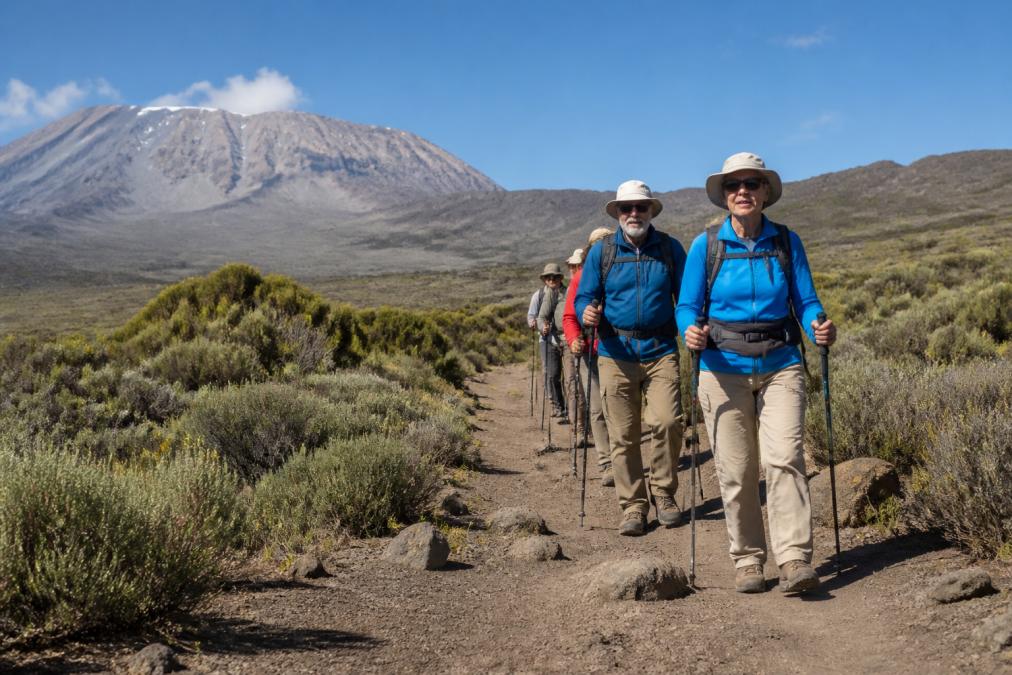
The Marangu route, often marketed as the "easiest" because it uses hut accommodation, is actually the shortest standard itinerary at five days. That brevity makes it one of the lower-success-rate routes precisely because the ascent profile is too steep for proper acclimatization.
| Route | Minimum Days | Acclimatization Profile | Best For |
|---|---|---|---|
| Lemosho | 7-9 | Excellent, gradual ascent | First-time 50+ climbers |
| Rongai | 6-7 | Good, approaches from north | Those wanting a quieter route |
| Machame | 6-7 | Good, popular and well-supported | Fit 50+ climbers with prior altitude experience |
| Marangu | 5-6 | Poor at 5 days | Not recommended for 50+ without extension |
| Northern Circuit | 9-10 | Best on the mountain | Climbers prioritising summit success above all |
Group vs. Private Climbs: Which Works Better at Fifty
Group climbs are cost-effective and provide social motivation, but they introduce a pacing risk particularly relevant for older climbers. A group moves at the pace of its fastest members unless the guide enforces discipline. Private climbs give you complete control over daily pace, rest stops, and itinerary adjustments. For climbers in the 50-plus bracket, that flexibility has a direct bearing on summit success and safety.
Kilimanjaro Training Plan for Seniors: A Step-by-Step Approach
A Kilimanjaro training plan for seniors needs to begin at least four to six months before the climb. The goal is to build the aerobic base, leg strength, and joint resilience to sustain six to eight hours of strenuous hiking per day for up to nine consecutive days.
Cardiovascular Endurance and Aerobic Capacity
Aerobic capacity is the engine of your Kilimanjaro attempt. The training priority for the first two months is building a consistent base of low-intensity cardiovascular work.
- Weeks 1-4: Three to four sessions per week of 30-45 minutes of brisk walking, cycling, or swimming at conversational intensity.
- Weeks 5-8: Introduce one longer session per week (60-90 minutes) and one session with moderate incline.
- Weeks 9-16: Add one weekend hike per week on real terrain with a loaded daypack (8-10 kg), progressively increasing to four to six hours.
- Weeks 17-24: Simulate back-to-back hiking days at least twice before departure to reveal joint and muscular weaknesses.
Training at Kilimanjaro's pace, not at a gym's pace, is the entire point. If you find yourself breathless at a pace you should be able to sustain, slow down rather than push through.
Strength, Flexibility, and Joint Health
Joint health is the underappreciated pillar of a successful Kilimanjaro attempt for the 50-plus climber. The descent from Uhuru Peak covers roughly 3,000 metres of elevation loss, much of it on loose scree and rock. Weak quadriceps and poor knee stability turn that descent into an injury event.
Prioritize squats and step-downs to build quadricep strength and eccentric control, hip strengthening through glute bridges and lateral band walks, calf raises for ankle stability, and yoga or dedicated stretching for hip flexor and hamstring flexibility. Two sessions of strength work per week, integrated with your cardiovascular training, is sufficient.
How Long Does It Take to Climb Kilimanjaro Safely at Fifty
The safest Kilimanjaro itinerary for a climber in the 50-plus age group is a minimum of seven days, with eight or nine days strongly preferred. Shorter itineraries compress the acclimatization window and statistically reduce summit success rates.
A responsible trekking itinerary spans eight days: Day 1 ascends to the first camp in the forest zone at approximately 2,800 m. Days 2-5 progress through moorland and alpine desert zones with a dedicated acclimatization hike on day three ("climb high, sleep low"). Day 6 is a rest and acclimatization day at base camp. Day 7 involves a midnight summit push to Uhuru Peak and descent to a lower camp. Day 8 completes the full descent to the gate.
The "climb high, sleep low" principle on day three is not optional padding. It triggers the physiological adaptations that make summit night survivable.
Acclimatization, Altitude Sickness, and the Pole Pole Principle
Acclimatization is the process by which the human body adapts to reduced oxygen partial pressure at high altitude, primarily by increasing respiratory rate, heart rate, and red blood cell production. It takes time that cannot be rushed, which is why route selection matters so much.
Altitude sickness presents with headache, nausea, fatigue, and dizziness. It is not a sign of weakness or poor fitness. The only reliable treatment is descent. Warning signs requiring immediate descent include severe headache unresponsive to paracetamol, loss of coordination or balance, confusion or altered mental state, persistent vomiting, and breathlessness at rest. According to Wilderness Medical Society guidelines on altitude illness, the cardinal rule of altitude medicine is that no summit is worth a life, and descent is always the correct response to deteriorating symptoms.
Hydration, Nutrition, and Monitoring Oxygen Saturation
Dehydration accelerates the onset of altitude sickness and compounds fatigue. The target on Kilimanjaro is three to four litres of fluid per day. Urine colour is the practical gauge: pale yellow indicates adequate hydration; dark amber indicates deficit.
Eat at every meal even when appetite is suppressed by altitude. Prioritize carbohydrates, which are more efficiently metabolized at altitude than fats. Avoid alcohol entirely, as it dehydrates and impairs the respiratory response to hypoxia. Oxygen saturation should be checked with a pulse oximeter at each camp, ideally morning and evening. A gradual decline across consecutive days is normal; a sudden drop of more than 10 percentage points overnight is a flag for your guide.
Gear Modifications That Make Climbing Kilimanjaro at Fifty Safer
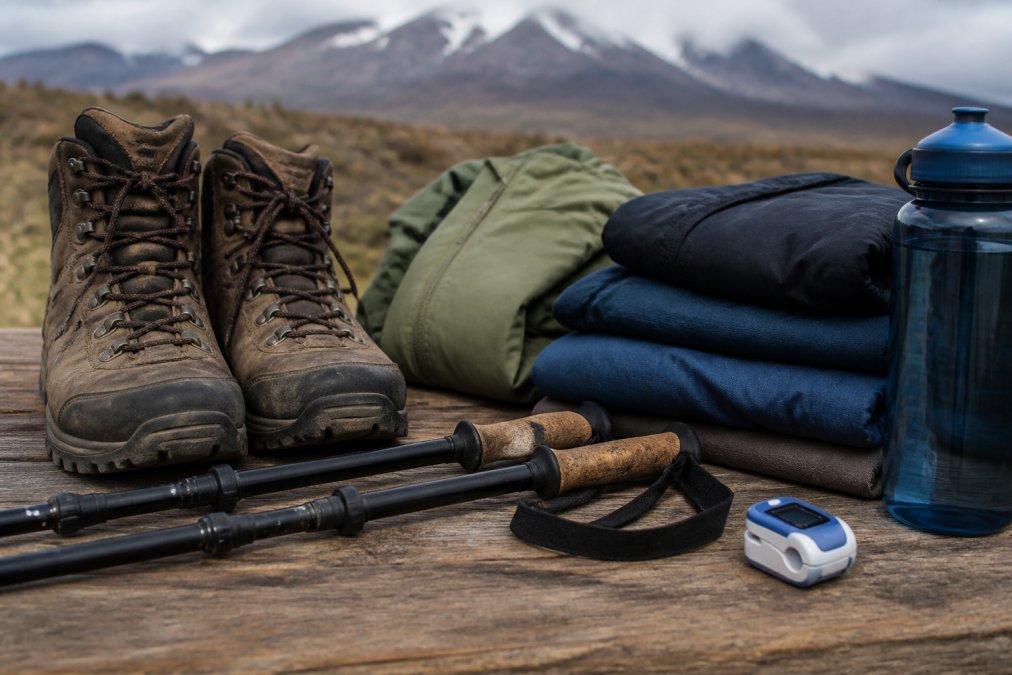
Trekking poles: Non-negotiable at this age. Two poles redistribute load away from the knees on descent by an estimated 25% per step. Adjust pole length so your elbow is at 90 degrees on flat ground.
Trekking boots: Mid-cut or high-cut boots with a stiff midsole provide ankle support on scree. Break them in for a minimum of 80 kilometres before the climb.
Layering system: Kilimanjaro passes through five distinct climate zones. A base layer (moisture-wicking), mid layer (insulating fleece), and outer shell (waterproof and windproof) is the minimum. Summit night temperatures can drop to minus 15 degrees Celsius.
Knee support: Lightweight compression sleeves or prophylactic knee braces are worth carrying for cumulative descent load management.
Gaiters: Scree gaiters prevent small rocks from entering boots on the summit cone, preventing large blisters.
As a reminder of the cultural richness that surrounds Kilimanjaro, the Kilimanjaro warrior oil painting available from Simcha African Safaris Limited captures an African warrior woman standing proudly over the mountain, a powerful piece of Tanzanian art to carry the memory of your climb home.

Post-Climb Recovery for the 50+ Hiker
Post-climb recovery for the 50-plus hiker is a distinct phase that most guides ignore entirely. Expect deep fatigue and muscle soreness in the first three days as the body readjusts to sea-level oxygen levels. Days 4-7 see appetite return and energy improve, though joint inflammation may peak. Days 8-14 allow light walking; avoid running or high-impact exercise. The return of full aerobic capacity typically takes three to four weeks for the 50-plus demographic.
Nutritional priorities post-climb include prioritizing protein intake to support muscle repair and maintaining high fluid intake for the first week. Plan at least two full rest days in Tanzania before any long-haul flight home. Sitting immobile in a pressurized cabin within 24 hours of a major physical effort increases the risk of deep vein thrombosis, a risk that rises with age.
Climbing Kilimanjaro at fifty is a serious undertaking that rewards serious preparation. Simcha African Safaris Limited offers curated Kilimanjaro expeditions designed around the specific needs of the 50-plus climber, with flexible itinerary structures, and access to authentic Tanzanian experiences before and after the climb. Request a quote from Simcha African Safaris Limited and begin planning the expedition your preparation deserves.
Frequently Asked Questions
Is 50 too old to climb Kilimanjaro?
Fifty is not too old for climbing Kilimanjaro at fifty. Many climbers in their 50s and 60s reach the summit each year. Success depends on cardiovascular endurance, proper acclimatization, and choosing a longer trekking itinerary that allows the body to adjust to high altitude. A thorough medical clearance before departure and a slow, steady pace throughout the climb are the two factors that matter most for older trekkers.
What is the best Kilimanjaro route for older hikers?
The Lemosho and Machame routes are widely considered the best Kilimanjaro routes for older hikers because both offer gradual altitude gain and strong acclimatization profiles. The Lemosho route, typically completed in seven to eight days, gives the body more recovery time between camps. Longer routes consistently produce better summit success rates for climbers over fifty because the additional days reduce the risk of hypoxia and altitude sickness.
How should I train for Kilimanjaro if I am over 50?
A Kilimanjaro training plan for seniors should begin at least four to six months before the climb. Focus on building aerobic capacity through hiking, cycling, or swimming three to five days per week. Add strength training twice a week to protect joint health, particularly in the knees and hips. Stair climbing with a loaded pack simulates summit night conditions well. Flexibility work, such as yoga or stretching routines, reduces injury risk on uneven terrain.
Does age affect altitude sickness on Kilimanjaro?
Research does not show that older age directly increases the risk of altitude sickness. Acclimatization ability varies by individual physiology rather than age alone. What does change at fifty is recovery time: the body takes longer to adapt between altitude gains. Choosing a longer trekking route, monitoring oxygen saturation with a pulse oximeter each evening, drinking three to four litres of water daily, and following the pole pole principle all reduce hypoxia risk regardless of age.
What medical clearance do I need for high altitude trekking on Kilimanjaro?
Medical clearance for high altitude trekking should include a cardiovascular assessment, blood pressure check, and a review of any existing conditions such as heart disease, diabetes, or respiratory issues. Discuss medications with your doctor, as some common prescriptions interact poorly with altitude. Your physician may recommend acetazolamide as a preventive measure. Obtain a fitness-to-trek certificate and ensure your travel insurance covers emergency evacuation from high altitude, which standard policies often exclude.
How long does it take to climb Kilimanjaro safely at fifty?
For climbers over fifty, a seven to nine day trekking itinerary is the safest option. Shorter five or six day routes leave insufficient time for acclimatization and raise the risk of altitude sickness. The extra days are not wasted: they are built-in recovery time that directly improves summit success rates. Discuss itinerary length with your mountain guide before booking and treat any operator who pushes a shorter schedule as a warning sign.
This article was written using GrandRanker


