

Table of Contents
- Why Community-Based Conservation in Tanzania Matters
- Understanding Wildlife Management Areas in Tanzania
- Booking an Ethical Safari: What to Look For
- Tanzania Wildlife Conservation Volunteer Opportunities
- How Your Safari Directly Supports Local Communities
- Supporting Local Artisans and Cultural Heritage
- Common Mistakes to Avoid When Contributing to Conservation
- Conclusion
- Frequently Asked Questions
Last Updated: September 10, 2026
Why Community-Based Conservation in Tanzania Matters
Community-based conservation is a model where local people living alongside wildlife hold real decision-making power over the land and animals they share, rather than having rules imposed from outside. To contribute to community based conservation in Tanzania, the most effective paths are tourism that pays communities directly, volunteers with useful skills, and purchases that keep traditional craft economies alive. Conservation only holds when people living with elephants, lions, and wildebeest see a genuine return from protecting them.

The stakes are straightforward. When a farmer loses a season's maize to a passing herd and receives nothing, the next elephant on that field is a problem to be removed, not a wonder to be protected. When that same farmer earns from a lodge, a guiding job, or a benefit-sharing payment, the calculus flips, and that shift from cost to benefit drives every successful conservation program in the country.
Below, we'll show you how to turn a safari, a volunteer placement, or a souvenir purchase into a real contribution, money and effort flowing to the people who share their land with wildlife.
Understanding Wildlife Management Areas in Tanzania
Wildlife management areas are designated zones where communities hold land-use rights and earn revenue from tourism and hunting concessions on that land. Authorized associations, the community bodies holding these rights, negotiate the deals and decide how the money is spent.
The structure changes who benefits. In a national park, the state collects tourism fees and boundary communities often receive little. In a wildlife management area, the authorized association signs contracts with safari operators and lodges, and revenue flows back through schools, clinics, and village projects.
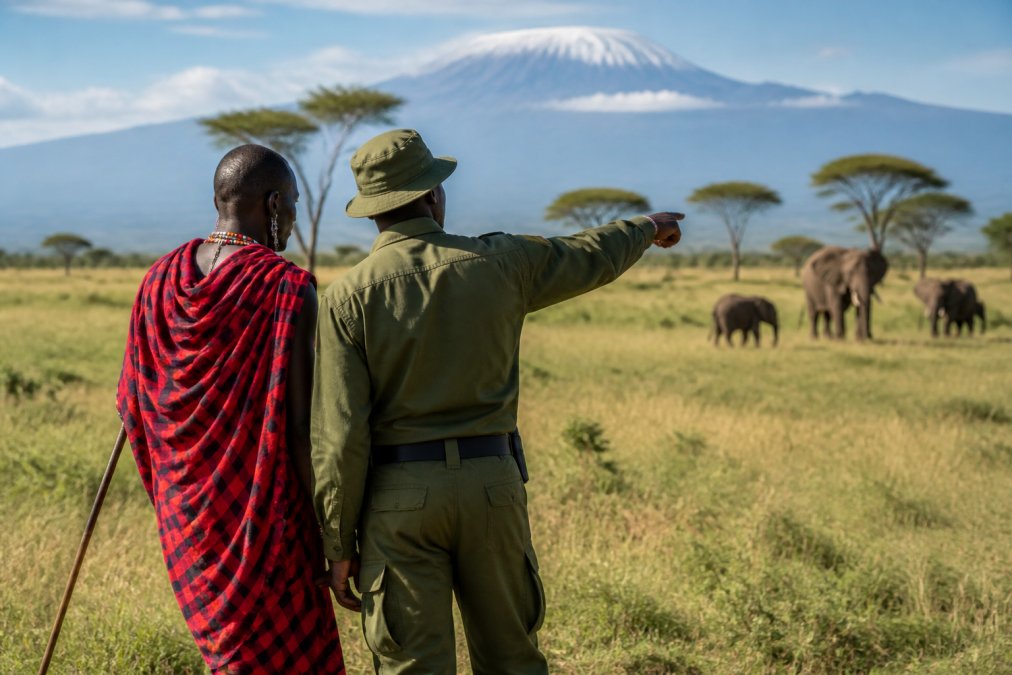
What most visitors miss is that these areas depend on tourism volume. A lodge that fills its rooms funds anti-poaching patrols; an empty lodge funds nothing. That is the practical link between your booking and wildlife protection.
Booking an Ethical Safari: What to Look For
The clearest signal of an ethical operator is transparency about where the money goes. Ask which wildlife management areas or community concessions your itinerary touches, and what share of the fee reaches the community.
Use this checklist before you book:
- The operator names the specific community conservancy or wildlife management area on your route
- You can see a written benefit-sharing arrangement, not just a verbal promise
- Guides are hired from the region you are visiting, not brought in from elsewhere
- Group sizes are capped so vehicles do not crowd wildlife
- The itinerary includes at least one genuine cultural visit, arranged with the community rather than staged for tourists
- Off-road driving and night drives follow the rules of the area you are in
A common mistake is assuming any lodge calling itself "eco" or "community" shares revenue. Some do, many do not. The separating question is simple: who owns the land, and who signs the checks?
Ethical safari practices in Tanzania also mean respecting wildlife corridors, the routes animals use between protected areas. An operator who blocks a corridor for a photo trades long-term habitat for a short-term shot.
Tanzania Wildlife Conservation Volunteer Opportunities
Volunteer placements in and around Tanzania's protected areas fall into four categories, and knowing which fits your skills is the difference between a useful contribution and a costly distraction for your host community.
Field research and wildlife monitoring. Placements with research stations and conservation NGOs tracking elephant, lion, cheetah, and wild dog populations. Tasks include driving transects, recording GPS waypoints, setting and checking camera traps, and entering data. These reward patience and attention to detail more than physical stamina.
Anti-poaching and ranger support. Some conservancies accept volunteers for foot patrols, vehicle maintenance, radio-room support, or de-snaring. Be cautious: untrained volunteers can compromise ranger safety and operational security, so reputable programs usually require prior military, law enforcement, or wildlife experience.
Conservation agriculture and community livelihoods. Placements working with smallholder farmers on drought-resistant crops, beekeeping, or livestock husbandry. Here a background in agronomy, veterinary science, or extension work is genuinely valuable, and a month of your time can translate into a season of better yields for a household.
Education, health, and capacity building. Teaching English, math, or conservation curriculum in village schools; supporting clinics; or helping a community-based organization with bookkeeping, grant writing, or social media. These are often the most requested and least glamorous placements.
What a Realistic Placement Looks Like
Most structured programs ask for two to four weeks minimum, with a sweet spot around one to three months (state.gov). Shorter stints often cost the host more in supervision and orientation than the volunteer produces.
Costs vary widely. A typical fee covers food, lodging, in-country transport, and a project contribution; volunteers usually pay their own airfare, visa, vaccinations, and travel insurance. Ask the program to break the fee into (a) your own costs and (b) project funding. A program that cannot or will not do this is one to skip.
How to Vet a Volunteer Program
- Ask for the name and contact of a past volunteer you can speak with directly.
- Ask what specific task you will be doing in week one, week two, and week three. Vague answers usually mean you will be filling time.
- Ask who supervises you and what their qualifications are.
- Ask how the program handles a volunteer who is not a good fit, a reputable one will send you home rather than keep you on for the fee.
- Confirm whether the program is registered locally and whether it partners with a community-based organization or an authorized association.
The Digital Skills Gap
One of the most underfilled volunteer needs is not boots on the ground but someone who can make sense of what the ground produces. Community monitoring programs increasingly rely on GPS-enabled apps, camera-trap image libraries, and GIS mapping to log wildlife sightings, human-wildlife conflict incidents, and poaching activity. Volunteers with basic spreadsheet, data-cleaning, QGIS, or even organized note-taking skills can turn a ranger's field notebook into a pattern that informs patrol routes.
If you have those skills, say so when you apply. If not, ask whether the program has a data backlog you could organize remotely before you arrive, many do, and remote pre-trip work is often more valuable than your first week on site.
Remote and Skills-Based Contributions
Not everyone can travel. Remote contributions that genuinely help include transcribing and translating field interviews, building or cleaning databases, designing monitoring dashboards, writing grant applications, producing outreach materials, and helping community organizations with websites and social media. These are real needs, and they cost the community nothing in supervision if you deliver finished work.
If you do travel, treat the placement as a job: show up on time, follow local protocols, ask before photographing people or sensitive locations, and leave your work documented so the next person can build on it.
How Your Safari Directly Supports Local Communities
Your safari supports communities through three channels: park and concession fees, employment, and direct spending with locally owned businesses. Employment is the one that lasts.
A guided game drive in a UNESCO World Heritage site funds rangers, vehicle maintenance, and anti-poaching work, that part is automatic. What is not automatic is where the rest of your money lands. A lodge owned outside the region sends its profit outside; a camp staffed and supplied locally keeps it there.
Ask your operator how many staff come from villages near the park, whether produce is bought from local farmers, and whether guides are trained locally. Those three questions tell you more about a trip's real impact than any certification badge.
Combination safaris pairing wildlife viewing with whale shark adventures or hot air balloon rides extend that spending into coastal communities, where fishing families and boat operators earn from conservation-friendly tourism rather than harvesting the same reef.
Supporting Local Artisans and Cultural Heritage
Buying directly from artisans is one of the few conservation contributions where money reaches a household the same day. But Tanzania's craft market is layered, and knowing which layer you buy from determines whether your purchase supports a village carver or a city warehouse reseller.
Where the Money Actually Goes
A carved piece typically passes through up to four hands before reaching a tourist: the carver, a bulk-buying middleman, a market stall operator, and sometimes a hotel gift shop (ilo.org). Each layer takes a cut. Buying at the source, a workshop, village cooperative, or fair-trade retailer with a documented supply chain, can mean the carver receives several times the wholesale price.
The practical test is simple: can you meet the maker, or can the seller name the maker and the village? If the answer is no, you are almost certainly buying from a reseller.
Reading the Craft
Mpingo, or African blackwood, is one of East Africa's most valuable carving woods: dense, dark, heavy for its size, with tight grain and a cool, solid feel (peer-reviewed research). Imitations are often lighter, made from stained softer woods, or cast from resin. Check the base, hand tools leave small irregularities, while machine copies are uniform to the millimeter.
Other authentic traditions worth seeking: Maasai beadwork (ask whether the beads are glass or plastic, and whether a women's cooperative made it), Tingatinga paintings (signed by the artist, not printed reproductions), and hand-woven baskets from Iringa and other regions.
A Buyer's Checklist
- You can meet the maker or the seller can name them and their village
- The price reflects the work, a hand-carved mpingo piece is not cheap, and a suspiciously low price usually signals machine production
- The material matches the claim (weight, grain, and smell are your tests for mpingo)
- The seller can explain the technique and the time involved
- The piece is not made from protected species, avoid ivory, tortoiseshell, and any wildlife product, which are illegal to trade and carry across borders
- Your purchase does not require a CITES permit you do not have
Cultural Visits Done Right
A cultural visit, to a Maasai boma, a Hadza community, or a village near a wildlife management area, can be a genuine income stream or an uncomfortable performance. The difference is consent and control. A visit arranged by the community itself, on their terms, with a clear agreement on what happens and how the fee is shared, is more respectful and more financially meaningful. A lodge-staged photo opportunity usually is not.
Ask before you book: who receives the fee, whether the community set the terms, and whether photography is permitted. Then follow the answer.
Beyond Souvenirs
To reach artisans directly: buy from cooperatives rather than hotel gift shops, pay in local currency where possible, avoid bargaining below the cost of materials, and consider commissioning a piece rather than buying off the shelf. A commission takes longer but pays the carver for time and skill rather than inventory they already hold.
For readers who cannot travel, buying from fair-trade retailers that publish their artisan partnerships is the next best thing. The test is the same: can the seller name the maker?
Common Mistakes to Avoid When Contributing to Conservation
The biggest mistake is treating a donation as a substitute for structural support. A one-time gift to a wildlife fund does less than a booking that employs local guides year after year.
Here are the pitfalls worth sidestepping:
| Mistake | Why It Backfires | Better Approach |
|---|---|---|
| Booking the cheapest operator | Cuts the community share to near zero | Ask what reaches the community, then pay for it |
| Short volunteer stints | Supervision costs exceed your output | Commit to a month or bring a scarce skill |
| Buying "handmade" souvenirs at hotels | Often mass-produced, little local benefit | Buy from makers or trusted sources |
| Ignoring land tenure questions | Money can bypass the people who own the land | Ask who holds the land rights |
| Photographing people without consent | Erodes trust and dignity | Ask first, respect a no |
A second common error is assuming wildlife conflict is someone else's problem. Human-wildlife conflict is the single biggest threat to coexistence, and proven mitigations like beehive fences, crop guarding, and compensation schemes all need funding. Choosing operators who contribute to those schemes is a direct way to help.
Conclusion
The hard truth is that conservation in Tanzania succeeds or fails on whether local people profit from living with wildlife, and most visitors never ask who actually gets paid. That is the gap worth closing on your next trip.
Simcha African Safaris Limited offers expert-guided game drives in iconic national parks, combination safaris that include whale shark adventures, flexible durations from 3 to 7 days, and handcrafted art sourced from real makers. Request a quote and plan a trip where the wildlife you came to see is the same wildlife your visit helps protect.
Frequently Asked Questions
How can I ensure my contributions directly reach local conservation projects?
Choose tour operators and organizations that are transparent about their community partnerships and can show you exactly which projects your money supports. Ask for specific names of Wildlife Management Areas or Authorized Associations they work with. When booking a safari, request a breakdown of how community fees are allocated. For donations, use organizations that publish annual reports and allow you to designate funds for specific programs like anti-poaching patrols or school support. Direct engagement with community-run initiatives gives you the most visibility into where your money goes.
What are the most effective ways for tourists to support conservation?
Book safaris with operators that hire local guides and contribute to Wildlife Management Areas. Pay the required conservation fees without negotiating them down. Purchase authentic handcrafted art directly from artisans or through verified sellers, which keeps money in local economies. Consider adding a volunteer component to your trip, such as a day with a community monitoring project. Avoid activities that exploit wildlife, like riding elephants or walking with captive lions. Your choices as a traveler signal what practices the market should reward.
How does Simcha African Safaris Limited integrate community support into their tours?
Simcha African Safaris Limited offers handcrafted African art, such as the Elephant Masaai mask and Mpingo wood sculptures, sourced from local artisans. These pieces, like the African Heritage Sculpture, represent both cultural preservation and economic support for the communities that create them.
What role do Authorized Associations play in community-based conservation?
Authorized Associations are community-led bodies that manage Wildlife Management Areas on behalf of local villages. They set rules for resource use, collect tourism and hunting fees, and distribute benefits to member communities. They also coordinate with government wildlife authorities on anti-poaching and habitat protection. By working through these associations, your safari or donation supports a structured system that gives locals a direct stake in protecting wildlife. Ask your tour operator which Authorized Association operates in the areas you visit.


