

Table of Contents
- Why Hydration and Energy Matter on Safari
- Safe Drinking Water on Safari
- Water Filter Bottles for Tanzania Safari
- Drinking Water Regularly Throughout the Day
- Electrolytes for Safari Travel
- What to Eat on a Safari Game Drive
- Protecting Yourself from Heat and Sun Exposure
- Recognizing Dehydration and Heat Illness
- Frequently Asked Questions
Last Updated: October 13, 2026
Why Hydration and Energy Matter on Safari
To stay hydrated energized safari in Tanzania isn't a luxury, it's essential.
Those who plan their hydration and nutrition ahead see the Big Five and remember every detail; those who don't spend half the drive exhausted and missing opportunities.
The heat is real, the distances are vast, and your stamina determines how much you get from this trip. This guide shows you how to stay sharp and energized for every moment.
Safe Drinking Water on Safari
Clean water is your foundation. Tanzania's tap water isn't always safe for visitors, whose stomachs can't handle the bacteria locals have adapted to over lifetimes.
Here's what works:
- Bottled water: Buy sealed bottles at lodges and camps. Check the seal before opening. This is the safest choice.
- Filtered water: Use a portable water filter bottle designed for travel. These remove most bacteria and parasites.
- Boiled water: Lodges and camps provide boiled water. Ask staff to fill your bottle with water that's been boiled and cooled.
The risk isn't worth the convenience, one bad case of traveler's diarrhea can ruin your entire trip. Stick to safe sources.
Water Filter Bottles for Tanzania Safari
A quality water filter bottle keeps water clean and reduces plastic waste. You'll refill at lodges and camps, and a filter lets you refill from treated sources without worrying about minor contaminants.
Look for bottles with these features:
- Activated carbon filters: Remove chlorine, sediment, and some bacteria
- Lightweight design: You'll carry this all day on game drives
- Large capacity: 24-32 ounces lets you go longer between refills
- Durable construction: Safari conditions are rough, your bottle needs to survive bumps and heat
Popular options include brands like LifeStraw and Grayl. These are practical tools, not luxuries, bring one from home or buy one on arrival.
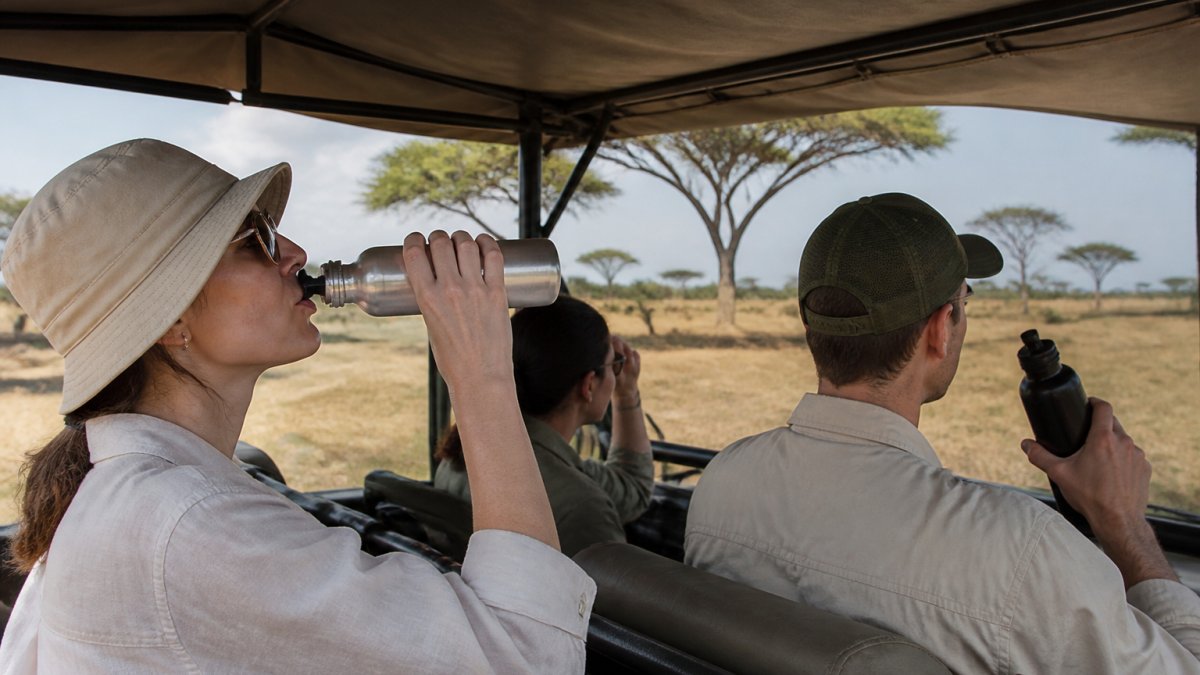
Drinking Water Regularly Throughout the Day
The biggest mistake is waiting until you're thirsty. Thirst is a lagging signal, you've typically lost around 1-2% of body weight in fluid before you feel it, roughly the point where focus, reaction time, and mood start to slip.
The fix isn't a single number of ounces but a routine mapped to your day, because a game drive, walking safari, long transfer, and lodge afternoon all drain you differently.
A safari hydration routine by activity and time of day
Pre-dawn (before your first game drive, roughly 5:00-6:00 AM) Drink 16-20 ounces with breakfast to top off after a night of dry air and, at higher elevations like the Ngorongoro Crater rim, extra fluid lost to altitude.
Mid-morning break (roughly 10:00-10:30 AM) Drink 12-16 ounces, and take an electrolyte tab if you've been sweating steadily.
Midday (roughly noon-2:00 PM) This is the hottest, highest-UV stretch. At the lodge, drink 16-20 ounces with lunch plus a hydrating food (watermelon, cucumber, oranges).
Afternoon game drive (roughly 3:00-6:00 PM) Drink 12-16 ounces across the drive.
Evening (after sunset, with dinner) Drink 16-20 ounces to replace what you lost across the whole day.
Adjusting for walking safaris and long transfers
- Walking safaris: Moving, sweating, and in direct sun for 1-3 hours. Carry at least 1 liter per person and drink 6-8 ounces every 20-30 minutes.
- Long transfers (park-to-park, airstrip runs): Sneaky dehydration windows, you're seated, distracted, and may not feel hot. Keep a bottle within reach and drink on a timer, not on thirst.
- Lodge and camp breaks: Refill every bottle before you leave, even if it's half full. Don't assume the next stop has water.
Why small and frequent beats large and rare
Your stomach absorbs water best in modest amounts. Chugging a liter can leave you sloshy and nauseated, and you'll lose some to urine before it's absorbed. Small, steady sips keep hydration stable, protecting your energy and focus across a long day.
A simple rule of thumb
Aim for roughly 2-3 liters of total fluid per day, more on hot full-day drives or walking safaris. Urine color is your cheapest check: pale straw is good, dark amber means drink more.
Electrolytes for Safari Travel
Water alone isn't always enough in the heat. Sweat loses water and sodium together, so replacing only water dilutes the sodium left in your body, which is why some travelers drink plenty and still feel weak, headachy, or crampy.
When water isn't enough
Plain water is fine for short, cool outings. Electrolytes earn their place when:
- You're sweating steadily for more than about an hour
- It's hot and you're in direct sun (midday game drives, walking safaris)
- You've had diarrhea or vomiting, you're losing fluid and minerals fast
- You're drinking a lot of plain water and still feel off
A useful rule: if your sweat is stinging your eyes or leaving white salt lines on your hat or shirt, you're a salty sweater and should lean toward electrolyte replacement earlier.
What you're actually replacing
- Sodium: The main electrolyte lost in sweat. Helps your body hold onto water and supports nerve and muscle function.
- Potassium: Supports muscle contraction and helps prevent cramps. Lost in smaller amounts than sodium.
- Magnesium: Supports muscle relaxation and energy metabolism. Easy to under-consume on a travel diet.
- Chloride and calcium: Also lost in sweat; usually covered by a normal diet.
How to use electrolyte packets and tablets
Bring packets or tablets from home, lighter, cheaper, and more reliable than hunting locally. Common options include Liquid IV, Nuun, and GatorLyte, plus oral rehydration salts (ORS) for illness.
- Mix according to package directions. Don't double the powder thinking more is better, too much sodium can cause its own problems.
- Use one serving during or after a hot, sweaty block of the day (midday drive, walking safari, long transfer).
- On a normal cool day with light activity, you may not need one at all.
- If you're on a sodium-restricted diet or take blood pressure or diuretic medication, check with your doctor before using electrolyte products.
Electrolytes from food
You don't need a packet every hour, meals and snacks do a lot of the work:
- Bananas, oranges, and dried fruit, potassium
- Nuts, seeds, and whole grains, magnesium
- Cheese, yogurt, and salted crackers, sodium and calcium
- Broth-based soups and salted nuts, easy sodium
Lodges typically serve these. Eat intentionally rather than picking at your plate, your body needs the minerals in heat.
Energy: food as fuel, not just flavor
Electrolytes handle hydration; calories handle stamina. Long drives and walking safaris burn energy steadily, and low blood sugar shows up as fatigue, irritability, headaches, and poor focus, exactly when you want to be watching wildlife.
- Eat a real breakfast with protein and complex carbs before your first drive.
- Snack every 90-120 minutes on the vehicle: trail mix, energy bars with 5-10 grams of protein, fresh fruit, crackers and cheese, jerky.
- Avoid heavy, fatty meals right before a drive, they sit in your stomach and make you sluggish.
- Avoid relying on sugary snacks alone; they spike and crash your energy.
A simple daily pattern
- Morning: water with breakfast, plus a normal meal for baseline sodium and potassium.
- Midday heat: one electrolyte serving if you've been sweating for an hour or more.
- Afternoon: water plus a snack with salt and potassium.
- Evening: rehydrate with dinner and a hydrating food; skip a second electrolyte packet unless you had a very hot, very active day or you're recovering from illness.
What to Eat on a Safari Game Drive
Food fuels your stamina. Long game drives burn calories fast, so pack foods that maintain energy without sluggishness.
Pack these items for your game drive:
- Trail mix: Nuts and dried fruit provide sustained energy. Pack a small bag.
- Energy bars: Choose ones with 5-10 grams of protein. They won't melt in heat like chocolate bars.
- Fresh fruit: Oranges, apples, or bananas travel well. Fruit has natural hydration too.
- Crackers and cheese: Protein and carbs together keep you alert.
Avoid these on game drives:
- Heavy, fatty foods that sit in your stomach
- Foods high in sugar that cause energy crashes
- Anything that requires refrigeration
- Foods that spoil quickly in heat
Eat small snacks every 90-120 minutes. This keeps your blood sugar stable and your energy consistent. A consistent energy level means better focus on wildlife and landscapes.
Protecting Yourself from Heat and Sun Exposure
The sun in Tanzania is intense, closer to the equator, with altitude amplifying UV radiation. Sunburn isn't just uncomfortable; it dehydrates you faster and can lead to heat illness.
Protect yourself:
- Sunscreen: Use SPF 30 or higher. Apply every 2 hours and after swimming. Bring enough from home, it's expensive in Tanzania.
- Hat: A wide-brimmed hat shades your face and neck. Wear it on every game drive.
- Long sleeves: Light, breathable fabrics protect your arms without trapping heat.
- Sunglasses: Polarized lenses reduce glare and protect your eyes.
Heat exhaustion happens gradually, you don't feel it coming until you're affected, and prevention is far easier than recovery.
Simcha African Safaris Limited guides know the landscape and position your vehicle for shade during rest stops. Let them guide you.
Recognizing Dehydration and Heat Illness
Know the signs. Early recognition makes all the difference.
Mild dehydration signs:
- Thirst (obvious, but often ignored)
- Dry mouth or lips
- Reduced urination or dark urine
- Mild fatigue
Moderate dehydration signs:
- Dizziness or lightheadedness
- Headache
- Muscle weakness
- Rapid heartbeat
Heat exhaustion signs:
- Heavy sweating
- Weakness or dizziness
- Nausea or vomiting
- Headache
If you notice these signs, stop. Tell your guide immediately. Sit in shade. Drink water with electrolytes. Rest until you feel better.
Learning to stay hydrated energized safari transforms your experience, you see more, remember more, and feel better.
Your wellness isn't separate from your adventure, it's part of what makes it possible.
Ready to experience Tanzania's wildlife and culture at your best?
Frequently Asked Questions
How much water should I drink on a safari?
Aim to drink at least 3-4 liters of water daily on safari, more if you're active or exposed to intense heat. Drink consistently throughout the day in small amounts rather than large quantities at once. Start your day with a full bottle before your game drive, refill at lunch, and continue drinking into the evening. Your urine color is a good indicator: pale yellow means you're well-hydrated, dark yellow suggests you need more water. Listen to your body and increase intake if you're sweating heavily or spending extended time in direct sun.
Should I bring a water filter bottle on safari?
Yes, a water filter bottle is highly recommended for safari travel. It allows you to refill from various water sources while removing bacteria, parasites, and sediment. Portable filter bottles like those with activated carbon or hollow-fiber membranes are lightweight and practical for game drives and lodge stays. Even though many lodges provide safe drinking water, having a filter bottle gives you independence during long drives and outdoor activities. Choose one with a capacity of at least 32 ounces and ensure it's durable enough for outdoor use.
Can I brush my teeth with tap water in Tanzania?
At established lodges and camps, tap water is typically treated and safe for brushing teeth. However, in remote areas or smaller camps, it's safer to use bottled or filtered water for brushing. When in doubt, ask your guide or lodge staff about water safety. Carry bottled water in your room for brushing if you're uncertain. This precaution prevents potential stomach issues from ingesting untreated water, especially if you have a sensitive digestive system.
What snacks help keep your energy up during a long game drive?
Pack a combination of carbohydrates, protein, and healthy fats: trail mix with nuts and dried fruit, energy bars, fresh fruit like bananas and oranges, cheese, whole-grain crackers, and peanut butter packets. These foods provide sustained energy without requiring refrigeration. Avoid heavy, greasy foods that can cause digestive discomfort during bumpy drives. Pair snacks with regular water intake and electrolyte drinks to maintain both energy and hydration. Most lodges also provide packed lunches for full-day game drives with sandwiches, fruits, and beverages.


