

Table of Contents
- Dry Season vs. Wet Season: What Each Offers in 2026
- The Best Time for a Great Migration Safari in 2026
- Month-by-Month Safari and Beach Breakdown
- When to Visit Zanzibar for Perfect Beach Weather
- Peak Season vs. Low Season: Crowds, Prices, and Malaria Risk
- Planning Your Tanzania Safari and Beach Itinerary 2026
- Adding Tanzania Whale Shark Safari Tours to Your Trip
- Final Verdict: The Best Time to Visit Tanzania for Safari and Beach
- Frequently Asked Questions
Last Updated: September 5, 2026
Planning a 2026 Tanzania trip means balancing the dry season's prime wildlife viewing with the coast's tropical rhythm. The best time for safari and beach falls between late June and October. This guide from Simcha African Safaris Limited breaks down every month so you can match wildlife movements, beach weather, and crowd levels to your travel style.
Your ideal timing depends on whether the Great Migration or a beach escape matters more, and how you feel about sharing the bush with other travelers.
Dry Season vs. Wet Season: What Each Offers in 2026
The dry season, running from late June through October, offers the most reliable game viewing across the northern safari circuit. Vegetation thins out, animals congregate around permanent water sources, and the Serengeti's short grass makes predator action easier to spot. Daytime temperatures sit comfortably in the 70s and 80s, while nights cool down noticeably.
The wet season splits into two periods. The short rains arrive in November and December; the long rains follow from March through May, when many lodges close and remote roads become difficult. For birders, the wet season is unmatched: migratory species arrive in huge numbers.
The Best Time for a Great Migration Safari in 2026
The Great Migration is a continuous, year-round cycle across the Serengeti ecosystem. For 2026, calving in the southern Serengeti runs from January through March, when roughly half a million wildebeest calves are born in the Ndutu area.
Mara River crossings, the migration's most dramatic spectacle, typically peak between July and October (nationalgeographic.com). Game drives deliver unmatched wildlife density, though you will share the experience with more vehicles than in the calving months.
| Migration Event | Best Months | Location | Crowd Level |
|---|---|---|---|
| Calving season | Jan - Mar | Ndutu / Southern Serengeti | Moderate |
| Grumeti crossings | May - Jun | Western Corridor | Low |
| Mara River crossings | Jul - Oct | Northern Serengeti | High |
| Return south | Nov - Dec | Central Serengeti | Low |
Month-by-Month Safari and Beach Breakdown
January
- Safari: Calving season peaks in the Ndutu area of the southern Serengeti and Ngorongoro Conservation Area. Hundreds of thousands of wildebeest calves are born, and predator action is at its annual high, prime for photographers.
- Beach: Zanzibar enjoys its 'short dry season' with minimal rainfall, low humidity, and daytime highs around 86°F (30°C). The ocean is warm and calm, ideal for snorkeling and diving.
- Crowds & Prices: Moderate crowds in the south; beach resorts are busy but not at peak. Prices are mid-range.
February
- Safari: Calving continues, though the herds begin to disperse slightly. The landscape is still green, and birdlife is exceptional, a sweet spot for fewer vehicles than January.
- Beach: Conditions mirror January, dry, sunny, and warm.
- Crowds & Prices: Similar to January; a good value window before the long rains.
March
- Safari: The long rains typically begin mid-month. The southern plains get muddy, and many mobile camps start to close. Early March can still offer good viewing, but it's a gamble.
- Beach: Humidity rises, and afternoon showers become more frequent, the start of the low season.
- Crowds & Prices: Low crowds; prices drop significantly as the rains arrive.
April & May
- Safari: This is the heart of the long rains. Most permanent lodges close, airstrips become unusable, and wildlife viewing is poor as animals disperse. We strongly advise against a safari in these months.
- Beach: Zanzibar experiences its wettest period with overcast skies, high humidity, and sporadic downpours. Marine activities are frequently canceled due to rough seas, the only time we recommend skipping Tanzania entirely for a first trip.
- Crowds & Prices: Absolute low season; many beach resorts also close for renovation.
June
- Safari: The long rains taper off. The western corridor (Grumeti River) becomes the focus as the migration pushes through. Game viewing is excellent and the landscape is still lush.
- Beach: Zanzibar's weather stabilizes quickly. Rainfall drops off, sunny days return, and the ocean calms down.
- Crowds & Prices: Low to moderate crowds; prices are still below peak.
July
- Safari: The migration reaches the northern Serengeti, and Mara River crossings begin in earnest, peak wildlife drama. The grass is short, and animals are concentrated.
- Beach: Perfect beach weather: dry, sunny, and breezy. Daytime highs are around 82°F (28°C).
- Crowds & Prices: Crowds surge; prices hit their annual peak. Book 8-10 months in advance.
August
- Safari: The peak of the Mara River crossing season. Herds are massed on the northern banks. Expect busy game-viewing sites, but the spectacle is unmatched.
- Beach: Ideal conditions continue, the busiest month on Zanzibar's beaches.
- Crowds & Prices: Maximum crowds and prices across the board.
September
- Safari: River crossings continue, though the herds start to thin as some groups begin moving south. Still excellent viewing in the north.
- Beach: Dry and warm; crowds begin to ease slightly after the August rush.
- Crowds & Prices: High, but slightly less frenetic.
October
- Safari: The migration is still in the north but begins its trek south. The central plains (Seronera) start to see action again, a transition month with good, but not guaranteed, crossings.
- Beach: Still dry and pleasant.
- Crowds & Prices: Moderate; prices start to dip.
November
- Safari: The short rains arrive, usually as brief afternoon showers. The herds move through the central Serengeti, the landscape turns green, and birding is spectacular, a hidden gem for travelers who don't mind a little rain.
- Beach: Zanzibar sees more showers, but there are still long sunny stretches.
- Crowds & Prices: Low crowds; prices are in the low season range.
December
- Safari: The short rains ease. The herds arrive back in the southern Ndutu area, setting the stage for calving season. Wildlife viewing is good across the south.
- Beach: Humidity rises, but the weather is generally warm with passing showers.
- Crowds & Prices: Low in the parks until Christmas week, then a sharp surge. Prices rise again for the holidays.
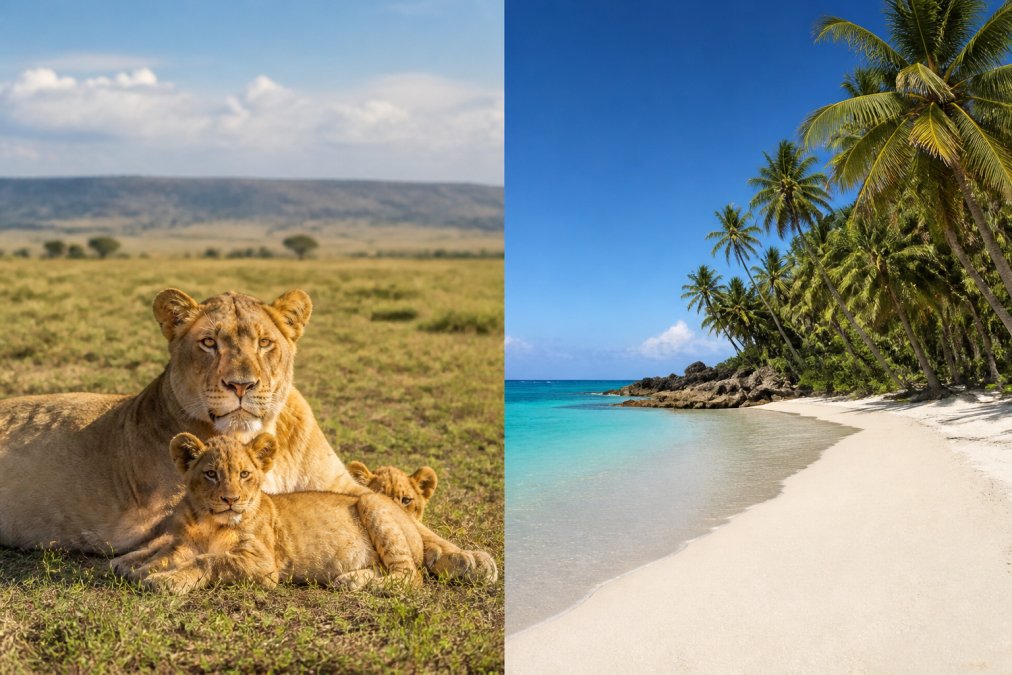
When to Visit Zanzibar for Perfect Beach Weather
Zanzibar's coastal climate follows its own rhythm, distinct from the mainland's safari conditions. For perfect beach weather, plan your stay between June and October, when rainfall is minimal and daytime temperatures hover in the low 80s.
The dry season means calm seas, excellent visibility for snorkeling and diving, and long stretches of sunshine. January and February also offer beautiful conditions, though humidity creeps higher.
Peak Season vs. Low Season: Crowds, Prices, and Malaria Risk
Peak season from July to October brings the highest lodge rates and the busiest game-viewing areas. Off-peak rates during the green season can be substantially lower, and you will often have prime sightings to yourself. The shoulder months of June and November offer a middle ground.
Malaria risk exists year-round in Tanzania, but it increases during and just after the wet season when mosquito breeding accelerates (the CDC). The dry season from June to October carries the lowest transmission risk, another reason families and first-time visitors favor this window. Consult your healthcare provider about prophylaxis well before departure.
For families, the June through October window aligns with school summer break, making it the most practical choice despite the crowds. Couples and photographers willing to travel during shoulder season will find better value and more intimate experiences.
Planning Your Tanzania Safari and Beach Itinerary 2026
Most guides treat the safari and the beach as two separate vacations. The core challenge is that the best safari months (July-October) align perfectly with the best beach months, but the internal travel between the Serengeti and the coast takes planning.
The Minimum Time Frame
A combined trip needs a minimum of 10 days to feel balanced: 7 days on safari and 3 on the coast. This accounts for two internal flights and the travel buffer they require.
The Standard Route: Arusha → Northern Circuit → Zanzibar
- Arrival (Day 1): Fly into Kilimanjaro International Airport (JRO) and overnight in Arusha, the gateway to the northern safari circuit.
- Safari (Days 2-8): Head into the Serengeti and Ngorongoro Crater. The most efficient use of time is a flying safari: take a scheduled light aircraft from Arusha's local airstrip directly into the Serengeti, rather than a 4-5 hour road transfer. This saves a full day of driving.
- Coast (Days 8-10): Fly from the Serengeti's airstrip (e.g., Seronera or Kogatende) directly to Zanzibar's Abeid Amani Karume International Airport (ZNZ). Daily scheduled flights via Coastal Aviation or Auric Air connect the parks to the island. The flight takes roughly 1.5 to 2 hours with a possible stop in Arusha.
- Departure (Day 10): Fly out from Zanzibar. This avoids the long drive back to the mainland and lets you end your trip on the beach.
The Reverse Route: Beach First, Safari Second
Consider the reverse route. If you fly into Zanzibar first, you can adjust to the time zone on the beach, then fly to the mainland for your safari. The trade-off is ending your trip with a long journey back to Kilimanjaro for your international departure.
The Southern Route: Ruaha & Mafia Island (For January-March)
If you are traveling between January and March for calving season, the logistics shift. Instead of the northern circuit, pair a safari in the southern parks (Ruaha or Nyerere National Park) with a stay on Mafia Island for whale shark season. Fly from Dar es Salaam (DAR) into the southern parks, then onward to Mafia.
Key Logistics Checklist for 2026
- Internal Flights: Budget for two internal flights. A typical routing (Arusha → Serengeti → Zanzibar) costs between $400 and $600 per person, depending on the season and how far in advance you book.
- Baggage Allowance: Light aircraft have strict baggage limits, usually 15 kg (33 lbs) per person in a soft-sided duffel bag. Hard-shell suitcases are often not accepted. Pack accordingly.
- Flight Timing: Schedule your Zanzibar departure flight for the late morning or early afternoon. This gives you a final game drive in the Serengeti on your last morning before flying out.
- Seamless Booking: Use a specialist operator like Simcha African Safaris Limited to coordinate the internal flights, park fees, and lodge transfers. They handle the complex interconnections so you don't miss a connection.
Adding Tanzania Whale Shark Safari Tours to Your Trip
Tanzania whale shark safari tours operate primarily around Mafia Island, where the whale sharks gather between October and March. This window aligns neatly with the calving season on the mainland. The whale sharks arrive when the short rains bring nutrient-rich waters.
For snorkelers and divers, swimming alongside whale sharks is a bucket-list moment few destinations offer with such reliability. If marine life draws you to Tanzania, structure your itinerary so the whale shark leg happens between January and March, when sightings are most consistent.
Final Verdict: The Best Time to Visit Tanzania for Safari and Beach
For most travelers, the best time to visit Tanzania for safari and beach in 2026 is late June through October. This window delivers the Great Migration's river crossings, the driest beach weather on Zanzibar, lower malaria risk, and the most reliable game viewing. The tradeoff is higher prices and more company in popular areas.
Travelers who prioritize value and solitude over guaranteed river crossings should target January through March instead. The calving season offers extraordinary predator action, whale shark encounters are at their peak, and the beaches remain beautiful. Whatever window you choose, Tanzania rewards careful planning with experiences that stay with you long after you return home.
Frequently Asked Questions
What is the best month to do a safari in Tanzania?
June through September is the best time for a safari in Tanzania. These months fall in the dry season, when wildlife density is highest and animals gather around predictable water sources in the Serengeti. Game viewing is at its peak, especially for the Great Migration river crossings in the northern Serengeti. Expect clear skies, comfortable daytime temperatures, and minimal rain. This period also aligns with the calving season in the southern Serengeti from January to February, which offers exceptional predator action.
Can you combine a Serengeti safari with a beach vacation in one trip?
Yes, combining a Serengeti safari with a Zanzibar beach vacation is a popular itinerary. Internal flights connect the Serengeti to Zanzibar, making the logistics manageable. The best time to visit Tanzania for a combined safari and beach itinerary is June through October, when the dry season ensures excellent wildlife viewing and the Indian Ocean coast has warm, dry weather. December through February also works well for those who prefer fewer crowds. Plan at least 10 days to balance game drives with beach relaxation.
When is the best time to visit Zanzibar for beach weather?
The best time to visit Zanzibar for beach weather is from June through October, during the dry season. You will get long sunny days, low humidity, and calm Indian Ocean waters, ideal for snorkeling and diving. The short rains in November and the long rains from March through May bring higher humidity and precipitation, though the island stays warm year-round. For a safari and beach combination, June through October offers the most reliable coastal climate after your time in the Serengeti.
What are the pros and cons of visiting during the shoulder season?
The shoulder seasons, which are October and November, plus February and March, offer a balance of good wildlife viewing and lower prices. Pros include fewer crowds at safari camps, off-peak rates on accommodation, and lush scenery after the rains. Cons include unpredictable weather and the possibility of afternoon showers that can interrupt game drives. In Zanzibar, the shoulder season can mean higher humidity. For budget-conscious travelers, the shoulder season provides a solid compromise between the high season and the wet season.
Choosing the right timing is only half the challenge; the other half is coordinating safari logistics, internal flights, and beach transfers across two very different environments. Simcha African Safaris Limited builds curated itineraries that handle both halves seamlessly, from expertly guided game drives in UNESCO World Heritage sites to the relaxation your beach days deserve. Request a quote and let us tailor your 2026 adventure around the wildlife moments and coastal calm you came to find.
This article was written using GrandRanker


