

Table of Contents
- What Is the Kilimanjaro Summit Success Rate?
- Best Kilimanjaro Route for Success
- How Many Days to Climb Kilimanjaro for Best Success
- Climbing Kilimanjaro at Fifty: Age and Success
- Kilimanjaro Altitude Sickness Prevention and Success
- Why Climbers Fail to Reach the Summit
- Physical Preparation and Guide Experience Matter
- Planning Your Kilimanjaro Summit Attempt
- Frequently Asked Questions
Last Updated: September 4, 2026
What Is the Kilimanjaro Summit Success Rate?
The kilimanjaro summit success rate 2026 reflects one of the most important realities of climbing Africa's highest peak: reaching the top is far from guaranteed. While the overall success rate across all climbers and routes hovers in the range of 45 to 65 percent depending on the operator and season, the number that actually matters for your planning is the rate specific to your chosen route and itinerary length (peer-reviewed research). This guide from Simcha African Safaris Limited breaks down those variables so you can make an informed decision before you book.
Success on Kilimanjaro is not primarily about physical strength or willpower. It is determined almost entirely by how well your body adapts to altitude, which means the structure of your climb matters more than almost anything else. Understanding the kilimanjaro summit success rate before you go helps you choose a route and schedule that give you the best possible odds.
Here is the honest picture: climbers who take longer itineraries of eight days or more see dramatically higher summit success rates than those on five-day climbs. Many experienced guides report success rates above 90 percent on the longest routes, while shorter treks often see less than half of their groups reach the summit (peer-reviewed research). Below, we will show you exactly how to structure your climb for the best results.
Best Kilimanjaro Route for Success
The best kilimanjaro route for success is the Northern Circuit, followed closely by the Lemosho and Machame routes. The reason comes down to one factor: time spent at altitude before summit night. Routes that allow more days for acclimatization consistently produce higher success rates, and the statistics from operators across the industry support this pattern.
A common mistake is choosing a route based on scenery or difficulty rather than acclimatization profile. The route you take determines how many nights you spend sleeping at altitude, which directly impacts your body's ability to produce the red blood cells needed to function in thin air.
Machame Route Success Rates
The Machame Route, often called the "Whiskey Route," is the most popular path up the mountain. Its kilimanjaro summit success rate typically falls in the range of 60 to 70 percent when climbed over seven days. The route offers good acclimatization through its "climb high, sleep low" profile, but the steep ascent to Barranco Wall and the long summit push from Barafu Camp challenge many climbers.
Lemosho Route Success Rates
The Lemosho Route begins on the western side of the mountain and is widely considered the best kilimanjaro route for success among climbers who want a balance of wilderness and acclimatization time. Success rates on the Lemosho Route reach 80 to 90 percent on eight-day itineraries. The route's longer approach and gradual ascent give your body more time to adjust, and the crossing of the Shira Plateau provides stunning views that distract from the altitude.
Northern Circuit Route Success Rates
The Northern Circuit is the newest and longest route, circling around the northern slopes of the mountain. It boasts the highest kilimanjaro summit success rate of any route, frequently exceeding 90 percent on nine-day itineraries. The extra day of acclimatization and the relatively gentle gradient make this the safest choice for climbers who want maximum odds of reaching the summit.
Rongai and Marangu Route Success Rates
The Rongai Route approaches from the north and offers a drier, quieter experience, with success rates around 60 to 70 percent on seven-day climbs. The Marangu Route, the only route with hut accommodation, is often underestimated. Its six-day standard itinerary produces lower success rates of around 45 to 55 percent because of the rapid ascent profile, though the seven-day version improves those odds considerably.
How Many Days to Climb Kilimanjaro for Best Success
How many days to climb Kilimanjaro for best success is the single most important decision you will make. The answer is clear: choose an itinerary of at least seven days, and preferably eight or nine, if your schedule allows. Each additional day on the mountain reduces the risk of altitude sickness and increases your chances of a successful summit.
| Itinerary Length | Success Rate Range | Best For |
|---|---|---|
| 5 days | 30-50% | Experienced, fast-acclimatizing climbers |
| 6 days | 45-60% | Those with limited time and good fitness |
| 7 days | 60-75% | Most recreational climbers |
| 8 days | 75-90% | First-time high-altitude climbers |
| 9+ days | 85-95% | Maximum success probability |
The relationship between days and success is not linear; it is exponential. The difference between a six-day and an eight-day climb can be the difference between turning around at Stella Point and standing on the true summit at Uhuru Peak. Many climbers who fail on shorter itineraries succeed on their second attempt simply by adding a day.
Climbing Kilimanjaro at Fifty: Age and Success
Climbing Kilimanjaro at fifty is not only possible; it is common, and age alone does not significantly reduce your chances of success. Many operators report that climbers in their fifties succeed at rates comparable to younger climbers when they follow proper acclimatization protocols. The key difference at fifty is not physical capacity but recovery time and the need for disciplined pacing.
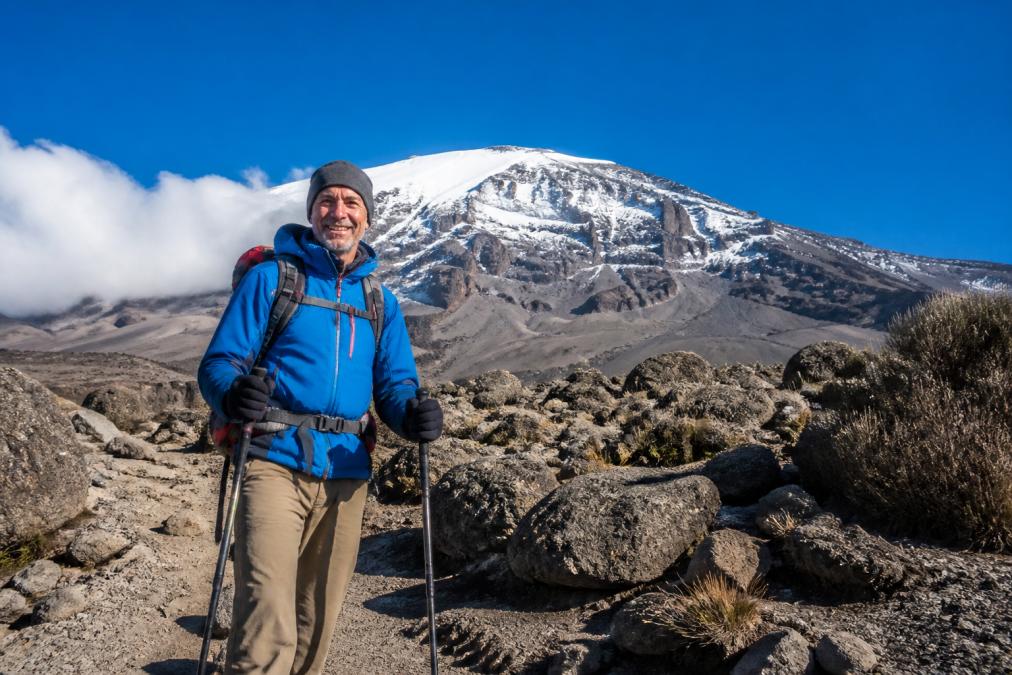
What matters more than your chronological age is your aerobic fitness, your history of altitude exposure, and your willingness to follow the "pole pole" philosophy of slow, steady walking. Climbers over fifty who train consistently for six months before departure and choose an eight-day route have success rates that match or exceed younger climbers who train less.
The physiological reality is that maximum oxygen consumption declines with age, but the demands of Kilimanjaro are modest compared to technical mountaineering. The summit day requires sustained effort rather than explosive power, which plays to the strengths of experienced, endurance-trained climbers in their fifties.
Kilimanjaro Altitude Sickness Prevention and Success
Kilimanjaro altitude sickness prevention is the most direct way to improve your kilimanjaro summit success rate. Altitude sickness, also known as acute mountain sickness, occurs when your body cannot adapt quickly enough to decreasing oxygen levels, and it is the primary reason climbers turn back before reaching the summit.
Prevention starts with a slow ascent profile, which is why route and itinerary length matter so much. The physiological process of acclimatization involves your body producing more red blood cells and breathing more deeply to compensate for lower oxygen saturation. This process cannot be rushed, and no amount of fitness can override the need for time at altitude.
Practical prevention strategies include:
- Ascending no more than 1,000 meters per day above 3,000 meters (the CDC)
- Sleeping lower than your highest daytime altitude
- Staying extremely well hydrated throughout the climb
- Monitoring your oxygen saturation with a pulse oximeter
- Communicating honestly with your guide about any symptoms
The "climb high, sleep low" strategy is the foundation of safe acclimatization. It means your daytime hikes take you higher than your overnight camps, giving your body exposure to altitude followed by recovery at a lower elevation. This pattern triggers physiological adaptation while reducing the risk of altitude sickness.
Why Climbers Fail to Reach the Summit
Most climbers fail to reach the summit for reasons that are entirely preventable. The primary causes are altitude sickness, exhaustion, and inadequate preparation, with altitude-related issues accounting for the vast majority of turnarounds.
The summit push typically begins around midnight, and climbers ascend from their final camp at around 4,600 meters to the summit at 5,895 meters in darkness and freezing temperatures. This six-to-eight-hour climb is physically demanding, but the real challenge is the altitude. Many climbers who felt fine at camp develop severe symptoms during the summit push.
Common reasons for failure include:
- Insufficient acclimatization from too-short itineraries
- Dehydration and inadequate caloric intake
- Pacing too fast in the early days of the trek
- Ignoring early symptoms of altitude sickness
- Poor gear choices that lead to cold and discomfort
The descent is also a critical factor. After reaching the summit, climbers must descend several thousand meters in a single day, and the physical toll of the summit push combined with the rapid descent can cause problems. Climbers who summit but struggle on the descent still count as successful, but the journey down requires its own preparation.
Physical Preparation and Guide Experience Matter
Physical preparation and guide experience are the two factors within your control that most influence your kilimanjaro summit success rate. While altitude is the great equalizer, arriving at the mountain with strong aerobic fitness and climbing with an experienced team gives you the best chance of handling whatever the mountain throws at you.
Training for Kilimanjaro should focus on sustained aerobic endurance rather than speed or strength. Long hikes with elevation gain, stair climbing, and incline treadmill work are the most effective preparation. Many successful climbers train for six months, gradually building up to eight-to-ten-hour days with a loaded pack.
The quality of your guiding team matters just as much as your fitness. Experienced guides recognize early symptoms of altitude sickness, adjust pacing to match the group, and make critical decisions about when to push forward and when to turn back. The guide-to-climber ratio is important; smaller groups allow for more personalized attention.
Planning Your Kilimanjaro Summit Attempt
Planning your Kilimanjaro summit attempt requires decisions that will directly impact your kilimanjaro summit success rate. Start by choosing your dates; the best climbing seasons are January through March and June through October, when weather conditions are most stable. The shoulder months can bring heavier precipitation and colder temperatures that complicate the climb.
Your preparation timeline should include six months of consistent training, a gear checklist that prioritizes warmth and layering, and a conversation with your chosen operator about their success rates and safety protocols. Ask directly about their guide-to-climber ratio, their emergency evacuation procedures, and how they handle climbers who develop altitude sickness.
At Simcha African Safaris Limited, we structure our Kilimanjaro expeditions around the principles that drive the highest success rates: longer itineraries, gradual acclimatization, and experienced guides who prioritize safety over summit pressure. Our curated Tanzania safari experiences extend beyond the mountain, allowing you to explore the wildlife and culture of the region after your climb.
The financial investment in a longer itinerary is worth it. The difference between a six-day and an eight-day climb is often the difference between a successful summit and a story about the one that got away. Plan for success by giving yourself the time your body needs.
The challenge of Kilimanjaro is not the climb itself; it is the preparation. By choosing the right route, giving yourself enough days, and training properly, you can dramatically improve your odds of standing at Uhuru Peak. Simcha African Safaris Limited offers expertly guided Kilimanjaro expeditions that prioritize acclimatization and safety, along with curated safari experiences that let you explore Tanzania's wildlife and cultural heritage before or after your summit attempt. Our team handles the logistics so you can focus on the climb. Request a quote and start planning the adventure of a lifetime.
Frequently Asked Questions
Which Kilimanjaro route has the highest summit success rate?
The Lemosho route is widely considered to offer good success rates due to its acclimatization profile. The Northern Circuit is also known for its longer acclimatization. Shorter routes like Marangu (5 days) generally have lower success rates due to insufficient time for acclimatization. Success depends on itinerary length and how well your body adjusts to high altitude during the climb.
Is 50 too old to climb Kilimanjaro?
No. Age alone does not determine success on Kilimanjaro. Climbers in their 50s, 60s, and beyond summit successfully every year. What matters more is physical conditioning, cardiovascular fitness, and mental preparation. Choosing a longer itinerary (7-9 days) gives your body better acclimatization time at high altitude. Proper training before your climb and working with an experienced guide significantly improves your odds regardless of age.
How does the number of climbing days affect summit success?
Itinerary length directly impacts success rates. More days mean your body acclimatizes better to altitude and oxygen saturation levels improve gradually. The pole pole approach (taking it slowly) reduces acute mountain sickness risk. Rushing the climb compresses acclimatization time, making summit night and the final push much harder.
What is the primary reason climbers fail to reach the summit?
Altitude sickness and inadequate acclimatization account for most failures. Acute mountain sickness affects climbers who ascend too quickly without proper acclimatization days. Physical exhaustion and dehydration also contribute significantly. Choosing a longer itinerary, staying hydrated, and following guide recommendations on pacing reduce failure risk. Mental fatigue during summit night can also stop climbers, preparation and realistic expectations help you push through when it gets difficult.
This article was written using GrandRanker


