

Table of Contents
- Understanding the Serengeti Migration Duration
- The Circular Nature of the Great Migration
- Best Time of Year for Serengeti Migration
- Why the Migration Happens: Rainfall and Grazing Patterns
-
How to Plan a Tanzania Safari Itinerary Around the Migration
- Step 1: Define Your Priority and Budget Framework
- Step 2: Choose Your Dates Based on Migration Phase and Accommodation Availability
- Step 3: Select Your Safari Duration
- Step 4: Work with Guides and Operators with Real-Time On-Ground Knowledge
- Step 5: Plan Your Vehicle and Group Size
- Step 6: Include Non-Migration Wildlife Viewing
- Step 7: Account for Logistics and Hidden Costs
- Climate Change Impact on Migration Patterns
- Ethical Wildlife Viewing and Photography Logistics
- Frequently Asked Questions
Last Updated: September 23, 2026
Understanding the Serengeti Migration Duration
How long does the Serengeti migration last each year? The answer is: it never stops. The migration isn't a linear event with a clear start and finish, it's a continuous twelve-month cycle.
The Great Migration involves approximately 1.5 million wildebeest, zebra, and gazelle moving in a roughly circular pattern across the Serengeti and Masai Mara ecosystems. Timing shifts yearly based on rainfall patterns, requiring flexibility and local expertise to predict herd movement.
The most visible phases occur during calving season (January-March) and river crossings (July-September), but constant herd movement seeking fresh grazing happens year-round.
The Circular Nature of the Great Migration
The Serengeti migration forms a continuous loop driven by seasonal rainfall and grass availability. Herds migrate because they must, not by choice.
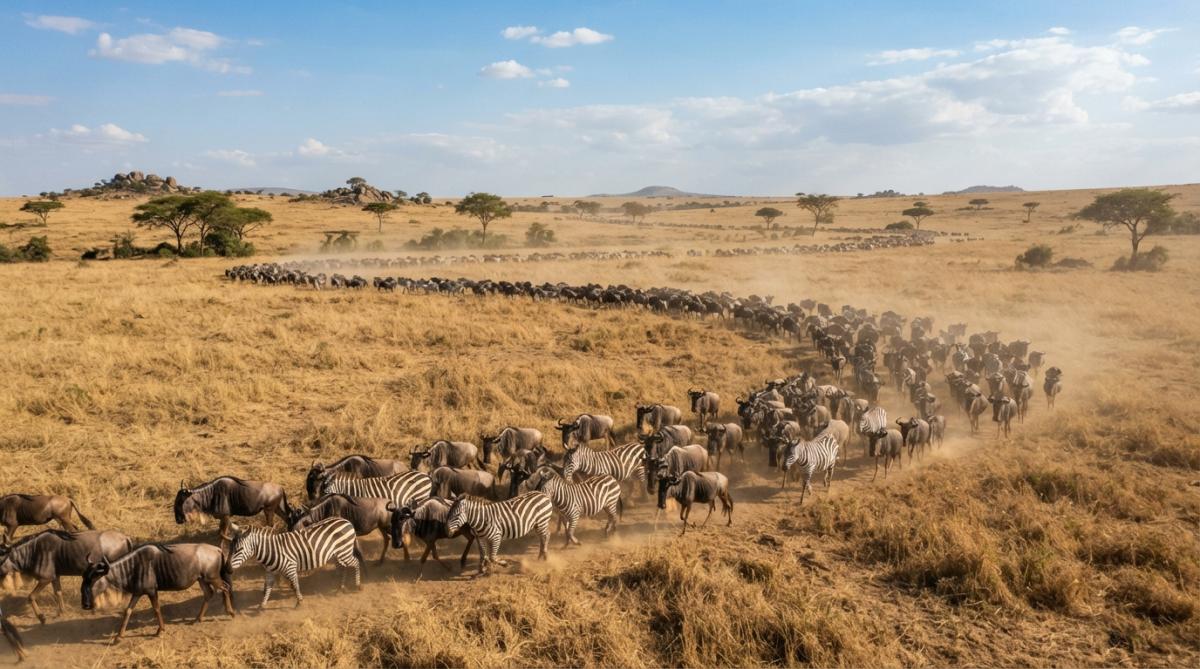
Herds spend the wet season in the southern Serengeti where grass is abundant. As the dry season approaches, they move northwest toward the Grumeti River, cross into the Masai Mara, and return south when rains return. This complete circuit takes approximately twelve months, though timing varies yearly.
The migration is never truly "over." Predator-prey dynamics and ecosystem relationships remain active year-round. The migration isn't a destination, it's how these animals survive.
Best Time of Year for Serengeti Migration
The best time to witness the Serengeti migration depends entirely on which phase interests you most and what trade-offs you're willing to accept. Different months offer dramatically different experiences, wildlife densities, and accessibility conditions. Here's a month-by-month breakdown:
January to March: Calving Season
Calving season transforms the southern Serengeti into a nursery. Between January and March, approximately 500,000 calves are born across just a few weeks. This concentration of newborns attracts massive predator populations, lions, leopards, hyenas, and wild dogs converge on the calving grounds in the Ngorongoro Conservation Area and southern plains.
What you'll see: Intense predator-prey dynamics with high kill rates and among the highest wildlife density of the year.
Trade-offs: Rainy season (March is wettest) means muddy roads and reduced visibility. Accommodation prices are lower and crowds minimal, but herd sightings are less predictable.
April to June: Post-Calving Dispersal and Green Season
After calving, herds disperse northward as the long rains green the landscape. April-June is often overlooked but offers exceptional value and wildlife diversity.
What you'll see: Dispersed herds, lush vegetation, frequent predator sightings, and excellent bird watching. Northern Serengeti and Masai Mara see herd movement by late May-June.
Trade-offs: Less concentrated drama than calving or river crossings. Roads are good, prices drop 30-50%, and tourist density is low.
July to September: Great Migration River Crossings
July through September represents the most famous phase of the migration, the river crossings. During these months, massive herds attempt to cross the Grumeti River (primarily July-August) and later the Mara River (August-September) as they move from Tanzania into Kenya.
What you'll see: Dramatic river crossings with crocodile predation, herd bunching, and thousands of animals crossing daily. Masai Mara experiences peak herd presence in August-September.
Trade-offs: Peak tourism season with full camps, prices 40-60% higher, and crowded viewing areas. However, predictability is high, you know where herds will be.
October to November: Short Rains and Herd Return
October and November mark the short rains and the beginning of the herds' return journey southward. This is a transition period with moderate tourist traffic and variable conditions.
What you'll see: Herds move south as fresh grass emerges. Wildlife is dispersed but present with good predator sightings.
Trade-offs: Unpredictable weather and muddy roads. Herd locations less predictable than peak seasons. Accommodation prices moderate.
December: Dry Season Transition
December sees herds settling into the southern Serengeti as the dry season begins. This is a quieter month that bridges calving season and the year's cycle.
What you'll see: Herds concentrating in the south with increasing predator activity. Weather is dry and clear. Tourist numbers low until late December.
Trade-offs: Late December brings holiday crowds and higher prices. Early December offers excellent value and solitude.
April to June and October to November: The Overlooked Shoulder Seasons
These months offer excellent value and minimal crowds. Wildlife viewing remains excellent and accommodation prices are 30-50% lower than peak season. The trade-off is less concentrated herd movement.
Why the Migration Happens: Rainfall and Grazing Patterns
The migration is driven by rainfall patterns and grazing distribution. The Serengeti receives most rainfall during October-November (short rains) and March-May (long rains), triggering fresh grass growth that attracts herds. The southern Serengeti receives more rainfall, making it ideal during the dry season. As southern grasslands deplete, herds move northwest toward the Grumeti and Mara Rivers for water and grass. Migration timing shifts yearly based on rainfall, early rains trigger earlier movement, late rains delay it. Guides who monitor current conditions can predict herd location weeks in advance.
How to Plan a Tanzania Safari Itinerary Around the Migration
Planning a safari around the migration requires balancing your interests, available dates, budget, and realistic expectations. Here's how to approach it systematically:
Step 1: Define Your Priority and Budget Framework
Determine your primary goal. Are you most interested in witnessing the river crossings, experiencing the calving season drama, photographing predator behavior, or simply spending time in a world-class wildlife ecosystem? Your answer determines which months make sense and what accommodation style suits your needs.
Big five mask. African Mask. Mask. →
Choose your accommodation strategy. This decision has the largest impact on your total cost and experience type:
Permanent Lodges (mid-range to luxury): Fixed properties offer consistent comfort and established infrastructure at $300-$800+ per night. Benefits: hot showers, reliable electricity. Drawbacks: less flexibility to follow herds, higher costs, crowded viewing areas during peak season.
Mobile Camps (mid-range): Seasonal camps relocate to follow herds at $250-$500 per night. Benefits: positioned near active movement, smaller groups, immersive experience. Drawbacks: basic amenities, less predictability, weather exposure.
Budget Camping (budget): Basic campsites cost $50-$150 per night. Benefits: lowest cost, authentic experience. Drawbacks: minimal comfort, self-catering required, limited guide access.
Step 2: Choose Your Dates Based on Migration Phase and Accommodation Availability
For river crossings (July-September): Book 6-9 months in advance. Peak lodges fill by April-May. Expect premium prices (40-60% above shoulder season rates).
For calving season (January-March): Book 4-6 months in advance. Cheaper accommodation and fewer crowds, but muddier roads. January-February offer better conditions than March.
For shoulder seasons (April-June, October-November): Book 2-3 months in advance. Prices drop 30-50%, crowds minimal, roads good. Trade-off: herds more dispersed.
Step 3: Select Your Safari Duration
Minimum 5-7 days: Allows time to locate herds and account for weather changes. Shorter trips leave insufficient margin for wildlife viewing unpredictability.
Ideal 8-10 days: Permits multiple ecosystems, flexibility to reposition, and time for non-migration wildlife (leopards, cheetahs, elephants, buffalo).
Extended 10-14 days: Permits deep immersion and exploration of less-visited areas like the Grumeti River region or northern Serengeti.
Step 4: Work with Guides and Operators with Real-Time On-Ground Knowledge
A guide with real-time knowledge of current herd location can adjust your itinerary on the fly. Book with established operators who maintain on-the-ground presence year-round.
Red flags: Generic itineraries, guides relying on historical calendars, operators without on-ground staff during your dates.
Green flags: Weekly herd location updates, guides with 5+ years experience, flexible itinerary adjustments based on real-time sightings.
Step 5: Plan Your Vehicle and Group Size
Vehicle type matters. Open-sided safari vehicles offer 360-degree viewing and photography angles. Closed vehicles provide weather protection but limit visibility.
Group size affects experience. Smaller groups (4-6 people) allow flexible positioning and personalized attention. Larger groups reduce cost but limit photography opportunities.
Step 6: Include Non-Migration Wildlife Viewing
The Serengeti and Masai Mara offer exceptional year-round wildlife beyond the migration. A well-designed itinerary allocates 40-50% of driving time to migration viewing and 50-60% to general wildlife exploration.
Step 7: Account for Logistics and Hidden Costs
International flights: Budget $800-$1,500 from major U.S. hubs to Kilimanjaro or Dar es Salaam.
Park entrance fees: Serengeti National Park costs $60 per person per day. Masai Mara (Kenya) costs $80 per person per day. Ngorongoro Conservation Area costs $50 per person per day.
Visa: Tanzania requires a visa ($50-$100 depending on processing method).
Travel insurance: Strongly recommended; budget $100-$300 for a 7-10 day trip.
Climate Change Impact on Migration Patterns
Climate change is already affecting migration timing and patterns. Rainfall has become less predictable across East Africa, which directly impacts when and where herds move. Droughts have become more severe and more frequent, forcing herds to migrate earlier or take different routes than historical patterns suggest.
Ethical Wildlife Viewing and Photography Logistics
Witnessing the migration comes with responsibility. Ethical wildlife viewing protects the animals and ensures the ecosystem remains healthy for future generations.
Frequently Asked Questions
Is the Great Migration a year-round event?
The Serengeti migration is a continuous year-round cycle rather than a single annual event. Herds are always moving somewhere across the ecosystem, but the most dramatic and accessible phases occur during calving season (January-March) and river crossings (July-September). The circular journey means the migration never truly ends, it repeats annually as herds follow rainfall and fresh grazing across the savannah.
What months are best to see the Great Migration river crossing?
July through September offer the best chances to witness river crossings, particularly at the Mara River and Grumeti River. During these months, massive herds cross into Kenya's Maasai Mara in search of grazing. The crossings are most intense in July and August, with thousands of wildebeest, zebra, and gazelle attempting to ford the rivers simultaneously. September crossings occur as herds begin returning to Tanzania.
How should I plan a Tanzania safari itinerary to see the migration?
Timing is critical. For river crossings, visit July-September. For calving season and predator activity, choose January-March. Book 4-7 days minimum to increase wildlife encounter odds. Work with experienced operators like Simcha African Safaris Limited who adjust itineraries based on herd location. Include game drives in Serengeti National Park and consider combining safari with cultural experiences or handcrafted African art purchases to enrich your journey.
What factors influence how long the migration takes each year?
Rainfall patterns, grazing availability, and predator-prey dynamics drive migration timing annually. Delayed or early rains shift when herds move, sometimes compressing or extending the migration cycle. Climate variability means no two years are identical. Herd density and calf survival rates also affect movement speed. This unpredictability is why experienced safari guides and real-time herd tracking are essential for planning an itinerary that maximizes your chances of witnessing this ecosystem spectacle.


