

Table of Contents
- Why Learning Basic Swahili Transforms Your Tanzania Cultural Experience
- How to Pronounce Swahili Words: A Beginner's Guide
- Swahili Greetings and Introductions: Your First Conversations
- Basic Swahili Phrases for Travelers: Everyday Essentials
- Directions, Markets, and Getting Around in Swahili
- Beginner Swahili Learning Resources for Pre-Trip Study
- Common Mistakes and Respectful Alternatives
- Conclusion: Speak with Confidence on Your Tanzania Journey
- Frequently Asked Questions
Last Updated: October 8, 2026
Why Learning Basic Swahili Transforms Your Tanzania Cultural Experience
A simple "Jambo" opens more doors in Tanzania than any itinerary upgrade. Learning basic Swahili for Tanzania cultural travelers is the difference between watching a culture and being welcomed into one.
The language itself is friendly to beginners. Swahili is a Bantu language with Arabic influences, and its sounds are consistent.
Below, we'll show you exactly how to pronounce the sounds, greet people properly, and handle real travel moments with confidence.
How to Pronounce Swahili Words: A Beginner's Guide
Swahili pronunciation is refreshingly predictable. Every letter gets pronounced, and every syllable ends in a vowel. Say each syllable evenly, and you'll sound clear from day one. The catch is that most English speakers never practice this out loud before a trip, so the first time they try Tafadhali is at a market stall. Build the habit at home instead.
Vowel Sounds and Syllable Stress
Swahili has five vowels, and they never change sound:
- a sounds like "ah" in father
- e sounds like "eh" in bed
- i sounds like "ee" in see
- o sounds like "oh" in go
Stress almost always falls on the second-to-last syllable. So Asante (thank you) is ah-SAHN-teh, and Karibu (welcome) is kah-REE-boo. Break long words into syllables and say them slowly: Tafadhali becomes tah-fah-DHAH-lee.
Syllable-by-Syllable Practice Drill
The fastest way to lock in pronunciation is to clap the syllables. Say each chunk on a clap, keep every clap the same length, and resist the urge to speed up on the last one. Here is how a few high-frequency words break down:
| Word | Meaning | Syllables | Say It |
|---|---|---|---|
| Asante | Thank you | a-san-te | ah-SAHN-teh |
| Karibu | Welcome | ka-ri-bu | kah-REE-boo |
| Tafadhali | Please | ta-fa-dha-li | tah-fah-DHAH-lee |
| Habari | How are you / news | ha-ba-ri | hah-BAH-ree |
| Ndiyo | Yes | ndi-yo | n-DEE-yoh |
| Hapana | No | ha-pa-na | hah-PAH-nah |
| Shikamoo | Respectful hello | shi-ka-moo | shee-kah-MOH |
| Samahani | Excuse me / sorry | sa-ma-ha-ni | sah-mah-HAH-nee |
| Ningependa | I would like | ni-nge-pe-nda | nee-ngeh-PEH-ndah |
Run the table three times a day for the first week. Read it aloud, not silently. Your mouth learns the rhythm faster than your eyes do.
Using Audio to Check Yourself
Phrase lists are everywhere, but audio is what turns a list into usable speech. Two practical moves:
- Shadow a native recording. Play a short clip of a greeting, pause it, and copy the speaker's rhythm and pitch, not just the sounds. Repeat until your version matches the clip's length.
- Record yourself. Most phones have a voice memo app. Record Habari ya asubuhi? (Good morning?), play it back next to a reference recording, and listen for clipped vowels or rushed syllables.
UCLA Language Materials Project on Swahili phonetics
Common Pronunciation Mistakes to Avoid
The biggest mistake is swallowing vowels. English speakers tend to clip word endings, but Swahili wants every vowel sounded. Ndiyo (yes) is n-DEE-yoh, not "ndyo."
Other traps to watch:
- Rolling the "r" too hard, when a light tap works fine
- Pronouncing "ng" as in "sing," when it's closer to n-g
- Rushing syllables together instead of keeping them even
- Dropping the final vowel in asante so it sounds like "asant"
Slow down. Clear beats fast every time. If a listener asks you to repeat something, that is a signal to slow the syllables, not to say it louder.
Swahili Greetings and Introductions: Your First Conversations
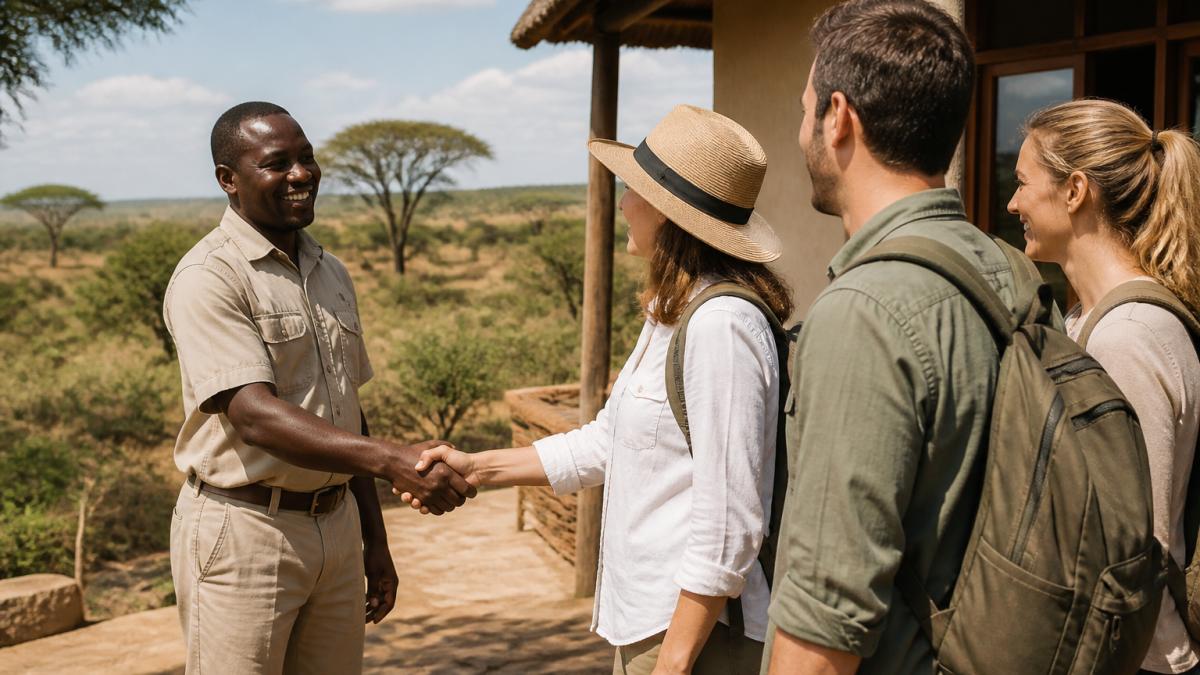
Greetings carry real weight in Tanzanian culture. Skipping them to get straight to business reads as cold, even rude. A proper exchange of Jambo or Habari is expected before anything else.
Formal vs. Informal Greetings
Match your greeting to the person and setting. With elders, officials, or people you've just met, lean formal. With peers and young people, informal is fine.
| Greeting | Meaning | Best Used With |
|---|---|---|
| Jambo | Hello | Tourists, casual settings |
| Habari? | How are you? | Most people, any setting |
| Shikamoo | Respectful hello | Elders, superiors |
| Mambo? | What's up? | Friends, young people |
| Hujambo | Hello (to one person) | Polite, neutral |
A common exchange sounds like this:
- You: Habari? (How are you?)
- Them: Nzuri, asante. (Fine, thank you.)
- You: Habari ya asubuhi? (Good morning?)
Introduce yourself with Jina langu ni... (My name is...). Then ask Jina lako ni nani? (What is your name?). It's a small script, but it turns strangers into hosts.
Basic Swahili Phrases for Travelers: Everyday Essentials
The phrases that matter most are the ones you'll repeat daily. Basic Swahili phrases for travelers cluster around three needs: being polite, buying things, and talking about animals.
Polite Expressions and Etiquette
Politeness is the currency of Tanzanian daily life, and a few words go far:
- Tafadhali: please
- Asante: thank you
- Asante sana: thank you very much
- Karibu: welcome
Handshakes matter too. A soft handshake with the right hand, sometimes held a moment longer, signals respect. When you receive something, take it with your right hand or both hands.
Safari and Wildlife Vocabulary
On safari, these words turn a game drive into a conversation:
- Simba: lion
- Tembo: elephant
- Twiga: giraffe
- Kifaru: rhino
The Big Five, or wanyama wakubwa watano, are the animals most travelers hope to spot. Ask your guide Tunaweza kuona simba leo? (Can we see lions today?) and you'll get a real answer, plus a grin.
Directions, Markets, and Getting Around in Swahili
Getting around is where a little Swahili pays off fast. Market vendors and drivers appreciate the effort, and prices often soften when you greet people properly first.
Key direction words:
- Kushoto: left
- Kulia: right
- Moja kwa moja: straight ahead
- Karibu: come in or welcome
In markets, bargain gently. Ask Bei gani? (What's the price?). If it's too high, try Punguza kidogo (Lower it a little).
For transport, Ningependa kwenda... means "I would like to go to..." Add your destination and you're set. A simple Asante when you arrive keeps things warm.
Beginner Swahili Learning Resources for Pre-Trip Study
You don't need a classroom to get conversational. Beginner Swahili learning resources range from free apps to one-on-one tutors, and the best mix depends on how much time you have.
Options worth trying:
- Language apps for daily vocabulary drills and spaced repetition
- YouTube channels for pronunciation you can copy out loud
- Podcasts for listening practice during commutes
- Online tutors for live conversation and correction
A good rule: use one app, one audio source, and one human. People correct mistakes that apps can't hear. If you only have two weeks, the human matters more than the app.
A 2-Week Pre-Trip Study Plan
Two weeks is enough to build a working base if you practice daily and out loud. Here's how we'd structure it, with a realistic 15-20 minutes per day:
- Days 1-3, Sounds and greetings. Master the five vowels and ten greetings. Goal: say Jambo, Habari?, Shikamoo, and Asante without hesitating. Practice by greeting an empty room until it feels natural.
- Days 4-6, Polite words and numbers. Add Tafadhali, Samahani, Ndiyo, Hapana, and numbers one to ten. Goal: order a drink and say thank you in one breath.
- Days 7-9, Safari and wildlife words. Drill simba, tembo, twiga, kifaru, chui, and nyati. Goal: name five animals from memory and ask Tunaweza kuona simba leo? (Can we see lions today?).
- Days 10-12, Directions, markets, and money. Learn kushoto, kulia, moja kwa moja, Bei gani?, and Punguza kidogo. Goal: run a short bargaining exchange out loud without reading.
Fifteen minutes a day beats one long cram session. Say everything out loud, even alone. Your mouth needs the practice as much as your memory does.
How to Know You're Ready
Progress in a two-week sprint is easy to measure if you set simple checkpoints:
- You can greet someone and respond to Marahaba without pausing
- You can ask for a price and understand the number that comes back
- You can give a direction to a driver in three words or fewer
- You can apologize and explain that your Swahili is limited: Samahani, sijui Kiswahili vizuri
If you can do those four things, you have enough to travel well. Fluency is not the bar; being understood and being polite is.
Where Swahili Helps Most, and Where It Doesn't
Swahili is the working language of markets, villages, buses, and family compounds. It is less essential inside international hotels, at airport counters, and on high-end lodge transfers, where English is standard. A useful pattern is to open in Swahili and let the other person choose the language. If they answer in English, follow their lead. If they answer in Swahili, keep going.
Peace Corps Swahili language training materials
Common Mistakes and Respectful Alternatives
The mistakes that sting aren't grammar errors. They're cultural missteps, and most are easy to avoid once you know them.
- Skipping greetings: Jumping straight to a question feels rude. Always greet first.
- Using "Jambo" with everyone: It's fine for tourists, but locals rarely use it with each other. Habari? is safer.
- Bargaining too hard: Treat the first price as an opening, not an insult. A fair deal beats a cheap win.
- Ignoring titles: Use Bwana (Mr.) or Bibi (Mrs.) with elders until invited to do otherwise.
- Assuming English is unwelcome: Many Tanzanians speak English well. Switching to Swahili is a gesture, not a necessity.
When you get something wrong, laugh and say Samahani, sijui Kiswahili vizuri (Sorry, I don't know Swahili well). People respond to effort, not perfection.
Conclusion: Speak with Confidence on Your Tanzania Journey
Learning basic Swahili is one of the highest-return investments you can make before a Tanzania trip. A few dozen words turn transactions into conversations and tours into friendships.
That's the spirit behind every journey we build at Simcha African Safaris Limited. Our curated safaris blend wildlife, culture, and comfort, with expertly guided game drives, Kilimanjaro hikes, whale shark adventures, and flexible itineraries.
Frequently Asked Questions
How do you say hello in Swahili in Tanzania?
Jambo is the most common greeting you will hear, especially from safari guides and hotel staff. Habari is another everyday greeting that literally asks 'what's the news?' When greeting someone older or in a formal setting, use Shikamoo, and they will likely respond Marahaba. For groups, say Hamjambo. A warm smile paired with Jambo goes a long way in Tanzania.
What are some basic Swahili phrases for beginners?
Start with Asante (thank you), Tafadhali (please), Ndiyo (yes), and Hapana (no). Karibu means welcome and you will hear it constantly. For directions, left is kushoto and right is kulia. When bargaining in markets, say Bei gani? (How much?). These basic Swahili phrases cover most travel situations and show locals you have made an effort to learn their language.
How can travelers practice Swahili before a trip?
Use a two-week study plan: spend 10 minutes daily on greetings and polite expressions, then add safari and direction vocabulary. Language apps like Duolingo and Memrise offer Swahili courses. YouTube channels provide pronunciation practice. Flashcards work well for memorizing 50 core phrases. Practicing aloud with a tutor or language partner builds confidence before you arrive in Tanzania.
What is a good book for a beginner learning Swahili?
Look for beginner Swahili learning resources that include audio components. 'Swahili Made Easy' and 'Colloquial Swahili' are solid starting points for structured self-study. Pair any book with audio pronunciation guides, since hearing the syllable stress matters more than reading phonetic spellings. Many travelers also download phrasebooks specifically designed for East Africa travel situations like safari, markets, and restaurants.
Ready to put your new phrases to work? Request a quote from Simcha African Safaris Limited and let us craft a journey where the language, the landscapes, and the people all come together.


