

Table of Contents
- Is Travel Insurance Mandatory for Tanzania Safari?
- Understanding Zanzibar vs. Mainland Insurance Requirements
- Emergency Medical Evacuation for Safari: What You Must Know
- Travel Insurance Coverage for High-Altitude Trekking on Kilimanjaro
- Safari Trip Cancellation Insurance: Protecting Your Investment
- Essential Coverage Types for Tanzania Safari Adventures
- Choosing the Right Policy: Key Questions to Ask
- Frequently Asked Questions
Last Updated: August 31, 2026
Is Travel Insurance Mandatory for Tanzania Safari?
Travel insurance isn't legally mandatory for entering Tanzania as a visitor. However, while the government doesn't require proof of insurance at the border or airport, this doesn't mean you should skip it. There's an important distinction between mainland Tanzania and Zanzibar that many travelers miss.
For mainland Tanzania, while not legally required, many safari operators and lodges strongly recommend coverage. The real risk isn't regulatory, it's financial. A medical emergency in a remote national park can cost thousands of dollars out of pocket, and evacuation expenses can exceed $50,000 if you need to be airlifted to a major medical center.
Zanzibar operates under different rules. As a semi-autonomous archipelago, some resorts request proof of travel insurance. If you're combining a safari on the mainland with a beach stay in Zanzibar, you'll want coverage that covers both regions clearly.
At Simcha African Safaris Limited, we advise clients that while travel insurance isn't mandatory, it's the difference between a memorable adventure and a financial disaster.
Understanding Zanzibar vs. Mainland Insurance Requirements
Mainland Tanzania follows national health and entry protocols. You can enter without proof of travel insurance, but once you're on a game drive six hours from the nearest clinic, insurance becomes your lifeline. Medical facilities in safari areas are limited, and serious illness or injury means evacuation to Dar es Salaam or Nairobi, a process that's expensive and time-sensitive.
Zanzibar's situation is more complex. While not strictly mandatory at entry, many Zanzibar resorts and tour operators request evidence of travel insurance before confirming bookings, especially for water-based activities like snorkeling and diving. If you're planning a combination trip, your single policy must explicitly cover both mainland and island activities.
One critical mistake: buying separate policies for mainland and Zanzibar. A single comprehensive Tanzania safari travel insurance policy that covers both regions costs less and eliminates coverage gaps. When comparing policies, verify explicitly that mainland activities and Zanzibar activities are both included with no geographic restrictions.
Emergency Medical Evacuation for Safari: What You Must Know
Emergency medical evacuation coverage is the single most critical component of any Tanzania safari travel insurance policy. In a remote safari setting, evacuation isn't optional, it's survival.
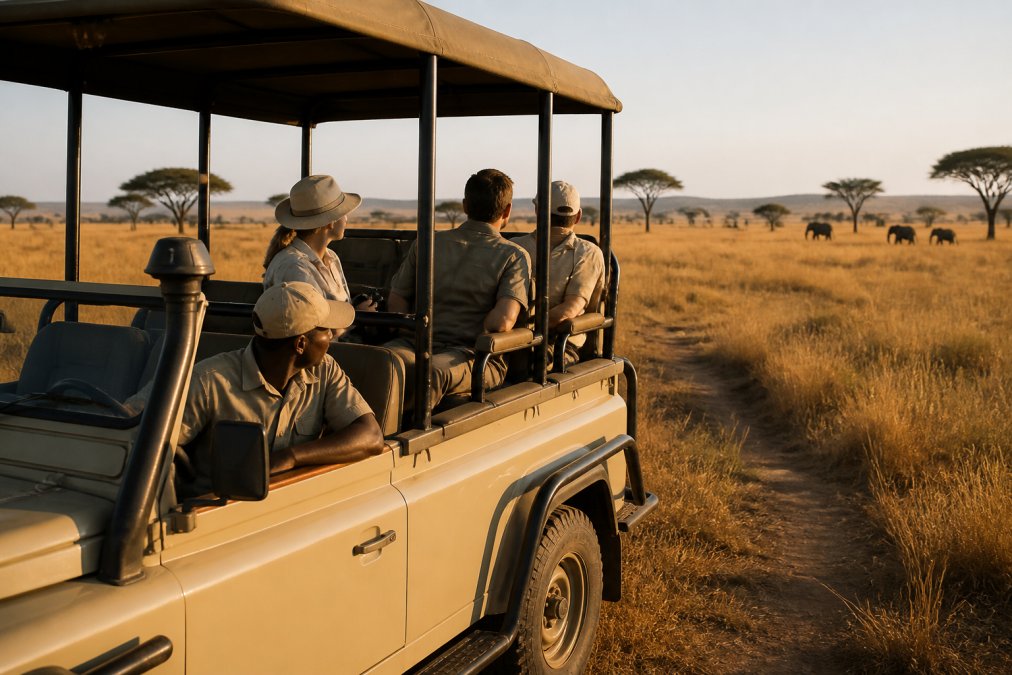
When you're on a game drive in the Serengeti or Ngorongoro Crater, you're hours away from advanced medical care. A sudden illness, severe injury, or allergic reaction can't wait for a regular vehicle transfer. Helicopter evacuation to a hospital in Dar es Salaam or Nairobi becomes necessary, costing $40,000 to $100,000 depending on distance and medical complexity (peer-reviewed research).
Your policy must specify emergency medical evacuation coverage with a minimum limit of $250,000. Many basic travel policies cap evacuation at $50,000 or $100,000, dangerously low for safari emergencies. Look for policies that cover helicopter evacuation from remote locations, fixed-wing aircraft transport if needed, ground ambulance to the nearest appropriate facility, and medical coordination costs. Coverage should activate automatically without requiring advance approval.
One detail many travelers overlook: evacuation coverage that requires you to be "stable enough to fly." You want coverage that authorizes evacuation based on medical need, not stability status. Your policy should cover evacuation for conditions requiring higher-level care than available locally.
Simcha African Safaris Limited recommends discussing evacuation coverage details with your insurer before departure. Ask: Will they cover evacuation to any hospital or only designated facilities? What's the process if you need evacuation during a multi-day trek? Can they handle coordination with remote safari camps?
Travel Insurance Coverage for High-Altitude Trekking on Kilimanjaro
Mount Kilimanjaro presents unique insurance challenges because altitude sickness and high-altitude pulmonary edema (HAPE) aren't always covered by standard travel insurance. Your Tanzania safari travel insurance must explicitly address high-altitude trekking if Kilimanjaro is part of your itinerary.
Standard travel policies often exclude or limit coverage for high-altitude activities. Kilimanjaro reaches 19,341 feet, high enough to trigger altitude-related exclusions in many policies (usgs.gov). You need coverage specifically labeled for "high-altitude trekking" or "mountain climbing" that covers altitudes above 15,000 feet.
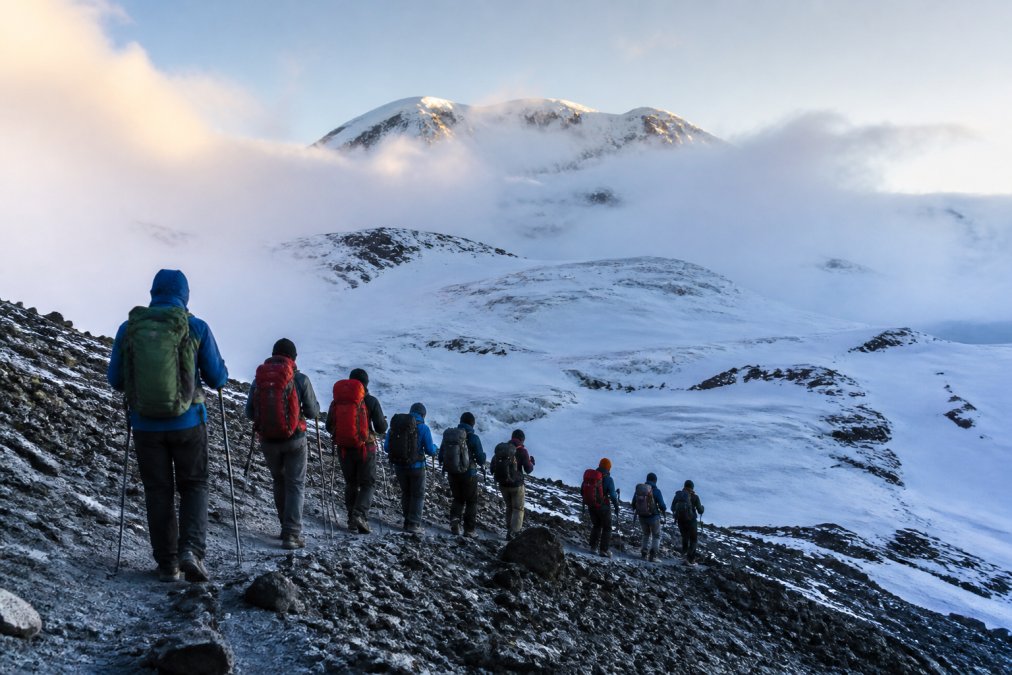
The coverage should include medical treatment for altitude sickness and HAPE, evacuation from high altitude, descent assistance if you can't continue, and acclimatization-related complications. Altitude sickness affects roughly 50% of climbers, though most cases are mild and manageable with descent and rest. Severe cases require immediate evacuation, and your insurance must cover this without treating it as an "adventure sport exclusion."
Check your policy's definition of covered altitudes. Some policies cover up to 15,000 feet but exclude anything higher. You need coverage that explicitly extends to at least 20,000 feet. The cost difference between standard coverage and high-altitude coverage is usually modest, $50 to $150 for a two-week trip.
Pre-existing conditions require special attention. If you have heart disease, lung disease, or diabetes, many insurers will either exclude altitude coverage or charge higher premiums. Disclose everything during the application.
Safari Trip Cancellation Insurance: Protecting Your Investment
Safari trips represent significant financial commitments. A week-long Tanzania safari with accommodations, guides, and activities can easily cost $3,000 to $10,000 or more. Trip cancellation coverage protects this investment against unforeseen circumstances.
Standard trip cancellation coverage reimburses you if you cancel before departure due to covered reasons. Common covered reasons include sudden illness or injury to you or a traveling companion, death of a close family member, job loss, severe weather making travel impossible, airline strikes or cancellations, and unexpected hospitalization.
What's usually NOT covered: pre-existing medical conditions (unless declared and accepted), financial hardship or change of mind, pregnancy after a certain point, travel warnings issued before you purchase insurance, and cancellations due to pandemics or government travel bans.
The cancellation coverage should reimburse 75% to 100% of your trip cost depending on how close to departure you cancel. Some policies offer "cancel for any reason" coverage, which reimburses 50-75% of costs for non-covered reasons. This costs more but provides maximum flexibility.
Timing matters significantly. You must purchase trip cancellation insurance within 14 days of your initial trip deposit in most cases. Buy after that window closes, and pre-existing conditions won't be covered. Purchase insurance early, often when you book your safari.
Essential Coverage Types for Tanzania Safari Adventures
Beyond the major categories, several other coverage types matter for a complete Tanzania safari travel insurance policy.
Medical expenses and hospitalization should cover doctor visits, hospital stays, medications, and diagnostic tests up to at least $100,000. Serious cases require evacuation to Dar es Salaam or international hospitals in Kenya or South Africa. Ensure your policy covers treatment at private hospitals.
Baggage and personal belongings coverage protects against loss, theft, or damage during your trip. Safari involves multiple vehicle transfers, flights between regions, and stays at various lodges. Coverage should include baggage delay and baggage loss, with limits typically $2,500 to $5,000 per person.
Travel delay coverage reimburses you if delayed more than 12-24 hours due to airline strikes, mechanical failures, or severe weather. This covers meals and accommodation while you wait.
Adventure activity coverage is essential if your safari includes activities beyond game drives. Snorkeling, scuba diving, hot air balloon rides, and hiking all require specific coverage. Standard travel insurance often excludes these. Verify your policy covers whatever activities you've planned.
Repatriation of remains coverage handles the cost of returning your body to your home country if you die during the trip, typically $10,000 to $25,000. Most comprehensive policies include it automatically.
Choosing the Right Policy: Key Questions to Ask
Selecting a Tanzania safari travel insurance policy requires asking the right questions before you commit.
First, confirm geographic coverage. Does the policy cover mainland Tanzania, Zanzibar, and any other countries you'll visit? Your policy must explicitly name Tanzania and any other destinations.
Second, verify activity coverage. List every activity you plan and ask the insurer directly if these are covered with no exclusions. Get written confirmation.
Third, understand the evacuation process. Ask how emergency evacuation is coordinated, how long authorization takes, and whether evacuation can happen from remote locations. The insurer should have protocols for safari-specific scenarios.
Fourth, clarify pre-existing conditions. If you have any medical conditions, declare them during the application and ask specifically about coverage related to those conditions.
Fifth, check the claims process. How do you file a claim? For safari emergencies, direct payment to providers is better than requiring upfront payment. Ask if the insurer has relationships with hospitals in Tanzania and Kenya.
Sixth, review the policy limits. Medical coverage should be at least $100,000. Evacuation should be at least $250,000. Trip cancellation should reimburse a meaningful percentage of your investment.
Seventh, ask about coverage duration. Does the policy cover your entire stay in Tanzania, including any pre- or post-trip days? Does it cover the entire duration of a Kilimanjaro climb?
When you book a safari with Simcha African Safaris Limited, ask us which insurers our clients typically use and what coverage gaps we've seen. We can point you toward policies that actually work for Tanzania safari adventures.
Choosing the right Tanzania safari travel insurance isn't about finding the cheapest option, it's about understanding what actually protects you in a remote, high-risk environment. A comprehensive policy covering emergency evacuation, high-altitude trekking, trip cancellation, and adventure activities costs more upfront but prevents catastrophic financial loss if something goes wrong.
At Simcha African Safaris Limited, we believe insurance is part of responsible safari planning. We help clients navigate these decisions because we want you focused on the adventure, not worrying about what happens if you get sick. The U.S. State Department's travel advisory resources provides current health and safety information for Tanzania. Combined with solid insurance, you're prepared for whatever your safari brings.
Request a quote with us, and we'll discuss insurance requirements specific to your itinerary. Your peace of mind matters as much as your adventure.
| Coverage Type | Minimum Recommended | Why It Matters |
|---|---|---|
| Emergency Medical Evacuation | $250,000 | Helicopter evacuation from remote safari areas costs $40,000-$100,000 |
| Medical Expenses | $100,000 | Hospital stays and treatment in Tanzania require international-standard facilities |
| High-Altitude Coverage | Up to 20,000 feet | Kilimanjaro reaches 19,341 feet; altitude sickness requires evacuation |
| Trip Cancellation | 75-100% reimbursement | Protects your $3,000-$10,000+ safari investment |
| Adventure Activity Coverage | Explicit inclusion | Covers snorkeling, diving, balloon rides, trekking beyond standard policies |
| Baggage Coverage | $2,500-$5,000 | Multiple transfers and lodge stays increase loss or delay risk |
Frequently Asked Questions
Do I need travel insurance if I'm only doing a short safari?
Yes. Even a three-day safari puts you in remote areas far from medical facilities. A single emergency evacuation can cost more than your entire trip.
What if I have a pre-existing condition?
Declare it during the application. Some insurers cover pre-existing conditions if you apply early; others exclude them. Honesty is essential, attempting to hide a condition can void your entire policy if you need to claim.
Can I buy travel insurance after I've booked my safari?
Yes, but trip cancellation coverage typically requires purchase within 14 days of your initial deposit. Buy early to maximize coverage options.
Will my regular travel insurance cover a Kilimanjaro climb?
Probably not. Standard policies exclude high-altitude activities. You need a policy specifically covering mountaineering or high-altitude trekking above 15,000 feet.
What happens if I get sick during my safari and can't continue?
Your evacuation coverage should activate automatically. The insurer coordinates with local medical facilities and arranges transport. You shouldn't need to negotiate or pay upfront.
Frequently Asked Questions
What travel insurance is recommended for a safari in Tanzania?
Comprehensive travel insurance that includes emergency medical evacuation, hospitalization coverage, and trip cancellation protection is essential for Tanzania safari travel. Look for policies with high policy limits for medical expenses (minimum $100,000), 24/7 travel assistance services, and specific coverage for adventure activities if you plan trekking or water sports. Verify that your policy covers remote region evacuation and pre-existing conditions if applicable. Reputable travel insurance providers offer safari-specific plans that address the unique risks of wildlife encounters and remote locations.
Is travel insurance mandatory for entry into Tanzania?
While travel insurance is not a legal entry requirement for non-resident visitors entering Tanzania, many tour operators and travel advisors strongly recommend it. Zanzibar, as a semi-autonomous region, has distinct entry regulations but does not mandate proof of insurance at the border. However, comprehensive coverage is critical given the distance from advanced medical facilities in remote safari locations and the high costs of emergency medical repatriation, which can exceed $50,000 in extreme cases.
Does my standard health insurance cover medical emergencies in Tanzania?
Most standard U.S. health insurance plans provide limited or no coverage outside the country. Many policies exclude out-of-pocket expenses for treatment abroad and do not cover medical evacuation. Before traveling, contact your health insurance provider to confirm coverage limits internationally. Dedicated travel medical insurance fills these gaps and ensures you have access to quality care and evacuation services without depleting your personal finances. This is especially important for safari travel in remote regions where emergency response times are longer.
What should I do if I need to make a claim for a canceled safari trip?
Contact your insurance provider immediately with your policy number and documentation of the cancellation (booking confirmation, cancellation notice, and proof of payment). Most travel insurance companies require claims to be filed within 30 to 90 days of the covered event. Provide receipts and evidence of the reason for cancellation (illness, death in family, severe weather, etc.). Work with your tour operator to obtain a written statement of cancellation. Keep all correspondence and documentation organized. Many insurers offer online claim submission, which speeds up the process and ensures a clear record of your submission.
This article was written using GrandRanker


