

Last Updated: October 29, 2026
Quick Summary
A longer Kilimanjaro itinerary spreads the same route over more days, giving you more time at altitude before your summit attempt. Extra days help most when they are placed at altitude with a defined job, such as an acclimatization hike or a buffer for weather and fatigue.
- Every extra day is not equal; one day placed at the right elevation can matter more than two days at the front.
- Many climbers choose seven or more days on the mountain to give acclimatization more time.
- A 7-day Machame can add an extra acclimatization day before the summit push, meaning a less demanding summit night.
- Two or more altitude risk answers point to eight days minimum.
- Ask your operator to show the camp-by-camp elevation profile before you book.
Table of Contents
- Why a Longer Kilimanjaro Itinerary Changes Your Climb
- Kilimanjaro Acclimatization: What Extra Days Actually Do
- Kilimanjaro Route Duration: How Many Days Do You Really Need?
- 6-Day vs 7-Day Machame Route: The Real Trade-Off
- Kilimanjaro Rest Days: Recovery, Contingency, and Weather
- What an Extra Day Actually Changes on the Mountain
- Choosing the Right Itinerary Length for Your Climb
- Plan Your Kilimanjaro Climb with Simcha African Safaris
- Frequently Asked Questions
Why a Longer Kilimanjaro Itinerary Changes Your Climb
A longer Kilimanjaro itinerary is a schedule that spreads the same route over more days, usually by adding a rest day or splitting a long trekking day in two.
Here's the part most guides skip. The CDC Yellow Book chapter on high-altitude travel makes the underlying point plainly: above roughly 2,800 meters, the body needs a slow, staged ascent, and sleeping elevation should climb gradually.
Below, we break down what extra days actually do, how route duration changes your odds, and how to pick an itinerary length that matches your fitness, timeline, and budget.
Kilimanjaro Acclimatization: What Extra Days Actually Do
Kilimanjaro acclimatization is the process by which your body adapts to lower oxygen levels over successive days at altitude. Extra days give that process more room to work. They do not guarantee a summit, and any operator promising one is selling you something nobody can deliver.
How the Body Adjusts at Altitude
Your body responds to thin air by breathing faster, raising heart rate, and gradually increasing red blood cell production. That adaptation is slow.
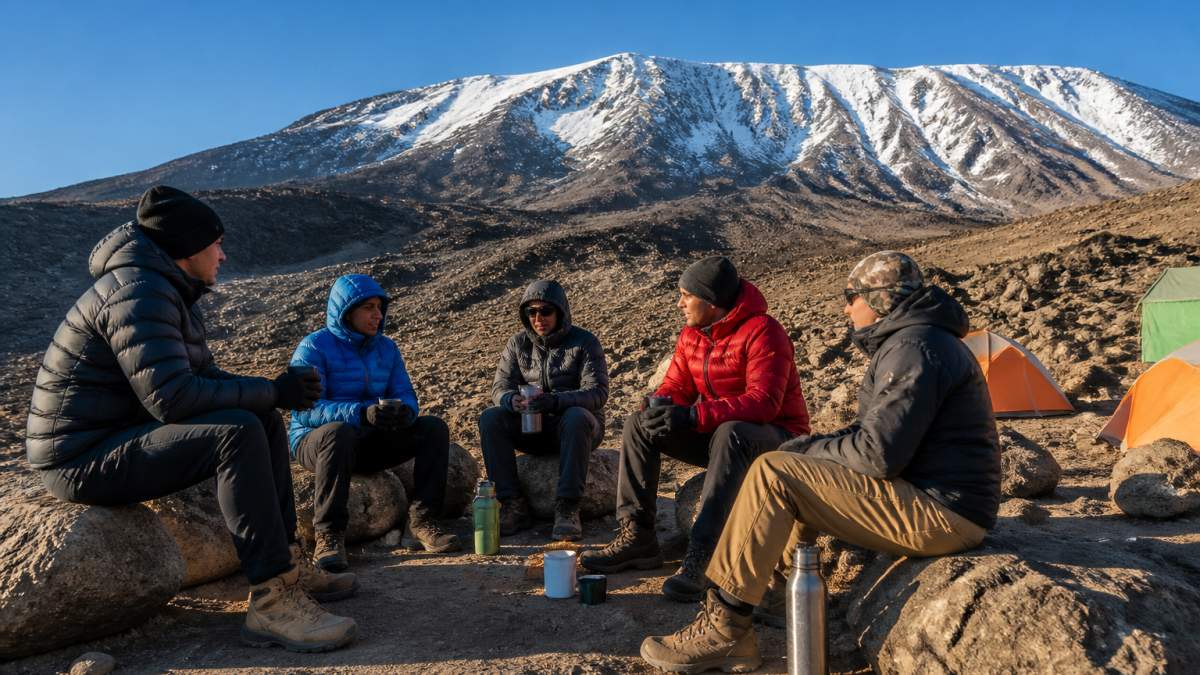
A common mistake is treating the acclimatization day as a rest day. It should be an active day, usually a short hike to a higher point and back down.
AMS Warning Signs and Your Response Plan
Acute Mountain Sickness (AMS) is the most common altitude illness on Kilimanjaro, and it ranges from mild headache and nausea to a life-threatening emergency. The CDC guidance on altitude illness is clear that the best prevention is gradual ascent, and that descending is the definitive treatment.
Watch out: the single most dangerous mistake is pushing upward through worsening symptoms because the summit is close. Our guides treat a persistent headache that does not respond to fluids and rest as a signal to stop climbing, not to push on.
Kilimanjaro Route Duration: How Many Days Do You Really Need?
Many climbers choose seven or more days on the mountain to give acclimatization more time, and longer schedules can suit anyone unsure of their altitude tolerance.
For a deeper look at whether a compressed schedule can work, read our breakdown of whether 7 days is enough to climb Kilimanjaro. The honest answer depends on the route and your prior altitude experience.
| Itinerary Length | Acclimatization Margin | Best For | Main Trade-Off |
|---|---|---|---|
| 5-6 days | Minimal | Very fit climbers on a tight schedule | Least time to adjust, highest AMS risk |
| 7 days | Moderate | Most first-time climbers | Balanced time and cost |
| 8-9 days | Generous | Climbers prioritizing summit readiness | More days off work, higher total cost |
6-Day vs 7-Day Machame Route: The Real Trade-Off
The 6-day vs 7-day Machame route decision is the clearest illustration of what a single day buys you. A 7-day version can add an extra acclimatization day before the summit push, which can mean a less demanding summit night.
If you want the success-rate picture for beginners, our guide to Kilimanjaro success rates for beginners lays out what actually drives outcomes.
Kilimanjaro Rest Days: Recovery, Contingency, and Weather
Kilimanjaro rest days serve three jobs, and most climbers only plan for one. The first is physical recovery. The second is acclimatization, since a rest day is often an active acclimatization hike. The third, and the one people forget, is contingency.
Weather on the mountain can change quickly. Before you commit to a longer schedule, run through our Kilimanjaro climbing gear checklist so the extra days do not catch you under-equipped.
What an Extra Day Actually Changes on the Mountain
"An extra day helps you acclimatize" is true and too vague to plan around. The useful question is: what does one specific added day change in the schedule, and how do you tell a well-placed day from a wasted one? Here is how added days map to real itinerary changes.
Mapping an Added Day to an Acclimatization Profile
On a standard 6-day Machame, the schedule moves from camp to camp with only one short acclimatization hike and a compressed summit night. Add one day in the middle of the trek, typically a hike to a higher point and a return to sleep lower, and three things shift at once:
- Sleeping elevation climbs more gradually, giving the body an extra night at a moderate altitude before the high camp.
- The summit night shortens, because the high camp is reached with less accumulated fatigue.
- The daily trekking load drops, because the same route is spread across more days.
That is a different product from adding a day at the trailhead, which changes almost nothing about your acclimatization profile. When you compare itineraries, compare the elevation of each night's camp, not just the number of days.
The Daily Pace Difference Is Real
On a compressed schedule, climbers often arrive at camp late, eat poorly, and sleep badly at altitude, and that compounds day after day. A longer itinerary lets the team walk slower, arrive earlier, and eat properly. That is not luxury. It is summit readiness. Ask any guide who has turned around a climber who was simply too depleted to continue: the failure usually started two days earlier, not on summit night.
Planned Acclimatization Days vs. Buffer Days
These are not the same thing, and most climbers only plan for one:
- Acclimatization days are built into the schedule and have a defined job, usually an active hike to a higher elevation.
- Buffer days are held in reserve for weather, fatigue, or a climber who needs to slow down. They are not wasted if unused; they are insurance.
A longer itinerary should give you both. If your schedule has acclimatization days but no buffer, a single storm or a bad night can force a summit attempt in unsafe conditions or cost you the summit entirely. If it has buffer but no acclimatization day, you have bought flexibility without adaptation.
Morale, Recovery, and Summit-Day Readiness
The summit push is the most demanding part of the trek, and it starts the night before. Climbers on longer itineraries tend to arrive at high camp with more energy, better appetite, and more confidence, all of which affect the decision-making that happens in the dark on summit night. Recovery is not a soft benefit; it is the difference between a climber who can keep going and one who cannot.
For the full picture of what drives outcomes, see our analysis of Kilimanjaro success rate factors.
Choosing the Right Itinerary Length for Your Climb
Most itinerary advice collapses into "take more days." That is directionally right and practically useless when you are balancing a fixed vacation allowance, a budget, and a body you have never tested at altitude. Use the framework below to turn the abstract case for a longer itinerary into a specific number of days.
Step 1: Score Your Altitude Risk Profile
Answer four questions honestly before you look at a route map:
- Have you slept above 3,000 meters (about 9,800 feet) before? If no, treat yourself as a first-time altitude traveler regardless of fitness.
- Have you had headache, nausea, poor sleep, or breathlessness at altitude before? Any prior AMS episode is a reason to add a day, not to prove you can tough it out.
- How does your body handle two consecutive hard days? Long back-to-back trekking days are where compressed itineraries break people.
Two or more "risk" answers point to eight days minimum. Zero risk answers still do not justify five days on a mountain this high.
Step 2: Match Days to a Route Profile, Not a Marketing Name
Itinerary length and route are not independent choices. The same number of days buys very different acclimatization margins depending on the route's elevation profile:
- Machame and Lemosho offer the most flexible day counts and the best high-sleep-low structure when extended. A 7-day Machame and an 8-day Lemosho are not equivalent even at similar total days, because the Lemosho profile spreads early elevation gain more gently.
- Rongai approaches from the drier side and can be extended, but its profile gives fewer natural acclimatization options than Lemosho.
- Marangu is the route most often sold short. Its hut-based schedule compresses ascent and is the route where an extra day matters most, and is most often unavailable.
If your chosen route cannot be extended, that is a signal to change routes rather than accept a compressed schedule.
Step 3: Decide How You Will Use the Extra Day
An added day is only valuable if it is placed correctly. Ask your operator to show you exactly where the day sits in the schedule and what happens on it:
- Acclimatization day: a short hike to a higher elevation and back down to sleep lower. This is the highest-value use of a day.
- Buffer day: held in reserve for weather, fatigue, or a climber who needs to slow down. Valuable, but different from acclimatization.
- Pacing day: splits a long trekking day into two shorter ones, reducing exhaustion before the summit push.
A schedule that adds a day at the trailhead or at the end of the trek is not the same product as one that adds it at altitude. Insist on the day-by-day placement.
Step 4: Compare Total Cost, Not Day Rate
Extra days can add costs beyond the daily rate, since park and camping fees, food, and crew costs may scale with the number of days. When comparing quotes, it helps to look at the total cost of the full itinerary. A cheaper day rate on a compressed schedule can cost more in the end if it reduces your summit odds.
Step 5: Set Your Walk-Away Criteria
Before you book, decide what you will not compromise on:
- At least one dedicated acclimatization day placed at altitude, not at the trailhead.
- A guide-to-climber ratio and a stated policy for turning around or descending.
- A schedule with enough slack that a weather day does not force a dangerous summit push.
If an operator cannot show you the day-by-day placement of your extra day, that is your answer. The right itinerary length is the one where every added day has a job.
Plan Your Kilimanjaro Climb with Simcha African Safaris
The hardest part of choosing an itinerary length is trusting the operator's judgment when conditions change on the mountain.
Simcha African Safaris Limited offers curated Tanzania safari experiences, including Mount Kilimanjaro hikes, with flexible durations. If you want to understand how to vet an operator before you commit, read our guide on how to book a Kilimanjaro climb safely.
Frequently Asked Questions
Why is a longer Kilimanjaro itinerary better for climbing?
A longer Kilimanjaro itinerary gives your body more days at altitude before the summit attempt, which supports acclimatization and lowers the risk of acute mountain sickness. Extra days also add recovery time between demanding trekking days, keep energy and morale higher, and build in buffer for weather delays. The result is a climb paced for summit readiness rather than a rushed push. Shorter itineraries can work for experienced, fit climbers, but they leave less margin for error.
Does adding days to a Kilimanjaro climb help with acclimatization?
Yes. Acclimatization depends on time spent at increasing elevation, so each added day above certain thresholds gives your body more opportunity to adjust. A common approach is to climb high and sleep low, which longer routes make easier to schedule. The benefit is not unlimited: rest days at low elevation help less than days spent gradually gaining altitude. That is why route choice and daily pace matter as much as total trip duration.
What is the difference between a 6-day and 7-day Machame route?
The 6-day vs 7-day Machame route difference comes down to pacing and acclimatization. A 7-day version adds a day that can allow a more gradual ascent, reducing the jump in altitude before the final push. The 6-day version compresses the same terrain into fewer trekking days, which means longer daily walks and less time to adjust. Climbers with limited time often choose 6 days; those prioritizing summit readiness lean toward 7.
Are rest days useful on Kilimanjaro?
Kilimanjaro rest days serve two purposes: recovery and contingency. A scheduled rest day or short acclimatization hike lets muscles recover and helps your body adjust before the summit attempt. Contingency days cover weather disruptions or a climber who needs extra time, so the whole group is not forced to abandon the schedule. Not every itinerary includes them, so ask your operator how rest and buffer days are built into the route before you book.
If you are weighing a longer schedule against a tighter one, the decision comes down to margin. We plan climbs with acclimatization time built in, expert guides who read altitude symptoms early, and flexible durations that fit your timeline. Get started with Simcha African Safaris Limited and climb with a schedule designed around your summit readiness.


